Dinner · Part 2 of 3: Instructions
One-Skillet Vodka Bolognese Orecchiette with Spicy Sausage Step-by-step instructions
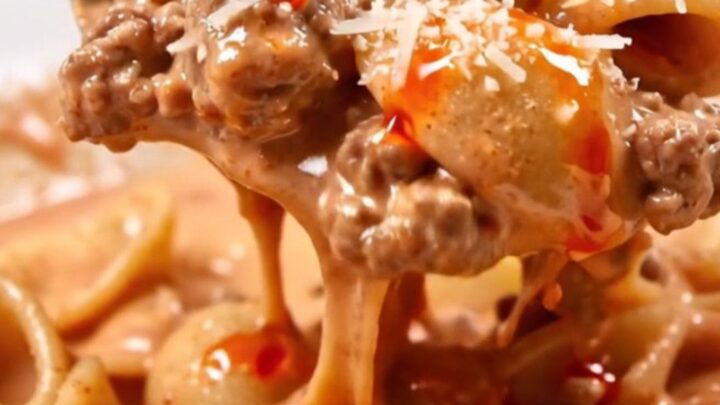
- Prep
- Cook
- Total
- Serves
- 4
Before you start
Ten minutes of setup makes the cooking feel unhurried. Grate the Pecorino finely and park it in a bowl near the stove — it goes in at the very end and needs to be ready the second the pasta is drained. Mince the garlic, open the tomato paste and measure the vodka, cream and chili oil. Set the large pot of water on the heat first so it reaches a boil while the sauce builds. Place the deep skillet next to it, with the wooden spoon and the instant-read thermometer standing by.
Ingredients at a glance (11)
- 10 1/2 oz ground beef (Wagyu)
- 7 oz spicy Italian sausage, casings removed if linked
- 4 garlic cloves, minced
- 1/3 cup tomato paste
- 1/4 cup vodka
- 3/4 cup heavy cream
- 1/2 cup pasta water, reserved from cooking
- 14 oz orecchiette
- 1 cup finely grated Pecorino Romano
- Fresh basil leaves, for serving
- Chili oil, for serving
Instructions
Set Up the Pan and the Pot
- Grate the cheese and mince the garlicGrate the Pecorino Romano on the fine holes of a box grater and set it in a bowl near the stove, then mince the garlic cloves. Measure the vodka, heavy cream and tomato paste into cups and line them up beside the skillet so nothing gets scrambled once the meat starts sizzling.Look for The grated cheese should look like fine sand rather than shreds, which is what melts smoothly into the cream.Tip Fine grating matters more than the brand of cheese; coarse shreds can stay grainy in the finished sauce.
- Get the pasta water boilingSet a large pot of water over high heat and bring it to a rolling boil for the orecchiette. Keep the pot uncovered and at a full boil, because a ladle of this starchy water goes into the sauce later and more may be needed to loosen it at the end.Look for Big bubbles break constantly across the entire surface of the water, not just around the edges of the pot.Tip Start the sauce in the skillet while the water heats so the pasta and sauce finish at about the same time.
By the end of this phase the counter is organized and the stove is working. The Pecorino is grated fine enough to look like coarse sand, the garlic is minced evenly so it will bloom in seconds, and the vodka, cream and tomato paste sit in measuring cups beside the skillet.
The pot of water is at a rolling boil — big bubbles breaking constantly across the whole surface, not just around the edges. Check two things before moving on: the cheese is within arm's reach of the stove, and the water stays at a full boil uncovered, because a ladle of it goes into the sauce later.
Build the Bolognese Base
- Brown the beef and sausage hardPlace the deep skillet over medium-high heat. Add the ground beef and the spicy Italian sausage, breaking everything up with a wooden spoon. Brown hard, stirring only occasionally, until no pink remains anywhere and the meat reads 160°F (71°C) on an instant-read thermometer.Look for Listen for a steady sizzle and look for deep brown, crusty bits stuck to the pan — that fond is the flavor base.Safe temperature 160°F (71°C) internal temperature (ground meat)Tip Crowding steams the meat instead of browning it; use a wide skillet or brown in two batches and combine.
- Bloom the garlic in the fatPush the browned meat to one side of the skillet and drop the minced garlic into the rendered fat. Let it bloom for about thirty seconds, stirring, then fold it through the meat so it toasts evenly without catching on the hot bottom of the pan.Look for The garlic should smell sweet and nutty, with the edges staying pale gold rather than turning brown.Tip Garlic burns fast and turns bitter, so keep it moving and have the tomato paste open and ready to go in.
- Fry the tomato paste to brick redAdd the tomato paste and fry it in the fat, stirring constantly, for two to three minutes. Let it darken from bright red to a deep brick color and cling to the meat in places, coating everything in the pan with a roasted tomato sheen.Look for The paste smells sweetly roasted rather than sharp and metallic, and the fat around it turns orange-red.Tip This step builds the Bolognese depth, so do not rush it or walk away — tomato paste scorches quickly over high heat.
- Deglaze with vodkaPull the skillet off the heat and pour in the vodka, scraping the bottom with the wooden spoon to lift every browned bit loose. Return the pan to medium and let the vodka reduce for a minute or two, until the sharp alcohol smell fades from the steam.Look for The pan stops steaming sharply and the base looks thick, dark and cohesive rather than watery.Tip Deglazing off the heat avoids flare-ups; any remaining alcohol cooks off fully in the cream simmer that follows.
The kitchen should smell deeply savory now — browned meat, sweet roasted garlic and cooked-off tomato. The beef and sausage are uniformly brown with dark crusty bits clinging to the pan and to the meat itself, and an instant-read thermometer reads 160°F (71°C) with no pink remaining.
The garlic is pale gold and fragrant, never browned past nutty. The tomato paste has darkened to brick red and smells sweetly roasted rather than sharp and metallic. The vodka has reduced until the harsh alcohol sting is gone from the steam.
Make It Pink and Fill the Cups
- Simmer with cream and pasta waterStir in the heavy cream and half the reserved pasta water, then hold the sauce at a gentle simmer over medium-low for about six minutes, around 190°F (88°C) — a lazy bubble, never a rolling boil. Stir from the edges as it thickens and turns pink.Look for Small bubbles rise slowly and the sauce coats the spoon, holding a clean trail when you drag it across the pan.Tip High heat can split the cream; if the bubble starts to roll, lower the heat and keep stirring from the edges.
- Fold in the pasta, cheese and toppingsBoil the orecchiette until just al dente, reserve any remaining pasta water, then drain. Pull the skillet off the heat and fold the hot pasta into the sauce with the grated Pecorino, adding splashes of pasta water until every cup is filled and glossy. Top with torn basil and a drizzle of chili oil and serve immediately.Look for The sauce should cling to each orecchiette without pooling at the bottom of the pan or the bowl.Tip Adding the cheese off the heat lets it melt creamy into the sauce instead of tightening into strings.
The sauce has relaxed into a blush pink, glossy state that coats the back of a spoon and holds a clean trail when you drag it. It simmers at a lazy bubble — small, slow rings of bubbles, never a rolling boil — with a faint cream-and-tomato sweetness in the air.
The orecchiette is al dente, tender with a firm center, and each cup has filled with sauce as you tossed it; nothing pools at the bottom of the pan. The Pecorino has melted completely, leaving no grainy specks, and the basil is bright green, not wilted into the heat.
Common mistakes
The most common slip is crowding the meat, which traps steam and gives you gray, watery beef instead of browned, crusty bits — use a wide skillet and brown in batches if needed. Rushing the tomato paste is next: paste needs two to three full minutes in the fat to lose its raw edge, but it scorches fast, so stir constantly. Boiling the cream hard can split the sauce; keep the bubble lazy. And adding Pecorino over direct high heat makes it clump into strings — pull the pan off the heat first.
How to tell it’s done
Three checkpoints tell you it is done. The meat: no pink anywhere and 160°F (71°C) on an instant-read thermometer — check it at the browning step, since the short simmer that follows keeps it safely there.
The pasta: bite a piece at the low end of the package time; it should be tender with a firm center, because it softens further in the hot sauce. The sauce: it should be blush pink, thick enough to coat a spoon, and glossy rather than oily — when you drag the spoon across the pan's bottom, the trail should hold for a second.
- Ground meat: 160°F (71°C) in the thickest part
Up next · Part 3 of 3
4 variations · storage & make-ahead · 5 answers · printable card
Tips, FAQ & printable recipe (Part 3)← Back to the ingredients (Part 1)