Dinner · Part 1 of 3: Ingredients
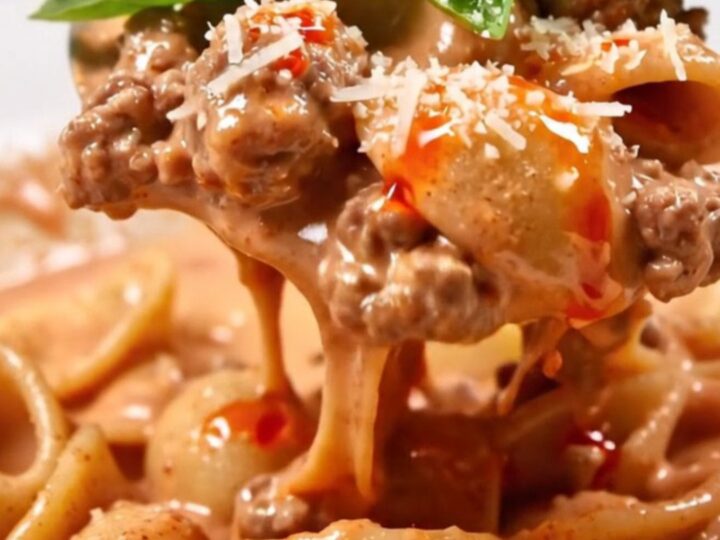
One-Skillet Vodka Bolognese Orecchiette with Spicy Sausage
- Prep
- Cook
- Total
- Serves
- 4
Bronze-die orecchiette are the little cups of the pasta world, and this sauce was built to fill them. Slow-browned ground beef and spicy Italian sausage meet a creamy pink vodka sauce, and every ear-shaped piece scoops up meat, cream and Pecorino in one bite. The whole thing comes together in about forty-five minutes, in one deep skillet, with a single pot of pasta water doing double duty from start to finish.
This recipe mashes up two Italian-American icons: a meaty Bolognese-style ragù and a silky vodka sauce. Ground beef and spicy Italian sausage are browned hard until deeply caramelized, tomato paste is fried until brick red, and a splash of vodka lifts the sauce and sharpens the tomato flavor. Heavy cream and a ladle of starchy pasta water turn everything blush pink and glossy.
Orecchiette goes straight into the pan at the end so each little cup fills with sauce, then a shower of finely grated Pecorino Romano, torn basil and a drizzle of chili oil finishes the plate. It reads like a weekend project but moves at a weeknight pace: one skillet, one pot, a short list of supermarket ingredients, and about forty-five minutes from the first sizzle to the table.
Ingredients
- 10 1/2 oz ground beef (Wagyu)
- 7 oz spicy Italian sausage, casings removed if linked
- 4 garlic cloves, minced
- 1/3 cup tomato paste
- 1/4 cup vodka
- 3/4 cup heavy cream
- 1/2 cup pasta water, reserved from cooking
- 14 oz orecchiette
- 1 cup finely grated Pecorino Romano
- Fresh basil leaves, for serving
- Chili oil, for serving
Why this recipe works
Two things build the deep, slow-cooked flavor here without hours of simmering. First, the beef and sausage are browned hard in a wide skillet, letting the meat sit long enough between stirs to develop a dark crust; those crusty browned bits stuck to the pan dissolve into the sauce later and taste like the ragù simmered all afternoon.
Second, the tomato paste is fried in the rendered fat until it darkens and smells sweetly roasted, which removes the raw, tinny edge canned paste can carry. The vodka then does quiet but real work: it loosens those browned bits, lifts the tomato's aroma and mellows the cream so the finished sauce tastes bright rather than heavy.
Orecchiette is the structural choice, not just a pretty one. Each little ear is stamped with a shallow cup and a rough surface, so it grabs a meaty sauce a smooth pasta would let slide off. Folding the drained pasta directly into the skillet, along with a splash of starchy pasta water, does the final thickening: the starch binds cream, fat and tomato into a glossy emulsion instead of a watery puddle.
Keeping the simmer lazy matters too — cream held at a gentle bubble stays smooth and velvety, while a hard boil can push it toward breaking. Finishing off the heat with finely grated Pecorino melts the cheese evenly through the sauce, leaving it creamy rather than stringy.
Notes and substitutions
Wagyu ground beef brings extra marbling and a buttery richness, but any good 80/20 ground beef works — the fat is doing the flavor work either way. Choose spicy Italian sausage sold as loose meat, or squeeze it from its casings; the fennel and chili in it season the whole pan. Tomato paste is measured generously because it carries the Bolognese character.
Use heavy cream, not half-and-half — the fat keeps the sauce stable and velvety. Pecorino Romano is salty and sharp; grate it yourself on the fine holes, since pre-grated cheese is coated with starch that can make the sauce grainy. Any vodka does the same job here, so nothing expensive is needed.
A wide, deep skillet — ten to twelve inches with high sides — is the one pan that matters: it holds the meat in a loose layer for browning and still has room to toss a full pound of pasta at the end. A large pot for the pasta and a colander round out the kit. Reserve the pasta water before draining; the starch in it is the sauce's adjuster, loosening a thick sauce or tightening a loose one. If the pan looks dry when the garlic goes in, lower the heat and stir so the garlic toasts in the rendered fat rather than scorching. Chili oil can be store-bought or a simple homemade infusion.
- ground beef (Wagyu): Any good 80/20 ground beef works here; the fat does the same flavor work, and the browning technique is identical.
- spicy Italian sausage: Use mild Italian sausage plus a pinch of crushed red pepper bloomed with the garlic, or hot sausage if the heat is wanted higher.
- Pecorino Romano: Finely grated Parmesan is a touch milder and slightly sweeter; taste the sauce after the cream goes in before adding extra salt.
- orecchiette: Rigatoni, casarecce or small shells hold the meaty pink sauce well; keep the boil at the low end of the package time.
Equipment
- large deep skillet, 10 to 12 inches with high sides
- large pot for the pasta
- box grater or microplane
- wooden spoon
- colander
- instant-read thermometer
- liquid measuring cups
Up next · Part 2 of 3
8 steps · 30 min of cooking · what to look for at each stage
Step-by-step instructions (Part 2)