Dinner · Part 3 of 3: Tips & recipe card
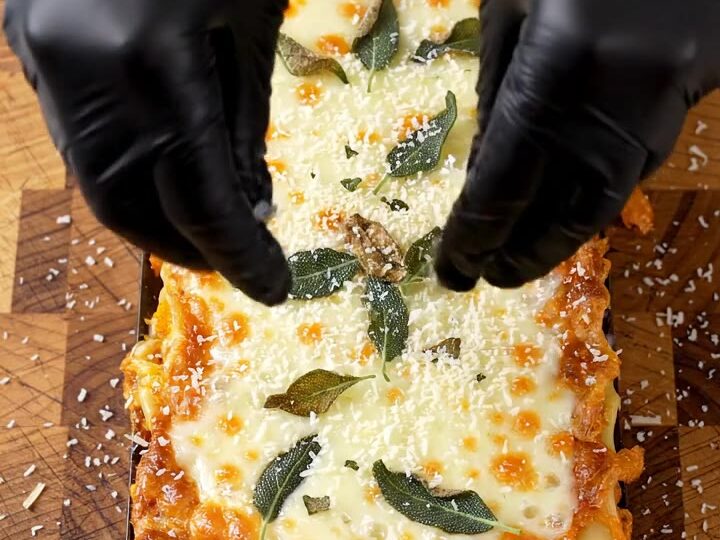
One-Skillet Butternut Sage Lasagna with Brown Butter Fontina Tips, FAQ & printable recipe
- Prep
- Cook
- Total
- Serves
- 6
Tips for success
For the best flavor, use freshly grated nutmeg and grate the Parmesan right before using. The brown butter should be a deep amber color but not burnt; if it turns too dark, it will taste bitter.
When frying the sage leaves, make sure the oil is hot enough—a leaf should sizzle immediately when added. Keep the fried leaves on paper towels to stay crisp, and sprinkle with salt while still warm.
To get clean portions, use a sharp knife or a bench scraper to cut the lasagna after it has rested. The crispy edges are a prized part of this dish, so be sure to include them when serving.
If the lasagna seems too saucy before baking, you can add a few extra minutes of baking time. Conversely, if it looks dry, add a splash of milk or broth to the sauce before layering.
Variations
- Add Sausage: For a heartier version, cook 1/2 pound of Italian sausage, crumble it, and layer it with the squash. Brown the sausage in a skillet before assembling, and drain off any excess fat.
- Swap the Squash: If butternut squash isn't available, use delicata or acorn squash. Peel and slice them thinly, and roast as directed. The cooking time may vary slightly depending on the variety.
- Make It Vegetarian: This recipe is already vegetarian, but for a vegan version, substitute the butter with olive oil, use plant-based milk, and choose vegan cheese alternatives. The flavor will differ, but the method remains the same.
- Add Spinach: Layer a handful of fresh spinach leaves between the lasagna layers for extra color and nutrients. The spinach will wilt as the lasagna bakes, adding a tender, earthy note.
Storage and make-ahead
- Fridge
- Store leftover lasagna in an airtight container in the refrigerator for up to 4 days. Reheat in a 350°F oven or microwave until hot.
- Freezer
- Freeze the fully baked and cooled lasagna for up to 3 months. Thaw overnight in the refrigerator and reheat in a 350°F oven until heated through.
- Reheat
- Reheat individual slices in the microwave for 1-2 minutes or in a 350°F oven for 10-15 minutes. Cover with foil to prevent over-browning.
Leftover lasagna can be stored in an airtight container in the refrigerator for up to 4 days. Reheat individual portions in the microwave or in a 350°F (175°C) oven until warmed through. The crispy edges will soften upon reheating, but the flavors remain delicious.
The lasagna can be assembled up to a day in advance and kept covered in the refrigerator. When ready to bake, add about 10 minutes to the baking time, as the cold skillet will take longer to heat through. The béchamel can also be made a day ahead and stored in the refrigerator; reheat gently before using.
Serving ideas
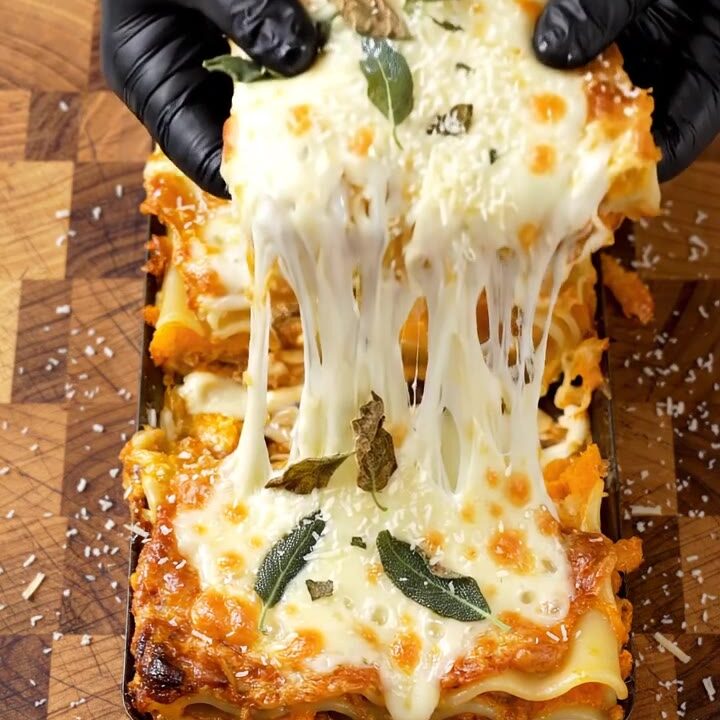
Serve the lasagna hot from the skillet, with the crispy edges and blistered cheese on full display. Use a large spoon to scoop out portions, making sure to get a bit of every layer.
A simple green salad with a lemon vinaigrette is a bright, fresh contrast to the rich, creamy lasagna. Crusty bread is also great for soaking up any extra béchamel.
This lasagna is a meal in itself, but it can be paired with roasted vegetables or a light soup for a more substantial dinner.
For a fall-inspired menu, serve with a roasted apple salad or sautéed greens. The nutty, savory flavors also pair well with a crisp white wine, such as Sauvignon Blanc or Pinot Grigio.
Frequently asked questions
Can this lasagna be made ahead of time?
What is the best way to reheat leftover lasagna?
Can this recipe be made gluten-free?
Why does the béchamel sometimes turn out lumpy?
What can be used instead of fontina cheese?
One-Skillet Butternut Sage Lasagna with Brown Butter Fontina
Ingredients
- 1 medium butternut squash (about 2 lb), peeled, seeded, and thinly sliced
- 3 tbsp olive oil, divided
- 1 tsp kosher salt, plus more for seasoning
- 1/2 tsp black pepper, plus more for seasoning
- 1/2 cup fresh sage leaves, thinly sliced, plus 12 whole leaves for frying
- 4 tbsp unsalted butter
- 1/4 cup all-purpose flour
- 3 cups whole milk
- 1/8 tsp ground nutmeg
- 12 no-boil lasagna noodles
- 2 cups shredded fontina cheese (about 8 oz)
- 1/2 cup grated Parmesan cheese, plus more for serving
- 1/2 cup vegetable oil, for frying sage
Instructions
- Heat the oven to 375°F (190°C). Peel the butternut squash, cut it in half lengthwise, and scoop out the seeds. Slice the squash into thin, even rounds, about 1/8-inch thick. Toss the slices with 2 tablespoons of olive oil, 1/2 teaspoon of salt, and 1/4 teaspoon of pepper in a large bowl. Grate the fontina and Parmesan cheeses on a box grater into separate piles. Thinly slice the sage leaves; set aside the whole leaves for frying.
- Spread the seasoned squash slices in a single layer on a baking sheet. Roast for 15 minutes, until just tender and lightly browned at the edges. Remove from the oven and set aside. Leave the oven on.
- In a medium saucepan, melt the butter over medium heat. Cook, swirling occasionally, until the butter turns golden brown and smells nutty, about 3 minutes. Add the sliced sage leaves and cook for 30 seconds. Whisk in the flour and cook for 1 minute. Gradually whisk in the milk, a little at a time, until smooth. Add the nutmeg, 1/2 teaspoon of salt, and remaining 1/4 teaspoon of pepper. Simmer gently, whisking often, until the sauce thickens enough to coat the back of a spoon, about 5 minutes.
- Spread a thin layer of the béchamel on the bottom of a 10-inch cast iron skillet. Arrange a layer of no-boil lasagna noodles, breaking them as needed to fit. Top with a third of the roasted squash slices, a third of the remaining béchamel, and a third of the fontina. Repeat the layers twice more, ending with a final layer of noodles, béchamel, and all remaining fontina. Sprinkle the Parmesan over the top.
- Place the skillet on a baking sheet to catch any overflow. Bake for 30 minutes, until the top is golden and bubbly and the noodles are tender. Increase the oven temperature to broil and broil for 2–3 minutes, until the cheese is blistered in spots. Watch closely to avoid burning.
- While the lasagna bakes, heat the vegetable oil in a small skillet over medium-high heat until shimmering. Add the whole sage leaves in a single layer and fry for 10–15 seconds, until crisp and dark green. Use a slotted spoon to transfer them to a paper towel-lined plate. Sprinkle with a pinch of salt.
- Let the lasagna rest for 10 minutes after baking. Sprinkle the fried sage leaves and extra grated Parmesan over the top. Use a large spoon to pull out a portion, making sure to get the crispy edges and long cheese pulls. Serve hot.
Estimated nutrition per serving
- Calories
- 610
- Protein
- 24 g
- Carbohydrates
- 52 g
- Fat
- 34 g
Next recipe

One-Pan Thai Red Curry Prawns with Coconut Cream
See the recipe → →This recipe is based on a short cooking video and is published under the pen name Clara Weller. It was checked before publication, but errors can slip through. Nutrition, when shown, is an estimate. Read more in our editorial policy and on our food safety page.
More recipes to try

Skillet Zucchini Lasagna Rolls with Garlic Marinara
Total time: 45 min
Butter-Basted Parmesan Cod with Wilted Spinach
Total time: 30 min
Seared Swordfish Steaks with Burst Tomato Caper Pan Sauce
Total time: 25 min
Queso Fundido Skillet Sweet Potato Bake: One-Pan Cheesy
Total time: 45 min
Honey Gochujang Shrimp and Charred Octopus Skillet
Total time: 35 min