Dinner · Part 1 of 3: Ingredients
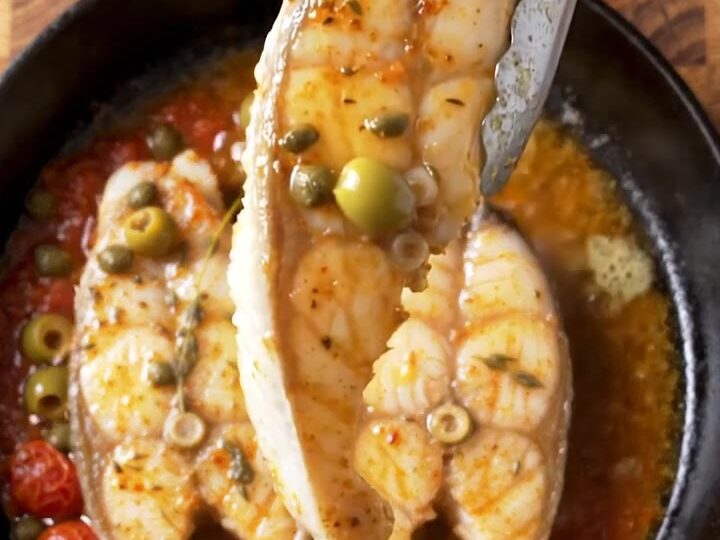
Seared Swordfish Steaks with Burst Tomato Caper Pan Sauce
- Prep
- Cook
- Total
- Serves
- 2
This one-pan swordfish dinner brings the Mediterranean to your table in under 30 minutes. Thick steaks are seared until golden, then finished with burst cherry tomatoes, briny kalamata olives, capers, and a garlic herb butter that turns into a glossy, spoonable sauce.
A shower of fresh oregano and a grating of aged sheep milk cheese add the final touch. It's the kind of meal that feels special enough for a weekend but quick enough for a weeknight.
Swordfish is a meaty, steak-like fish that stands up beautifully to high-heat searing. In this recipe, the fish is cooked in a hot cast iron skillet with olive oil and butter, then joined by sweet cherry tomatoes, salty olives, and tangy capers.
The garlic herb butter melts into the pan juices, creating a rich sauce that coats every bite. Fresh lemon and oregano brighten the dish, while a snowy pile of grated aged sheep milk cheese adds a savory finish. Serve it straight from the skillet for a rustic, impressive dinner.
Ingredients
- 2 thick swordfish steaks (about 6 oz each)
- 2 tbsp olive oil
- 1 tbsp butter
- 1 cup cherry tomatoes
- 1/2 cup kalamata olives, pitted
- 2 tbsp capers, drained
- 2 tbsp garlic herb butter
- 1 lemon, sliced into rounds
- 1/2 cup grated aged sheep milk cheese
- 2 tbsp fresh oregano leaves
- kosher salt to taste
- black pepper to taste
Why this recipe works
The high heat of a cast iron skillet creates a deep, golden crust on the swordfish while keeping the interior moist and flaky. The fish is seared quickly, so it never dries out — just a few minutes per side is all it takes. The butter and olive oil combination adds richness and helps the fish brown evenly, while the pan drippings become the base for the sauce.
The burst tomatoes, olives, and capers cook in the same pan, absorbing the fish's savory juices and the garlic herb butter. As the tomatoes blister and pop, they release their sweet-tart juices, which mingle with the briny olives and capers to create a balanced, punchy sauce.
The fresh oregano and lemon rounds brighten the whole dish, and the grated sheep milk cheese adds a nutty, salty finish that ties everything together.
Notes and substitutions
Choose thick, center-cut swordfish steaks — about 1 inch thick — so they stay juicy during searing. If the steaks are thin, reduce the cooking time slightly. Kosher salt and freshly ground black pepper are all you need to season the fish; the olives, capers, and cheese bring plenty of saltiness to the dish.
A cast iron skillet is ideal for this recipe because it holds heat well and gives the fish a beautiful crust. If you don't have cast iron, use a heavy stainless steel or carbon steel skillet.
The garlic herb butter can be store-bought or homemade: simply mix softened butter with minced garlic and chopped parsley or oregano. For the cheese, look for an aged sheep milk cheese like pecorino Romano or Manchego.
- swordfish: halibut or mahi-mahi steaks (both are firm and hold up well to searing)
- aged sheep milk cheese: pecorino romano or manchego, both aged and salty
- garlic herb butter: mix 2 tbsp softened butter with 1 minced garlic clove and 1 tsp chopped parsley
- kalamata olives: castelvetrano or green olives for a milder, buttery flavor
Equipment
- Cast iron skillet
- Box grater
- Fish spatula
- Cutting board
- Chef's knife
Up next · Part 2 of 3
6 steps · 15 min of cooking · what to look for at each stage
Step-by-step instructions (Part 2)