Dinner · Part 2 of 3: Instructions
One-Pan Tomato Mini Meatball Ditalini Pasta Step-by-step instructions
- Prep
- Cook
- Total
- Serves
- 4
Before you start
Before starting, bring a large pot of salted water to a boil and cook the ditalini pasta according to package instructions until al dente. Reserve 1/4 cup of the pasta water before draining.
Have all ingredients measured and ready: olive oil, tomatoes, meatballs, tomato paste, salt, pepper, chili flakes, and fresh basil. If using homemade meatballs, prepare them ahead of time. The skillet should be large enough to hold everything comfortably.
Ingredients at a glance (10)
- 1/2 cup olive oil
- 4 whole ripe tomatoes
- 20 seasoned ground beef mini meatballs
- 1 tbsp tomato paste
- 1 tsp salt
- Black pepper to taste
- Red chili flakes to taste
- 250 g ditalini pasta
- 1/4 cup pasta water
- Fresh basil leaves for garnish, to taste
Instructions
Simmering the Base
- Simmer Tomatoes and MeatballsHeat the olive oil in a large skillet over medium heat. Add the whole tomatoes and the seasoned ground beef mini meatballs. Cover the skillet and simmer gently for 12 minutes, until the tomatoes are soft and the meatballs are cooked through. The tomatoes will release their juices, creating a flavorful base.Look for Tomatoes are tender and the meatballs are firm and browned on the outside.Safe temperature 160°F (71°C) internal temperature (ground meat)Tip Keep the heat low enough to avoid splattering but high enough to maintain a gentle simmer.
- Peel and SeasonUsing tweezers or tongs, carefully peel the soft skins off the tomatoes. Discard the skins. Stir in the tomato paste, salt, black pepper, and red chili flakes. Continue to cook for another 2 minutes, allowing the flavors to meld.Look for The tomato skins slip off easily and the sauce smells aromatic.Tip Peeling the tomatoes gives a silkier texture; if any skin remains, it's fine to leave it.
After 12 minutes of covered simmering, the tomatoes should be very soft and the meatballs cooked through. The oil and tomato juices will have formed a fragrant, reddish sauce.
The meatballs should be browned on the outside and no longer pink inside. The kitchen will smell like warm tomato and herbs.
Building the Ragù
- Mash into RagùWith a spatula or wooden spoon, gently mash the roasted tomatoes into a silky, sweet ragù. Keep the meatballs intact. The sauce should be thick and glossy.Look for The sauce is smooth with small tomato pieces, and the meatballs remain whole.Tip Mash gently to avoid breaking the meatballs.
- Add Pasta and WaterAdd the boiled ditalini pasta and the reserved pasta water to the skillet. Stir vigorously until every pasta ring is coated with sauce and the water has been absorbed, about 2 minutes.Look for The pasta is glossy and the sauce clings to each ring.Tip The pasta water helps the sauce adhere and creates a silky texture.
Once the tomatoes are mashed, the sauce should be smooth and thick, with small tomato pieces. The meatballs remain intact. The sauce will have a glossy sheen from the olive oil. The taste should be sweet and savory, with a hint of heat from the chili flakes.
Finishing with Pasta
- Garnish and ServeRemove the skillet from the heat. Garnish with fresh basil leaves. Serve immediately, scooping a heaping spoonful of pasta with meatballs into bowls.Look for The basil is bright green and the dish is steaming hot.Tip For extra richness, drizzle a little olive oil on top before serving.
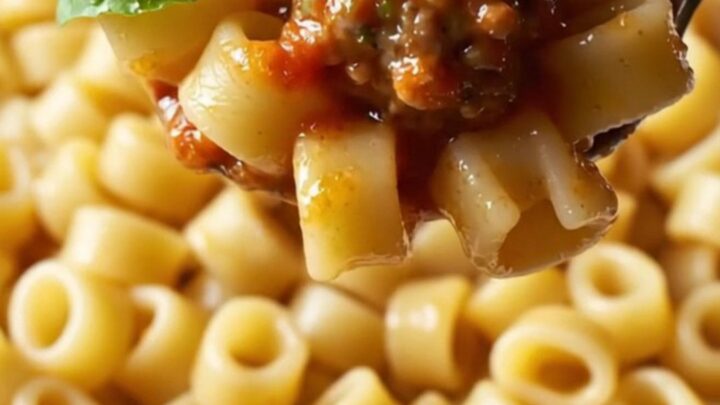
After tossing with the pasta and pasta water, every ditalini ring should be coated in a thin layer of sauce. The pasta should be al dente and the sauce should cling, not pool. The dish looks cohesive and inviting, with the meatballs nestled among the pasta.
Common mistakes
Avoid overcrowding the skillet—use a large enough pan to prevent steaming instead of simmering. Do not rush the simmering; the tomatoes need time to soften and release their juices.
When adding the pasta water, add it gradually and stir vigorously to emulsify the sauce. If the sauce becomes too thick, add more pasta water. Be careful not to over-mash the tomatoes if you prefer some texture, but the goal is a silky ragù.
How to tell it’s done
The dish is done when the tomatoes have completely collapsed into a silky sauce, the meatballs are cooked through (internal temperature reaches 160°F/71°C), and the pasta is coated and glossy.
The sauce should cling to the pasta without being watery. Taste and adjust seasoning with salt and pepper. The basil should be added just before serving to preserve its bright flavor.
- Ground meat: 160°F (71°C) in the thickest part
Up next · Part 3 of 3
4 variations · storage & make-ahead · 5 answers · printable card
Tips, FAQ & printable recipe (Part 3)← Back to the ingredients (Part 1)