Dinner · Part 3 of 3: Tips & recipe card
One-Pan Thai Red Curry Prawns with Coconut Cream Tips, FAQ & printable recipe
- Prep
- Cook
- Total
- Serves
- 4
Tips for success
For the best sear, pat the prawns dry with paper towels before adding them to the hot skillet. Moisture is the enemy of browning.
Also, don't move the prawns around for the first 2 minutes—let them develop a crust before flipping. This is the difference between golden, flavorful prawns and pale, steamed ones.
If the sauce is too thick after simmering, loosen it with a splash of coconut milk or chicken stock. Conversely, if it's too thin, let it bubble a little longer to reduce.
Taste and adjust seasoning at the end: the curry paste may be salty enough, but a pinch of salt or a drizzle of fish sauce can brighten the flavors. Always add the lime and basil off the heat to keep them fresh.
Variations
- Vegetable Curry: Replace the prawns with 2 cups of cubed firm tofu or a mix of zucchini and eggplant. Sear the vegetables until golden, then proceed with the sauce. Add a handful of baby spinach at the end for extra color.
- Extra Spicy: Add 1-2 fresh bird's eye chilies, minced, along with the curry paste. Or stir in 1 teaspoon of chili garlic sauce with the coconut milk. Garnish with extra sliced chilies for a fiery kick.
- Peanut Twist: Stir 2 tablespoons of smooth peanut butter into the sauce along with the coconut milk. Top with chopped roasted peanuts and a drizzle of coconut cream before serving. This adds a nutty richness that pairs well with the prawns.
- Herb Swap: If Thai basil is unavailable, use a combination of fresh cilantro and mint. Add them off the heat just before serving. The cool, bright herbs provide a similar freshness and aroma.
Storage and make-ahead
- Fridge
- Store in an airtight container in the refrigerator for up to 3 days.
- Freezer
- Freeze the sauce (without the prawns) in a freezer-safe container for up to 2 months.
- Reheat
- Reheat gently on the stovetop over medium-low heat, stirring occasionally, until heated through. Avoid boiling, which can toughen the prawns.
Refrigerate leftovers in an airtight container for up to 3 days. The sauce will thicken as it cools; add a splash of coconut milk or water when reheating. Store the prawns and sauce together to keep them moist. Reheat gently on the stovetop or in the microwave, being careful not to overcook the prawns.
The curry sauce can be made up to 2 days ahead. Prepare the sauce through step 5, let it cool, and refrigerate. When ready to serve, reheat the sauce, then sear the prawns and peppers fresh and add them to the simmering sauce. This keeps the prawns tender and prevents them from becoming rubbery.
Serving ideas
Serve this curry over steamed jasmine rice to soak up the rich sauce. For a low-carb option, serve over cauliflower rice or alongside a crisp green salad.
Thai basil and lime wedges on the table let everyone adjust the brightness to their liking. A side of crusty bread is also excellent for dipping into the sauce.
For a complete meal, add a simple cucumber salad with rice vinegar and a sprinkle of crushed peanuts. The cool, tangy salad balances the heat and richness of the curry.
If you like extra heat, pass additional sliced chilies at the table. This dish pairs well with a cold beer or a crisp white wine like Sauvignon Blanc.
Frequently asked questions
Can this recipe be made with chicken instead of prawns?
Why does the coconut milk sometimes separate?
Can this dish be made ahead of time?
What can be used instead of creamed coconut block?
Is this recipe gluten-free?
One-Pan Thai Red Curry Prawns with Coconut Cream
Ingredients
- 1 1/2 lb jumbo tiger prawns, peeled and deveined, tails on
- 2 red bell peppers, sliced into strips
- 1 block solid block of creamed coconut, grated
- 2 tbsp fresh ginger, grated
- 3 tbsp Thai red curry paste
- 1 1/2 cups full-fat coconut milk
- 1/2 cup Thai basil leaves, torn
- 1 red chili, thinly sliced
- 1 lime, cut into wedges
- 2 tbsp neutral oil, such as grapeseed or avocado
- 2 tbsp unsalted butter
Instructions
- Butterfly the prawns by cutting along the back, keeping the tail intact, and removing the vein. Pat them dry with paper towels. Slice the red bell peppers into 1/4-inch strips. Grate the creamed coconut block and the fresh ginger on the large holes of a box grater into separate piles.
- Place a large cast iron skillet over high heat and add the oil. Heat until the oil shimmers and a drop of water sizzles immediately when flicked in. This takes about 2 minutes.
- Add the prawns in a single layer, cut-side down, and the pepper strips. Sear without stirring for 2 minutes, then flip the prawns and cook 1 minute more. The prawns should be just pink but not fully cooked through. Transfer the prawns and peppers to a plate.
- Reduce the heat to medium. Add the Thai red curry paste to the skillet and stir constantly for 30 seconds until fragrant and slightly darkened. The paste will sizzle and release its oils.
- Stir in the grated creamed coconut and the coconut milk. Bring the mixture to a gentle simmer, scraping up any browned bits from the bottom of the pan. Let it simmer for 3 to 4 minutes, stirring occasionally, until the sauce thickens slightly and coats the back of a spoon.
- Return the seared prawns and peppers to the skillet, nestling them into the sauce. Simmer for 2 to 3 minutes, spooning the sauce over the prawns, until the prawns are opaque and cooked through. The internal temperature should reach 145°F (63°C).
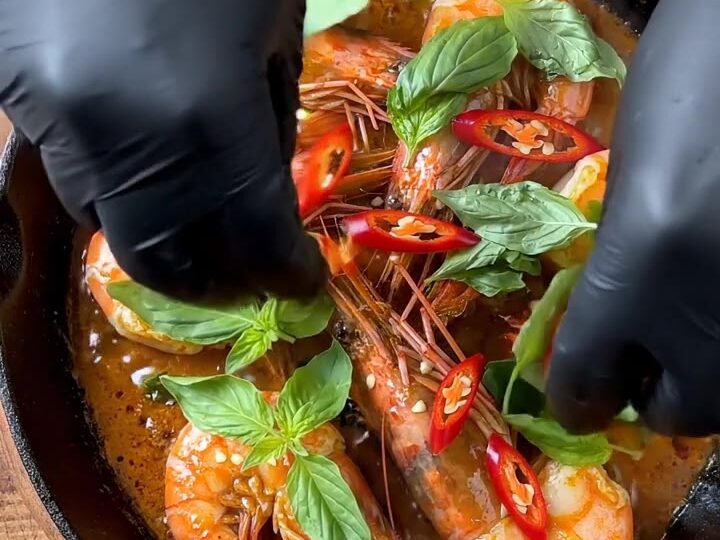
- Remove the skillet from the heat. Scatter the torn Thai basil leaves and sliced red chili over the top. Squeeze the lime wedges over the dish and add the butter, swirling the pan until the butter melts into the sauce and turns it glossy.
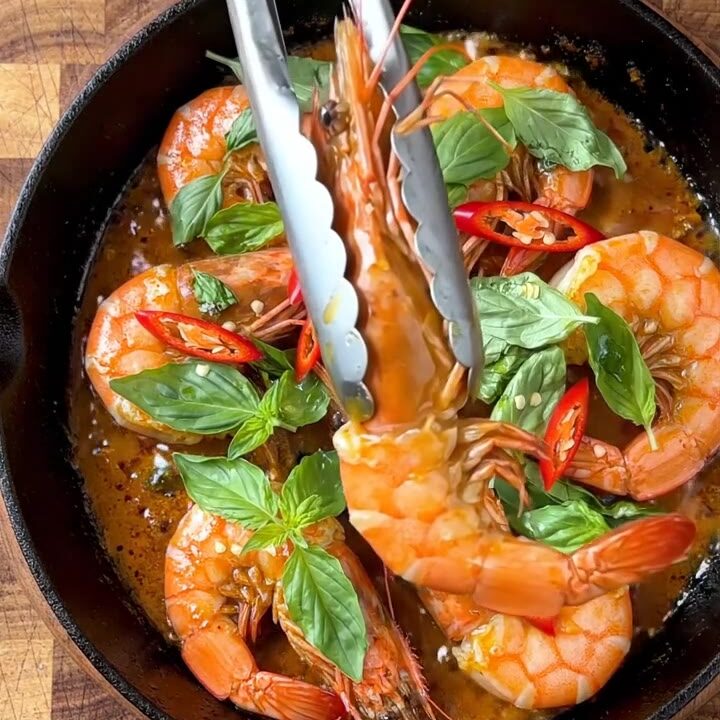
- Lift a glistening butter-basted prawn from the skillet and serve over steamed jasmine rice or with crusty bread to soak up the sauce. Spoon extra sauce over each portion. Serve hot.
Estimated nutrition per serving
- Calories
- 480
- Protein
- 32 g
- Carbohydrates
- 12 g
- Fat
- 34 g
Next recipe

Skillet Zucchini Lasagna Rolls with Garlic Marinara
See the recipe → →This recipe is based on a short cooking video and is published under the pen name Clara Weller. It was checked before publication, but errors can slip through. Nutrition, when shown, is an estimate. Read more in our editorial policy and on our food safety page.
More recipes to try
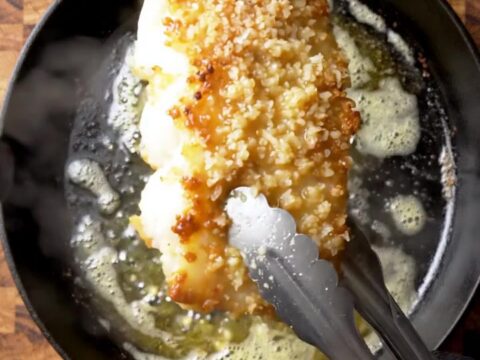
Butter-Basted Parmesan Cod with Wilted Spinach
Total time: 30 min
Seared Swordfish Steaks with Burst Tomato Caper Pan Sauce
Total time: 25 min
Queso Fundido Skillet Sweet Potato Bake: One-Pan Cheesy
Total time: 45 min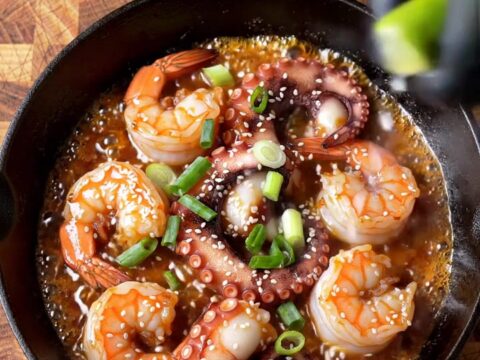
Honey Gochujang Shrimp and Charred Octopus Skillet
Total time: 35 min
Brown Butter Scallops with Squash and Parmesan
Total time: 30 min