Dinner · Part 3 of 3: Tips & recipe card
One-Pan Chimichurri Sea Bass with Garlic Butter Corn Tips, FAQ & printable recipe
- Prep
- Cook
- Total
- Serves
- 4
Tips for success
For the crispiest skin, make sure the fish is as dry as possible before searing. Pat it with paper towels and let it sit uncovered in the refrigerator for 15 minutes if you have time.
Also, preheat the cast iron skillet thoroughly — a hot pan is key. When you place the fillets in the pan, press them down gently with a spatula for a few seconds to ensure the skin makes full contact.
When making the chimichurri, chop the herbs by hand rather than using a food processor, which can bruise them and turn the sauce muddy. Let the chimichurri sit for at least 10 minutes before serving to allow the flavors to meld.
If you prefer a more pronounced garlic flavor, add an extra clove. The chimichurri can also be made a day ahead and stored in the refrigerator.
Variations
- Lemon-Herb Chimichurri: Add 1 tablespoon of lemon zest and 2 tablespoons of fresh lemon juice to the chimichurri, and reduce the red wine vinegar to 1 tablespoon. The citrus brightens the sauce and pairs well with the fish.
- Spicy Mango Salsa: Replace the chimichurri with a fresh mango salsa: diced mango, red onion, jalapeño, cilantro, lime juice, and a pinch of salt. Spoon over the cooked fish for a sweet-heat contrast.
- Smoked Paprika Butter: Add 1 teaspoon of smoked paprika to the garlic butter before searing. This gives the butter a smoky depth that complements the sweet corn and Manchego.
- Grilled Corn Version: Instead of searing the corn in the skillet, grill the corn on the cob until charred, then cut the kernels off and toss with a little butter. This adds a deeper smoky flavor.
Storage and make-ahead
- Fridge
- Store leftover sea bass and corn in an airtight container in the refrigerator for up to 2 days. Keep chimichurri separately for up to 3 days.
- Freezer
- Freezing cooked sea bass is not recommended, as it becomes dry and mushy. Freeze chimichurri in an ice cube tray for up to 1 month.
- Reheat
- Reheat sea bass gently in a skillet over low heat with a little butter. Avoid microwaving, as it can dry out the fish. Chimichurri can be served cold.
Leftover sea bass and corn can be stored in an airtight container in the refrigerator for up to 2 days. The chimichurri will keep for up to 3 days. To reheat, gently warm the fish in a skillet over low heat with a little butter, being careful not to overcook. The skin may lose its crispness, but the flavor will remain.
The chimichurri can be made up to 2 days ahead and stored in the refrigerator. The Manchego can be grated up to a day ahead and kept in an airtight container. The corn can be cut from the cob a few hours ahead. However, the sea bass should be cooked just before serving for the best texture and crisp skin.
Serving ideas
Serve the sea bass immediately after topping with chimichurri and Manchego, while the fish is still hot and the cheese is slightly melted.
The charred corn can be spooned around the fillets or served on the side. A light green salad or steamed greens would complement the dish nicely, but it's also satisfying on its own.
For a complete meal, consider serving with crusty bread to soak up the garlic butter and chimichurri juices. A crisp white wine, such as Sauvignon Blanc or Albariño, pairs beautifully with the herbaceous flavors.
This dish is best enjoyed right away, as the fish will continue to cook and the skin will soften if left to sit.
Frequently asked questions
Can this recipe be made with frozen sea bass?
What can be used instead of Manchego cheese?
How do you keep the sea bass skin from sticking to the pan?
Can the chimichurri be made ahead of time?
Is this dish spicy?
One-Pan Chimichurri Sea Bass with Garlic Butter Corn
Ingredients
- 4 sea bass fillets (6 oz each), skin-on
- 1 cup fresh flat-leaf parsley, finely chopped
- 1/2 cup fresh cilantro, finely chopped
- 4 cloves garlic, minced
- 1 red chili, finely chopped (seeds removed for less heat)
- 1/3 cup extra-virgin olive oil
- 2 tbsp red wine vinegar
- 1/2 tsp kosher salt
- 4 oz aged Manchego cheese, grated on a box grater
- 3 ears sweet corn, kernels cut from the cob
- 4 tbsp unsalted butter
- 4 cloves garlic, thinly sliced
- Kosher salt, for seasoning, to taste
- Freshly ground black pepper, to taste
Instructions
- In a medium bowl, combine the finely chopped parsley, cilantro, minced garlic, red chili, olive oil, red wine vinegar, and 1/2 teaspoon kosher salt. Stir until well blended. Set aside to let the flavors meld. Grate the aged Manchego on the large holes of a box grater into a fresh pile. Pat the sea bass fillets dry with paper towels. Using a sharp knife, score the skin side in a crosshatch pattern, about 1/4-inch deep, without cutting into the flesh.
- Take the firm block of aged Manchego and grate it on a box grater into a fresh pile. Use the large holes for a light, fluffy texture. Set aside.
- Place a large cast iron skillet over medium-high heat. Add the butter and sliced garlic. When the butter foams, add the sea bass fillets skin-side down. Press gently with a spatula for 10 seconds to ensure even contact. Add the corn kernels around the fillets. Cook without moving for 3–4 minutes, until the skin is golden brown and crisp. The fish should flake easily with a fork and reach 145°F (63°C) at the thickest part.
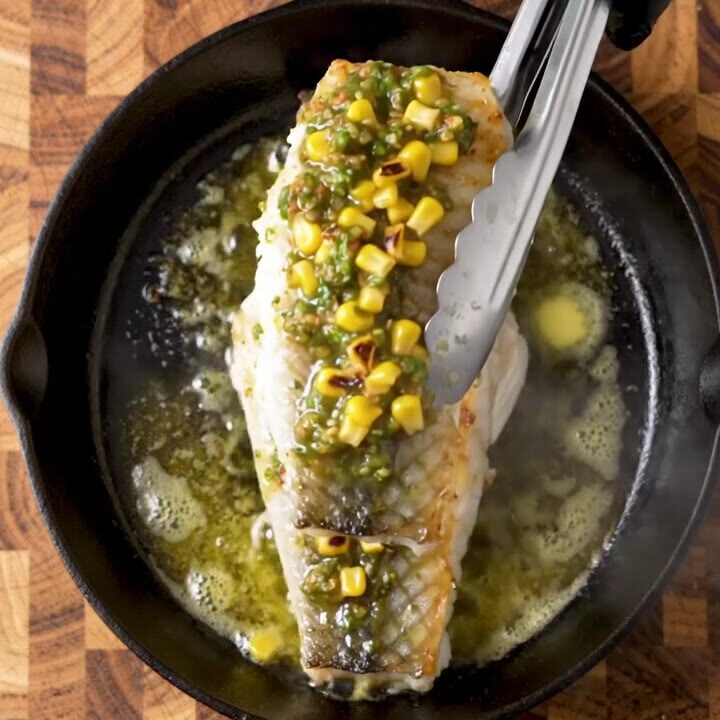
- Spoon the foaming garlic butter over the tops of the fillets as they cook. Continue cooking until the flesh is opaque and flakes easily. Transfer the fillets to a serving platter, leaving the corn in the skillet to keep warm.
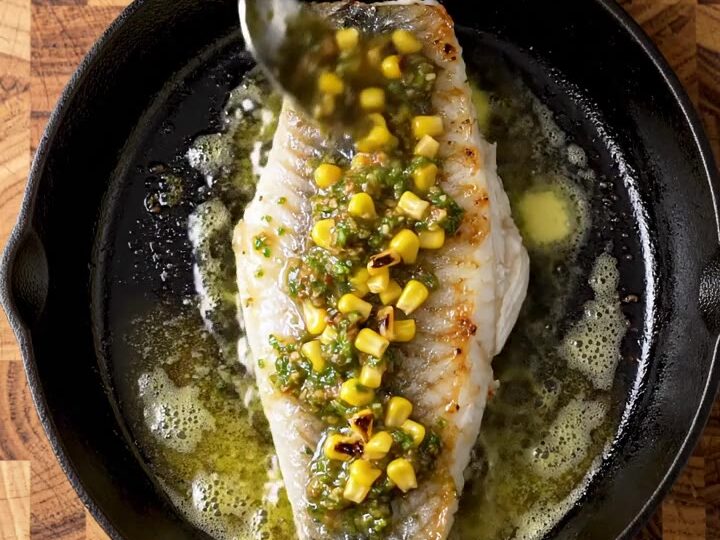
- Spoon the vibrant emerald chimichurri generously over the sea bass fillets. Sprinkle the grated Manchego over the top, letting it melt slightly from the residual heat. Add the charred corn around the fish. Lift a glistening butter-basted piece to serve.
Estimated nutrition per serving
- Calories
- 520
- Protein
- 35 g
- Carbohydrates
- 18 g
- Fat
- 34 g
Next recipe
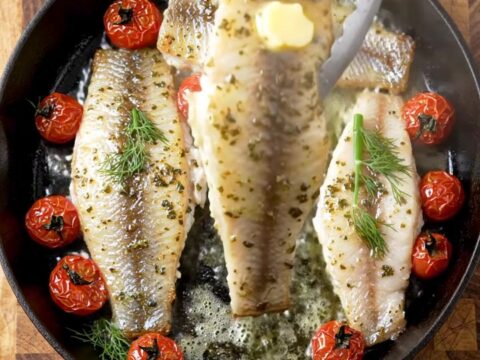
Crispy Skillet Arctic Char with Garlic Dill Butter
See the recipe → →This recipe is based on a short cooking video and is published under the pen name Clara Weller. It was checked before publication, but errors can slip through. Nutrition, when shown, is an estimate. Read more in our editorial policy and on our food safety page.
More recipes to try

One-Skillet Butternut Sage Lasagna with Brown Butter Fontina
Total time: 1 h 25 min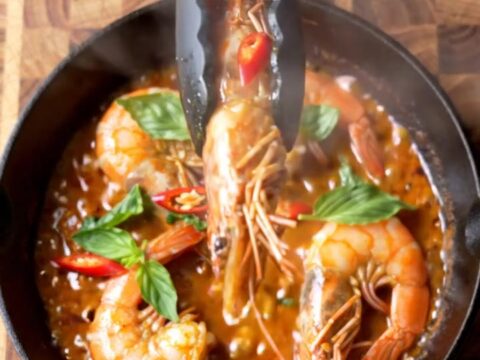
One-Pan Coconut Curry Prawns with Thai Basil
Total time: 25 min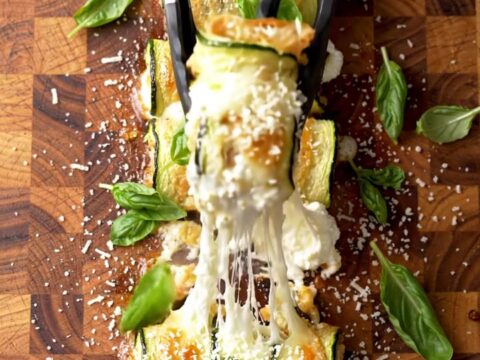
Skillet Zucchini Lasagna Rolls with Ricotta and Mozzarella
Total time: 55 min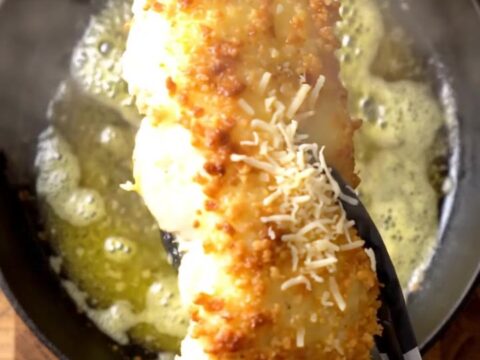
Parmesan Crusted Cod with Lemon Garlic Butter
Total time: 25 min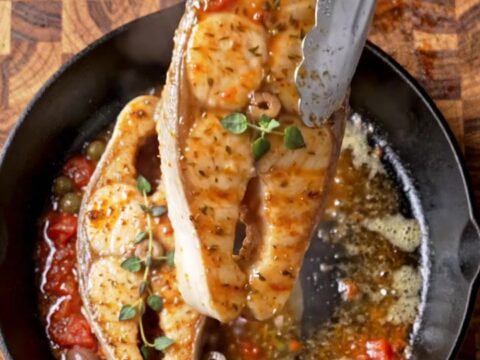
Seared Swordfish with Burst Tomato Caper Sauce
Total time: 25 min