Dinner · Part 2 of 3: Instructions
One-Pan Cheesy Steamed Vegetable Pasta Step-by-step instructions
- Prep
- Cook
- Total
- Serves
- 4
Before you start
Before starting, gather all ingredients and equipment. Fill a kettle with water and bring it to a boil—you'll need 1 cup for the pasta. Wash the vegetables and pat them dry. Peel the onions.
Have a large skillet with a tight-fitting lid ready. Shred the mozzarella if not already shredded, and chop the parsley. Set out measuring cups and a wooden spoon. This mise en place ensures the cooking process flows smoothly.
Ingredients at a glance (10)
- 1 large whole tomato
- 1 whole green zucchini
- 1 slender eggplant
- 2 peeled onions
- 1/4 cup olive oil
- 1/2 cup water
- 10 oz tagliatelle pasta
- 1 cup boiling water
- 1 1/2 cups shredded kashar mozzarella cheese
- 1/4 cup chopped fresh parsley
Instructions
Steam the Vegetables
- Steam the VegetablesPlace the whole tomato, zucchini, eggplant, and peeled onions in a large skillet. Add the olive oil and water. Cover with a glass lid and bring to a simmer over medium heat. Steam for 10 minutes, or until the vegetables are fork-tender. Remove the lid and let cool slightly. Use tweezers or tongs to peel away the loosened skins from the tomato, zucchini, and eggplant. Discard the skins.Look for Vegetables are soft and easily pierced with a fork; skins slip off easily.Tip Keep the heat medium so the water simmers gently and doesn't evaporate too quickly.
- Mash into SauceUsing a fork or potato masher, gently mash the steamed vegetables in the skillet until they form a chunky sauce. The onions will break down, and the tomato will release its juices. Stir to combine with the olive oil and any remaining liquid.Look for A thick, rustic sauce with visible vegetable pieces.Tip Don't over-mash; leaving some texture adds heartiness.
After steaming, the vegetables should be fork-tender and the skillet should have a small amount of flavorful liquid. The skins will be loose and easy to peel.
The aroma is sweet and vegetal. Check that the vegetables are soft enough to mash easily; if not, steam for a few more minutes.
Cook the Pasta in the Sauce
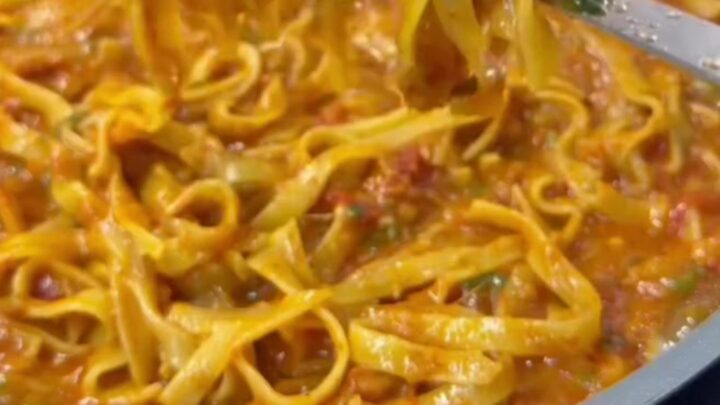
- Cook the Pasta in the SauceNestle the tagliatelle ribbons directly into the vegetable sauce. Pour in the boiling water. Increase heat to medium-high and bring to a gentle boil. Cook, stirring frequently, for 8-10 minutes, until the pasta is tender and has absorbed most of the liquid, creating a glossy sauce that coats the noodles.Look for Pasta is al dente and the sauce clings to each ribbon.Tip Stir often to prevent sticking; add a splash more water if the pan looks dry before pasta is done.
The pasta should be tender and the sauce should be glossy and clinging to the noodles. The liquid will have reduced and thickened. The skillet will emit a gentle bubbling sound. Check that the pasta is cooked to your liking and the sauce is not too dry.
Finish with Cheese and Parsley
- Finish with Cheese and ParsleyRemove the skillet from the heat. Sprinkle the shredded kashar mozzarella evenly over the pasta. Cover for 1-2 minutes to let the cheese melt into gooey ribbons. Uncover, scatter the chopped fresh parsley over the top, and serve immediately.Look for Cheese is melted and stretchy; parsley adds fresh color.Tip Covering traps steam and melts the cheese without overcooking the pasta.
The cheese should be melted and stretchy, forming gooey ribbons when lifted. The parsley adds a fresh, green contrast. The dish looks inviting with melted cheese and vibrant herbs. Check that the cheese is fully melted and the parsley is evenly distributed.
Common mistakes
One common mistake is using a skillet that's too small, causing the pasta to stick or cook unevenly. Another is adding too much water, resulting in a thin, soupy sauce—start with 1 cup and add more only if needed.
Overcooking the vegetables can make them mushy, but they should be soft enough to mash. Skipping the peeling step leaves tough skins that ruin the texture. Finally, stirring the pasta too infrequently can cause it to clump; stir every minute or so.
How to tell it’s done
The dish is done when the tagliatelle is tender but still has a slight bite (al dente), and the sauce has thickened enough to coat the noodles. The cheese should be fully melted and stretchy, and the parsley should be bright green.
The vegetables should be completely soft and have melded into the sauce. Taste a strand of pasta to check for doneness; it should be cooked through but not mushy. The sauce should cling to the pasta without being watery.
Up next · Part 3 of 3
4 variations · storage & make-ahead · 5 answers · printable card
Tips, FAQ & printable recipe (Part 3)← Back to the ingredients (Part 1)