Dinner · Part 1 of 3: Ingredients
One-Pan Cheesy Steamed Vegetable Pasta
- Prep
- Cook
- Total
- Serves
- 4
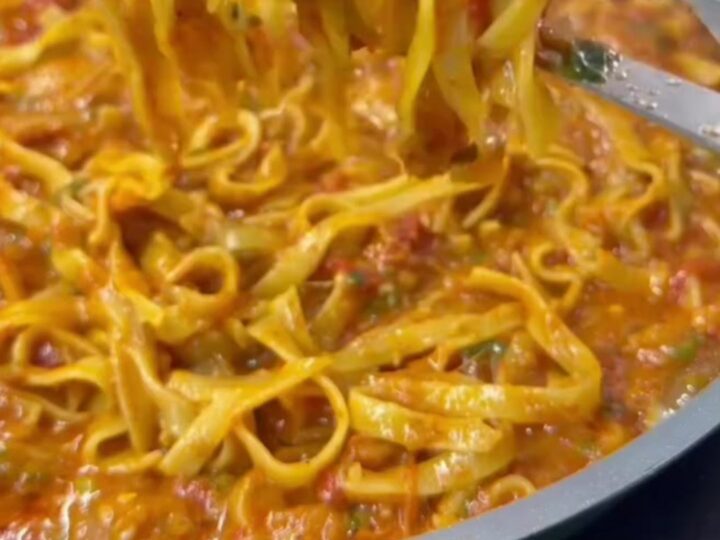
This one-pan pasta turns humble vegetables into a silky, comforting sauce. Whole tomatoes, zucchini, eggplant, and onions steam until tender, then become the base for tagliatelle that cooks right in the skillet. A blanket of melted kashar mozzarella and fresh parsley makes it irresistibly cheesy. It's a complete dinner with minimal cleanup and maximum flavor.
Imagine a skillet where vegetables soften into a rich, savory sauce, pasta cooks directly in that sauce, and melted cheese pulls into golden ribbons. This recipe delivers exactly that—a streamlined, one-pan meal that feels both rustic and indulgent.
The technique of steaming whole vegetables preserves their natural sweetness and creates a silky texture without hours of simmering. Tagliatelle absorbs the flavorful liquid as it cooks, becoming glossy and satisfying. Finished with a generous layer of mozzarella and fresh parsley, this dish is a weeknight hero that tastes like a slow-simmered Sunday supper.
Ingredients
- 1 large whole tomato
- 1 whole green zucchini
- 1 slender eggplant
- 2 peeled onions
- 1/4 cup olive oil
- 1/2 cup water
- 10 oz tagliatelle pasta
- 1 cup boiling water
- 1 1/2 cups shredded kashar mozzarella cheese
- 1/4 cup chopped fresh parsley
Why this recipe works
Steaming whole vegetables in a covered skillet with a little oil and water is the key. The trapped steam gently cooks the vegetables until they're fork-tender, concentrating their flavors and creating a soft, spreadable texture.
Peeling away the skins afterward removes any tough or bitter parts, leaving only the sweet, tender flesh. This method avoids the need for chopping and sautéing, saving time and ensuring even cooking. The resulting sauce is naturally thick and silky, coating the pasta beautifully without any cream or tomato paste.
Cooking the tagliatelle directly in the vegetable sauce is a clever one-pot trick. As the pasta simmers in the flavorful liquid, it releases starch, which thickens the sauce and helps it cling to the noodles.
The boiling water added at this stage provides the necessary moisture for the pasta to cook, while the vegetables break down further, creating a cohesive, glossy sauce. This technique eliminates the need for a separate pot of salted water and infuses every strand with vegetable flavor. The result is a deeply integrated dish where pasta and sauce become one.
Notes and substitutions
Kashar mozzarella is a Turkish cheese with a mild, milky flavor and excellent melting properties. If unavailable, low-moisture mozzarella or provolone works beautifully. The cheese should be shredded fresh for the best melt and stretch. Fresh parsley adds a bright, herbaceous finish that balances the richness of the cheese. Use flat-leaf parsley for a more robust flavor.
Tagliatelle is a wide, ribbon-shaped pasta that holds sauce well. Fettuccine or pappardelle are excellent substitutes. The pasta cooks directly in the sauce, so it absorbs the vegetable flavors and becomes extra savory.
Ensure the skillet is large enough to hold the pasta and liquid without overcrowding; a 12-inch skillet works well. If the sauce seems too thick before the pasta is done, add a splash of hot water.
- kashar mozzarella: low-moisture mozzarella or provolone, shredded
- tagliatelle: fettuccine, pappardelle, or wide egg noodles
- zucchini: yellow squash, sliced
- eggplant: 1 large bell pepper, seeded and quartered
Equipment
- Large skillet with lid
- Culinary tweezers or tongs
- Cutting board
- Chef's knife
- Measuring cups
- Wooden spoon
Up next · Part 2 of 3
4 steps · 20 min of cooking · what to look for at each stage
Step-by-step instructions (Part 2)