Dinner · Part 3 of 3: Tips & recipe card
Nobu-Style Miso Honey Glazed Black Cod Tips, FAQ & printable recipe

- Prep
- Cook
- Total
- Serves
- 4
Tips for success
For the most authentic flavor, allow the fish to marinate in the glaze for at least 24 hours in the refrigerator.
This allows the miso to penetrate the flesh, enhancing the depth of flavor and ensuring the fish remains incredibly moist and tender throughout the high-heat cooking process.
When broiling, keep a close eye on the oven. Because of the high sugar content in the honey and mirin, the glaze can transition from perfectly caramelized to burnt in seconds.
If the edges begin to darken too quickly, move the skillet to a lower rack or reduce the broiler intensity if your oven allows.
Variations
- Spicy Miso Cod: Add one teaspoon of chili paste or sriracha to the glaze mixture before whisking. This adds a subtle, warming heat that balances the sweetness of the honey and provides a modern twist on the classic Nobu flavor profile.
- Citrus Infused Miso: Stir in one teaspoon of freshly grated ginger and a squeeze of fresh lime juice to the glaze. The acidity and brightness from the citrus and ginger provide a vibrant, refreshing lift to the richness of the black cod.
Storage and make-ahead
- Fridge
- Keep leftovers in a sealed container in the refrigerator for no more than 2 days.
- Reheat
- Reheat gently in an oven or toaster oven at 300°F until warmed through, being careful not to overcook the delicate fish.
Store any leftovers in an airtight container in the refrigerator for up to two days. Because of the delicate nature of the fish, it is best consumed as soon as possible. Do not attempt to store the fish for longer, as the texture will degrade and the glaze may become overly salty.
The miso glaze can be prepared up to three days in advance and kept in the refrigerator. The fish can also be coated in the glaze and kept in the refrigerator for up to 24 hours before cooking, which will help the flavors develop more deeply before the final sear.
Serving ideas
Serve the black cod hot, directly from the skillet or transferred to a warm serving platter.
It pairs beautifully with a side of steamed jasmine rice and lightly blanched bok choy or snap peas, which provide a fresh, crunchy contrast to the rich, buttery, and sweet profile of the caramelized fish.
For a refined presentation, garnish the dish with a sprinkle of toasted sesame seeds or finely sliced scallions.
The sharp, oniony bite of the scallions cuts through the sweetness of the miso honey glaze, while the sesame seeds add a subtle nuttiness that complements the overall Japanese-inspired flavor profile.
Frequently asked questions
Can other types of fish be used for this recipe?
Why does the glaze burn so quickly?
Is it necessary to marinate the fish?
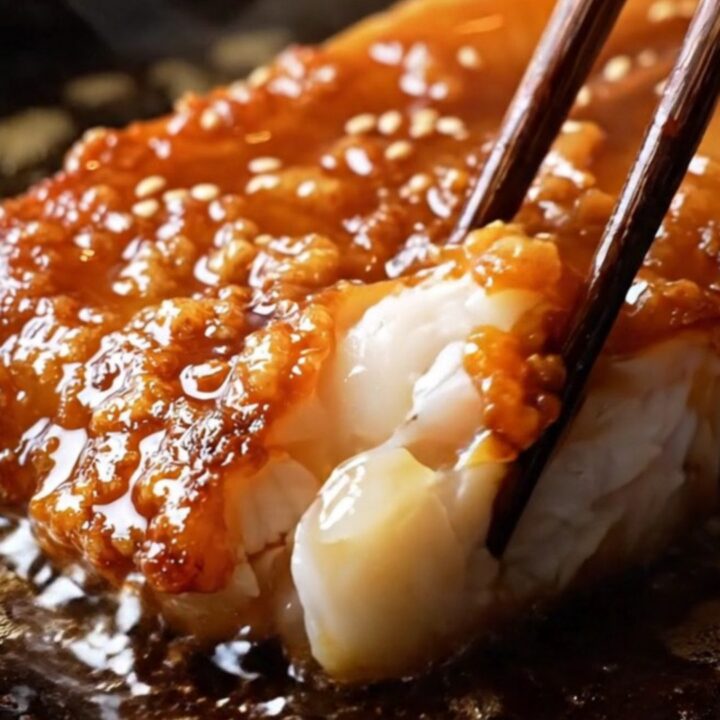
Nobu-Style Miso Honey Glazed Black Cod
Ingredients
- 1/3 cup sweet white Saikyo miso
- 1/4 cup mirin
- 1/4 cup sake
- 3 tbsp honey
- 4 fillets black cod (6 ounces each)
Instructions
- In a small saucepan over low heat, combine the sweet white Saikyo miso, mirin, sake, and honey. Whisk continuously until the mixture is smooth, well-combined, and glossy. Remove from heat and allow it to cool slightly before coating the fish fillets.
- Pat the black cod fillets dry with paper towels. Generously coat each of the four 6-ounce fillets with the prepared miso honey glaze. Ensure the fish is evenly covered on all sides to allow for a uniform caramelization during the cooking process.
- Preheat the oven to 400°F. Place an oven-safe skillet over medium-high heat and sear the coated cod fillets for 2 minutes. Transfer the skillet to the oven and broil at 500°F for 5 minutes, or until the internal temperature reaches 145°F (63°C). The glaze should be bubbling and transformed into a deep, caramelized mahogany bark.
Estimated nutrition per serving
- Calories
- 420
- Protein
- 28 g
- Carbohydrates
- 22 g
- Fat
- 24 g
- Fiber
- 0.5 g
- Sugar
- 18 g
- Sodium
- 850 mg
Next recipe

Cast-Iron Garlic Butter Lobster Tails in 10 Minutes
See the recipe → →This recipe is based on a short cooking video and is published under the pen name Clara Weller. It was checked before publication, but errors can slip through. Nutrition, when shown, is an estimate. Read more in our editorial policy and on our food safety page.
More recipes to try

Creamy Tuscan Sun-Dried Tomato Salmon with Crispy Skin
Total time: 30 min
Crispy Prosciutto-Wrapped Goat Cheese Stuffed Chicken
Total time: 33 min
Elegant French Poulet à l'Estragon with Creamy Dijon Tarragon Sauce
Total time: 30 min
15-Minute Teriyaki Pineapple Cashew Chicken Skillet
Total time: 20 min
Honey Balsamic Bruschetta Chicken Skillet
Total time: 35 min