Dinner · Part 3 of 3: Tips & recipe card
Montreal Duck-Fat Poutine with Bone-Marrow Gravy Tips, FAQ & printable recipe
- Prep
- Cook
- Total
- Serves
- 4
Tips for success
Batch discipline is the whole game with the fries. Frying too many batons at once drops the fat temperature by 20 to 30 degrees, and the difference shows up immediately as limp, greasy fries.
Keep each batch to a single loose layer, wait for the thermometer to climb back to target between batches, and move the fries to the rack the second they leave the fat — hot surfaces grab any final seasoning far better than cooled ones. If the fry temperature swings, a lid placed briefly over the pan helps it recover without overshooting.
The squeak in cheese curds is a freshness marker, so buy them as close to cooking day as possible and never refrigerate the portion destined for the skillet — room-temperature curds soften and stretch under the gravy while cold ones stay stubborn and firm.
For the gravy, crack the peppercorns coarsely rather than grinding them fine: the cracked pieces bloom slowly in the simmer and give the sauce its characteristic bite without turning it harsh or dusty.
Variations
- Smoked Gravy: Swap the Worcestershire for a teaspoon of smoked paprika and use smoked beef stock for a campfire-leaning, deeper gravy.
- Garlic-Lover's Skillet: Add 3 minced garlic cloves to the roux in the last minute of browning so they toast without burning.
- Breakfast Poutine: Top the finished skillet with a fried egg per person; the yolk joins the gravy as an extra sauce.
- Spicy Peppercorn: Double the cracked black pepper and add a pinch of cayenne with the stock for a sinus-clearing Montreal diner heat.
Storage and make-ahead
- Fridge
- Components only: gravy 3 days, fries 3 days, curds 2 days — always store separately.
- Freezer
- Freeze the gravy up to 2 months; fries and curds do not freeze well.
- Reheat
- Re-crisp fries at 425°F on a rack 8 minutes; rewarm gravy gently, whisking, with a splash of stock.
Leftovers are best eaten fresh, but they keep: cool the components no more than 2 hours, then refrigerate the fries, curds and gravy in separate containers for up to 3 days. Stored assembled, the fries surrender their crust to the gravy and turn soft — still tasty, a different dish. Separately stored, the fries can be re-crisped and the gravy rewarmed for a near-fresh rebuild the next day.
The gravy is the ideal make-ahead component: it can be made up to 3 days in advance and actually deepens in flavor overnight in the refrigerator. Rewarm it gently over low heat, whisking, and loosen with a splash of stock if it has tightened.
The potatoes can be cut and blanched a day ahead — dry them well and refrigerate uncovered on the rack so their surfaces dry out even further, which only improves the par-fry. The par-fry itself can also be done a few hours ahead; spread the fries on the rack and let them sit, then finish at 385°F (196°C) right before serving.
Serving ideas
Serve the poutine straight from the cast-iron skillet, set on a trivet at the center of the table with forks and a small pitcher of extra hot gravy alongside.
The theatrical pour is part of the pleasure — bring the skillet out with the curds scattered and the gravy in the pitcher, then flood it in front of everyone so the curds stretch on cue. Cold beer, a sharp acidic salad or simple dill pickles cut through the richness better than any side dish.
Portion it generously: this recipe serves four as a hearty main, or six as a shared late-night snack. Keep napkins close and eat it fast — poutine is at its absolute peak in the first five minutes, while the fries still shatter and the curds still pull. Re-pour any pooled gravy from the bottom of the skillet over the last servings.
Frequently asked questions
Why do the cheese curds need to be at room temperature?
Can the fries be fried in something other than duck fat?
Why is the roux cooked so dark?
How far ahead can the gravy be made?
What makes poutine curds squeak in the first place?
Montreal Duck-Fat Poutine with Bone-Marrow Gravy

Ingredients
- 1 3/4 lb Russet potatoes, cut into 1 cm batons
- 1 1/2 cups duck fat, for frying
- 8 cups cold water, for blanching the potatoes
- 3 tbsp unsalted butter
- 1/4 cup all-purpose flour
- 2 cups beef-and-veal stock
- 1 tsp cracked black peppercorns
- 2 tsp Worcestershire sauce
- 8 oz white cheddar cheese curds, at room temperature
Instructions
- Melt the butter in a saucepan over medium heat. Whisk in the flour and keep it moving for 4 to 5 minutes, until it turns deep brown and smells toasty, like toasted hazelnuts. This color is the backbone of the gravy — pale roux tastes raw, so be patient and let it darken slowly without burning.
- Pour in the beef-and-veal stock a little at a time, whisking hard after each addition so no lumps form. Add the cracked black peppercorns and Worcestershire sauce, then simmer gently for 10 to 15 minutes, stirring now and then, until the gravy coats the back of a spoon, reads glossy and dark brown, and registers at least 145°F (63°C). Let it rest off the heat for at least 3 minutes before holding it warm.
- Lower the heat to its minimum and cover the pan. The gravy should stay hot, around 200°F, while the fries cook — hot enough to soften the curds on contact but not boiling, which would thin it back out and dull the flavor.
- Peel the Russet potatoes and cut them into batons about 1 cm thick, keeping every piece the same size so they cook evenly. Drop them into a bowl of cold water as each one is cut to rinse off surface starch, which is what makes fries clump and go limp later.
- Bring a pot of water to a boil, add the batons, and blanch for 5 minutes until the edges look just tender. Drain well, spread them on a rack, and pat every piece completely dry with towels. Any surface water left now will splatter violently when the potatoes hit hot fat.
- Heat the duck fat in a deep saucepan to 300°F. Fry the dried batons in batches for 6 to 8 minutes, until they look pale, blistered and floppy but take on no color. Lift them out with a spider and spread them on the rack to cool and rest for 10 minutes.
- Let the par-fried fries sit at room temperature for 10 minutes while the fat heats toward the finishing temperature. This pause lets steam escape from the centers and sets up the crust, so the second fry turns them glass-crisp instead of just golden.
- Raise the duck fat to 385°F (196°C). Fry the rested batons for about 3 minutes, in batches, until deep golden and glass-crisp, rattling against the spider. Transfer them straight to the rack the moment each batch leaves the fat so the crust stays hard and hot for assembly.
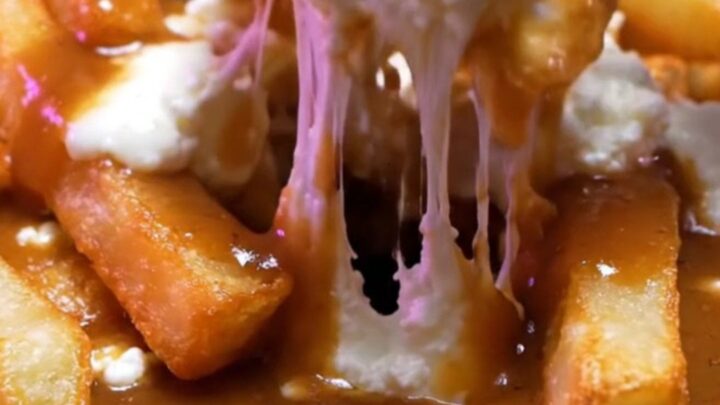
- Transfer the hot fries to a cast-iron skillet and scatter the room-temperature cheese curds evenly over the top. Piling them while everything is hot is what makes the curds soften on their edges and turn stretchy, while their centers keep that signature squeak.
- Bring the skillet to the table and pour the hot gravy over everything in a slow, steady stream so it soaks between the fries and melts the curds. Serve immediately with forks — poutine waits for no one, and the contrast of crisp fries and soft curds fades fast.
Estimated nutrition per serving
- Calories
- 690
- Protein
- 18 g
- Carbohydrates
- 60 g
- Fat
- 42 g
- Sodium
- 980 mg
Next recipe
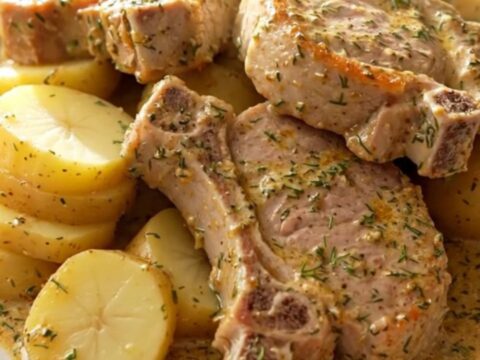
Crockpot Creamy Dill Pork Chops and Potatoes — One-Pot Dinner
See the recipe → →This recipe is based on a short cooking video and is published under the pen name Clara Weller. It was checked before publication, but errors can slip through. Nutrition, when shown, is an estimate. Read more in our editorial policy and on our food safety page.
More recipes to try
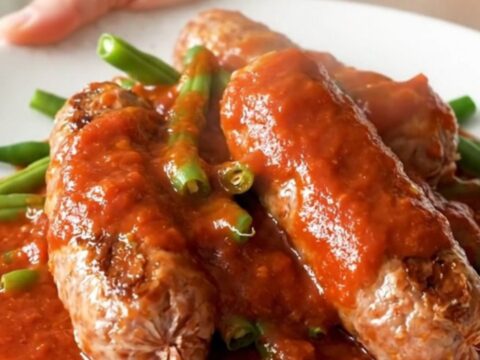
Crockpot Italian Sausage and Green Beans in Red Sauce — One Pot, Zero Fuss
Total time: 4 h 10 min
Crockpot Cream Cheese Taco Chicken, Set It and Forget It
Total time: 4 h 10 min
Crockpot Cheddar Scalloped Potatoes: Easy One-Pot Comfort Food
Total time: 4 h 15 min
Slow Cooker Pork Chop Potato Tot Casserole for Easy Dinners
Total time: 4 h 13 min
Crockpot Greek Turkey Meatballs with Tomatoes and Feta
Total time: 4 h 5 min