Dinner · Part 3 of 3: Tips & recipe card
Miso Butter Halibut with Shiitake and Bok Choy Tips, FAQ & printable recipe
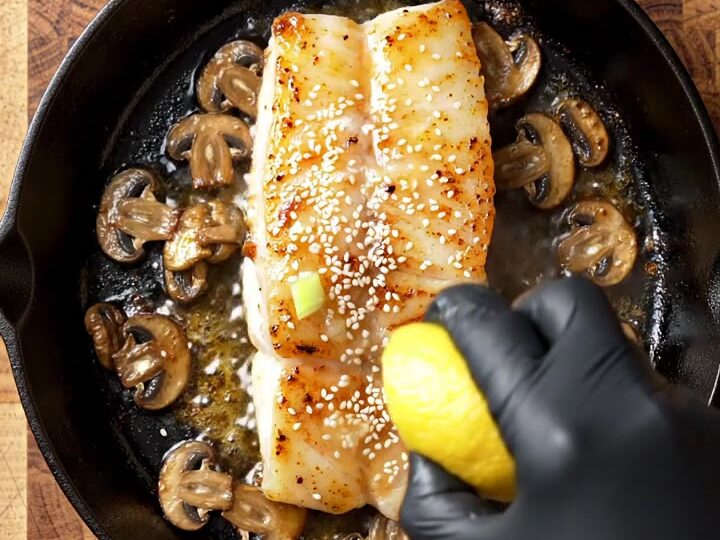
- Prep
- Cook
- Total
- Serves
- 4
Tips for success
For the best sear, make sure the halibut fillets are very dry before adding them to the hot skillet. Pat them with paper towels just before cooking.
If the fish sticks to the pan, it likely needs more time to develop a crust; wait another 30 seconds before trying to flip. Use a fish spatula to gently turn the fillets without breaking them.
When basting the fish, tilt the skillet slightly so the miso butter pools at one side. This makes it easier to spoon the butter over the fish. Keep the butter moving to prevent it from burning. If the butter starts to brown too quickly, lower the heat slightly. The sauce should be a rich amber color, not dark brown.
Variations
- Salmon with Miso Butter: Substitute salmon fillets for halibut. Cook skin-side down for 4-5 minutes, then flip and baste with the miso butter. Salmon cooks slightly faster, so adjust the time accordingly.
- Miso Butter Cod: Use cod fillets instead of halibut. Cod is thinner and cooks quickly, so reduce the cooking time to 2-3 minutes per side. The miso butter enhances the delicate flavor of cod.
- Vegetable-Only Miso Butter: For a vegetarian version, skip the fish and increase the mushrooms and bok choy. Sear the vegetables and baste with the miso butter until tender. Serve over rice for a satisfying meatless meal.
- Spicy Miso Butter: Add 1 teaspoon of sriracha or gochujang to the miso butter for a spicy kick. This works well with halibut or salmon and adds a nice heat to the dish.
Storage and make-ahead
- Fridge
- Store leftovers in an airtight container in the refrigerator for up to 2 days.
- Freezer
- Freezing cooked halibut is not recommended, as the texture may become dry and mealy. Freeze the miso butter separately for up to 1 month.
- Reheat
- Reheat leftover halibut in a skillet over low heat with a splash of water or broth. Cover and heat gently until warmed through, about 5 minutes.
Leftover miso butter halibut can be stored in an airtight container in the refrigerator for up to 2 days. The fish may lose some of its crispness, but the flavor will remain.
Reheat gently in a skillet over low heat, adding a splash of water or broth to loosen the sauce. Avoid microwaving, as it can make the fish rubbery.
The miso butter can be made up to 3 days ahead and stored in the refrigerator. Let it soften at room temperature before using. The vegetables can be prepped a few hours in advance and kept in the refrigerator. The fish should be scored and seasoned just before cooking to maintain its texture.
Serving ideas
Serve the miso butter halibut immediately after cooking, with the bubbling sauce spooned over the top. Steamed jasmine rice or sushi rice makes an excellent base to soak up the savory butter.
For a low-carb option, serve with cauliflower rice or simply enjoy the fish and vegetables on their own. A side of pickled cucumbers or a simple green salad would add a refreshing contrast.
This dish is elegant enough for a dinner party but quick enough for a weeknight. Pair it with a crisp white wine like Sauvignon Blanc or a light sake.
The miso butter also pairs well with other seafood like salmon or scallops. Leftover sauce can be drizzled over roasted vegetables or grilled chicken for an extra burst of flavor.
Frequently asked questions
Can this recipe be made with frozen halibut?
What can be used instead of white miso?
Can the miso butter be made ahead of time?
Why does the fish stick to the pan?
Can this dish be made without a cast iron skillet?
Miso Butter Halibut with Shiitake and Bok Choy

Ingredients
- 4 Pacific halibut fillets (6 oz each)
- 8 oz shiitake mushrooms
- 4 baby bok choy, halved lengthwise
- 1 tbsp fresh golden ginger, grated
- 1/2 cup unsalted butter, softened
- 3 tbsp sweet white miso
- 3 scallions, sliced
- 1 tbsp toasted sesame seeds
- 2 tbsp neutral oil (such as canola or grapeseed)
Instructions
- Score the halibut fillets on the skin side with shallow diagonal cuts, about 1/2 inch apart. Slice the shiitake mushrooms into 1/4-inch pieces. Halve the baby bok choy lengthwise. Grate the ginger on a box grater into a small bowl.
- In a small bowl, mash the softened butter with the white miso until smooth and well combined. Set aside at room temperature.
- Heat a large cast iron skillet over medium-high heat. Add the oil. When the oil shimmers, place the halibut fillets skin-side down in the skillet. Add the sliced shiitake mushrooms in a single layer. Sear without moving for 3-4 minutes until the fish is golden and releases easily.
- Carefully flip the halibut fillets. Add the halved baby bok choy to the skillet, cut-side down. Cook for 2 minutes until the bok choy begins to char and the fish is almost cooked through.
- Sprinkle the grated ginger over the fish and vegetables. Add the miso butter in pieces to the skillet. Let it melt and bubble, then spoon the bubbling butter over the halibut and bok choy continuously for about 2 minutes.
- Continue basting the halibut with the miso butter until the fish is opaque and flakes easily with a fork, and the internal temperature reaches 145°F (63°C). Remove from heat immediately.
- Scatter the sliced scallions and toasted sesame seeds over the halibut and vegetables. Lift a glistening piece of halibut onto a plate, spoon the miso butter sauce and mushrooms over the top, and serve immediately.
Estimated nutrition per serving
- Calories
- 420
- Protein
- 38 g
- Carbohydrates
- 8 g
- Fat
- 26 g
Next recipe

Blistered Tomato Gnocchi with Molten Brie in Garlic Butter Skillet
See the recipe → →This recipe is based on a short cooking video and is published under the pen name Clara Weller. It was checked before publication, but errors can slip through. Nutrition, when shown, is an estimate. Read more in our editorial policy and on our food safety page.
More recipes to try

Tuscan Salmon and Scallops with Pink Vodka Cream Sauce
Total time: 35 min
One-Pan Chimichurri Sea Bass with Garlic Butter Corn
Total time: 30 min
Crispy Skillet Arctic Char with Garlic Dill Butter
Total time: 22 min
One-Skillet Butternut Sage Lasagna with Brown Butter Fontina
Total time: 1 h 25 min
One-Pan Coconut Curry Prawns with Thai Basil
Total time: 25 min