Desserts · Part 2 of 3: Instructions
Marble Swirl Loaf Cake with Hazelnuts Step-by-step instructions
- Prep
- Cook
- Total
- Serves
- 10
Before you start
Before starting, set out the eggs, milk, and any other cold ingredients so they come to room temperature—this helps the batter emulsify properly. Measure all ingredients accurately: flour should be spooned into the measuring cup and leveled, not packed.
Grease a 9x5-inch loaf pan and line it with parchment paper, leaving overhang on two sides for easy lifting. Preheat the oven to 350°F (175°C) and position a rack in the center. Have all equipment ready, including an electric mixer and a rubber spatula.
Ingredients at a glance (9)
- 3 large eggs
- 1 1/2 cups granulated sugar
- 1 cup whole milk
- 1/2 cup vegetable oil
- 2 cups all-purpose flour
- 2 tsp baking powder
- 1/2 tsp salt
- 1/4 cup unsweetened cocoa powder
- 1/2 cup chopped roasted hazelnuts
Instructions
Mixing the Batter
- Prepare the BatterHeat the oven to 350°F (175°C). Grease a 9x5-inch loaf pan and line with parchment paper. In a large bowl, beat the eggs and sugar with an electric mixer on medium-high speed until pale, thick, and ribbon-like, about 3 to 4 minutes. Add the milk and oil, then beat on low until combined. In a separate bowl, whisk together the flour, baking powder, and salt. Gradually add the dry ingredients to the wet mixture, mixing on low just until no streaks of flour remain.Look for The batter is smooth, glossy, and slightly thick, with no lumps.Tip Ribbon stage means the batter falls in a thick ribbon that holds its shape briefly on the surface.
- Divide and Flavor the BatterPour half of the batter (about 2 cups) into a separate bowl. Sift the cocoa powder over one portion and gently fold it in with a spatula until fully incorporated and no dry streaks remain. The other half remains plain vanilla. Both batters should be smooth and similar in consistency.Look for The chocolate batter is deep brown and smooth, the vanilla batter is pale and creamy.Tip Folding rather than stirring keeps the batter airy and light.
- Layer the Batters in the PanSpoon alternating dollops of vanilla and chocolate batter into the prepared loaf pan, creating a checkerboard pattern. Use a knife or skewer to gently swirl through the batters in a figure-eight motion to create a marble effect. Do not over-swirl or the colors will blend into one muddy brown. Smooth the top with a spatula.Look for The pan shows distinct ribbons of vanilla and chocolate, not fully mixed.Tip A few broad strokes are enough to create beautiful swirls; overmixing ruins the contrast.
At the end of this phase, you should have a smooth, glossy batter that falls in ribbons from the beater. The vanilla batter is pale and creamy, while the chocolate batter is deep brown and fragrant.
Both are thick enough to hold their shape when spooned, but still pourable. The pan is filled with alternating dollops, ready for swirling.
Baking the Loaf
- Add the Hazelnut ToppingSprinkle the chopped roasted hazelnuts evenly over the top of the batter. Press them lightly into the surface so they adhere during baking. The nuts will toast further in the oven, adding a crunchy contrast to the soft crumb.Look for The top is evenly covered with chopped nuts.Tip If the nuts are large, chop them into smaller pieces so they distribute well.
- Bake the LoafPlace the pan in the preheated oven and bake for 50 to 60 minutes, until the top is golden brown and a toothpick inserted into the center comes out with only a few moist crumbs. The internal temperature of the cake should reach 200°F (93°C) in the center. If the top browns too quickly, cover loosely with foil after 30 minutes.Look for The cake is risen, the top is golden, and the kitchen smells of toasted nuts and chocolate.Safe temperature 200°F (93°C) internal temperature (egg dishes)Tip Start checking at 50 minutes; oven times vary. A toothpick with a few crumbs is perfect.
- Cool and Remove from PanRemove the pan from the oven and place on a wire rack. Let the cake cool in the pan for 10 minutes. Then run a knife around the edges and carefully lift the cake out using the parchment paper. Transfer to the wire rack and cool completely before slicing.Look for The cake is firm enough to handle, and the parchment peels away easily.Tip Cooling in the pan prevents the cake from breaking apart; don't rush this step.
The loaf is risen, golden brown, and the top is studded with toasted hazelnuts. The kitchen smells of vanilla, chocolate, and roasted nuts. A toothpick inserted in the center comes out with a few moist crumbs, and the internal temperature reads 200°F (93°C). The cake is firm to the touch and has pulled away from the pan edges.
Cooling and Serving
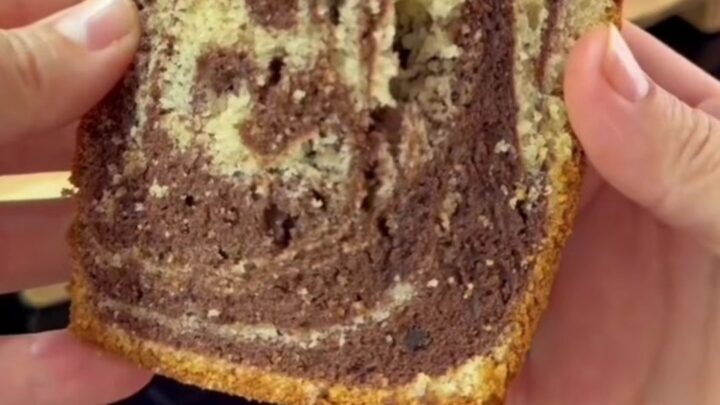
- Slice and ServeOnce completely cool, use a serrated knife to slice the loaf into thick pieces. Each slice reveals the beautiful marble swirl and the crunchy hazelnut crust. Serve as is or with a dusting of confectioners' sugar, if desired.Look for The slices show distinct dark cocoa waves against the fluffy vanilla crumb.Tip For clean slices, wipe the knife between cuts.
The cake is completely cool and holds its shape when sliced. The interior reveals beautiful ribbons of dark cocoa against the pale vanilla crumb. The hazelnut topping is crunchy and aromatic. Each slice is moist and tender, with a satisfying contrast of textures. Ready to serve and enjoy.
Common mistakes
Overmixing the batter after adding the flour can develop gluten and result in a dense, tough cake. Mix only until no streaks remain. Overbeating the eggs and sugar can also deflate the batter—stop when the mixture is pale and thick, but not stiff.
When swirling the batters, use a light hand; too much swirling turns the cake into a single muddy color. Finally, opening the oven door during the first 20 minutes of baking can cause the cake to sink; resist the urge to peek.
How to tell it’s done
The loaf is done when the top is deep golden brown and a toothpick inserted into the center comes out with only a few moist crumbs attached, not wet batter. The internal temperature should read 200°F (93°C) in the center.
The edges will pull slightly away from the pan, and the cake will feel firm to the touch. If the top browns too quickly, tent with foil after 30 minutes. Let it cool in the pan for 10 minutes before transferring to a wire rack to cool completely.
- Egg dishes: 160°F (71°C) in the thickest part
Up next · Part 3 of 3
4 variations · storage & make-ahead · 5 answers · printable card
Tips, FAQ & printable recipe (Part 3)← Back to the ingredients (Part 1)