Breakfast · Part 3 of 3: Tips & recipe card
Korean Flat Smash Croissant: Crispy Caramelized in 10 Minutes Tips, FAQ & printable recipe
- Prep
- Cook
- Total
- Serves
- 1
Tips for success
Temperature control is the whole game. Medium heat on most stoves lands near 350°F (175°C) on cast iron; if the sugar darkens before the four minutes are up, lower the flame slightly rather than shortening the press time, since a gentler heat builds a more even crust.
Keep the press on the pastry for the full cook, and when flipping, slide the spatula all the way under to protect the crust.
Work in batches of one croissant at a time and let the pan come back to temperature between batches; a second croissant added to a cooled pan will soak rather than sear.
For a crowd, hold finished croissants on a wire rack in a 200°F (95°C) oven for up to 15 minutes, which keeps the crust dry and crisp without cooking them further.
Variations
- Cinnamon sugar crust: Whisk 1/2 tsp ground cinnamon into the cane sugar before coating. The spice blooms in the hot caramel and gives the crust a snickerdoodle warmth that suits a cold morning.
- Espresso glaze: Stir 1/2 tsp instant espresso powder into the honey before drizzling. The bitter edge balances the caramel and turns the finished croissant into something close to a coffee-shop pastry.
- Chocolate drizzle: Melt 1 oz dark chocolate and drizzle it over the crust in place of, or alongside, the honey. Let it set for a minute before cutting so the top cracks cleanly.
- Savory herb finish: Skip the honey, reduce the sugar to 2 tbsp and finish with flaky salt and a few thyme leaves. The result leans toasty and buttery, closer to a pressed cheese-toastie without the cheese.
Storage and make-ahead
- Fridge
- Not recommended; refrigeration softens the caramel crust within hours.
- Freezer
- Freezing is not advised; the crust loses its snap when thawed.
- Reheat
- Re-crisp in a dry skillet over low heat for 2 minutes, crust side down, without the press.
The smashed croissant is at its best within ten minutes of leaving the pan, while the caramel crust is fully crisp.
Once cooled completely, it keeps at room temperature for a few hours wrapped loosely in paper, but the crust gradually absorbs moisture and loses its snap, so plan to serve it the same day it is made.
There is little to do ahead, which is part of the appeal. The butter can be softened and the sugar measured onto the pressing plate a few hours in advance, and the skillet and press staged on the stove.
Slice the croissant no more than 30 minutes before cooking; earlier slicing exposes the crumb to air and the layers dry slightly, which dulls the final texture.
Serving ideas
Serve the smash croissant warm, cut in half so the compressed, caramelized interior shows, with the glossy crust facing up. Coffee is the classic pairing, and the salt and honey make it sweet enough to double as dessert after a simple dinner.
For a small brunch spread, pair it with fresh fruit or yogurt on the side; the croissant is rich on its own, so keep accompaniments simple. Hand it over promptly after plating, and warn guests that the first bite crackles loudly, which is entirely the point.
Frequently asked questions
Can a heavy skillet be used instead of a cast iron press?
Why is the sugar still grainy after cooking?
Can this be made with a day-old croissant?
How is the pan temperature kept at 350°F?
Can several croissants be cooked at once?
Korean Flat Smash Croissant: Crispy Caramelized in 10 Minutes

Ingredients
- 1 large butter croissant, fresh and flaky
- 2 tbsp salted butter, softened
- 3 tbsp raw cane sugar
- Wildflower honey, for serving
- Flaky sea salt, to taste
Instructions
- Set the croissant on a cutting board and slice it horizontally through the middle with a serrated knife, using a gentle sawing motion so the flaky layers stay intact. Aim for two even halves of similar thickness, since uneven halves press and caramelize at different rates on the griddle.
- Spread the softened salted butter evenly over the cut side and the outside of each half with a pastry brush, about half a tablespoon per surface. Cover every ridge of the flaky exterior, because the butter carries the sugar and builds the caramelized crust on the outside of the pastry.
- Sprinkle the raw cane sugar over a small plate and press each buttered surface firmly into it, turning to coat thickly. Pat the sugar gently so it clings in an even layer; this sugar is what melts and bubbles into the glassy, lacy crust under the press.
- Place a cast iron skillet or griddle over medium heat and let it preheat for about 3 minutes, until a pinch of sugar or a drop of water dances and evaporates on contact. A properly hot surface starts the caramel within seconds; a cold one lets the butter soak in instead of searing.
- Lay both halves cut side down if cooking two, or work with one half at a time, then set the cast iron press on top. Cook at 350°F (175°C) for 4 minutes, keeping the press in place the whole time so the pastry stays flat and the sugar makes full contact with the hot metal.
- Slide an offset spatula under each half and flip carefully, then replace the press. Cook another 4 minutes until the second side matches the first: flat, amber and glassy, with a thin caramel crust that has spread slightly beyond the edges of the pastry. Lower the heat if the sugar darkens too fast.
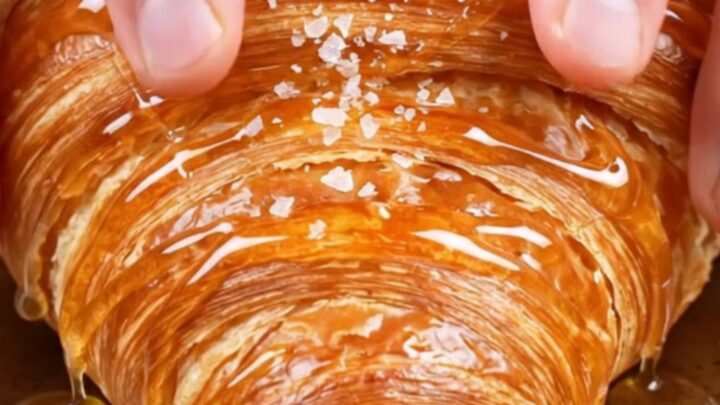
- Transfer the smashed croissant to a plate and let it sit for about 1 minute so the caramel crust firms and stops being stretchy. Drizzle wildflower honey in thin lines across the top; a light hand keeps the crust crisp, since too much honey softens the surface it touches.
- Finish with a few flakes of sea salt scattered over the honey, then cut the croissant in half to show the compressed, caramelized interior. Serve immediately while the crust is at its loudest; the snap fades as the pastry sits and picks up moisture from the air.
Estimated nutrition per serving
- Calories
- 690
- Protein
- 6 g
- Carbohydrates
- 75 g
- Fat
- 40 g
- Sugar
- 38 g
- Sodium
- 480 mg
Next recipe

Crispy Chorizo and Tater Tot Breakfast Burrito in 30 Minutes
See the recipe → →This recipe is based on a short cooking video and is published under the pen name Clara Weller. It was checked before publication, but errors can slip through. Nutrition, when shown, is an estimate. Read more in our editorial policy and on our food safety page.
More recipes to try

Crockpot Maple Waffle & Sausage Breakfast Bake
Total time: 3 h 25 min
Biscuit Sandwich with Sausage Gravy and a Jammy Egg
Total time: 35 min
Crispy Hashbrown Birria Tacos with a Runny Fried Egg
Total time: 35 min
Viral Four-Quadrant Breakfast Tortilla Fold — Crispy, Cheesy, 15 Minutes
Total time: 20 min
Slow-Cooker French Toast Casserole, Ready When You Are
Total time: 4 h 25 min