Dinner · Part 2 of 3: Instructions
Korean Cheesy Fire Chicken with Gochujang Glaze Step-by-step instructions
- Prep
- Cook
- Total
- Serves
- 4
Before you start
Before starting, cut the chicken thighs into bite-size pieces and mince the garlic and ginger. Measure all sauce ingredients and whisk them together in a bowl. Shred the mozzarella if using a block, and slice the scallions.
Have a lid or baking sheet ready to cover the skillet during the melting step. Keep the chicken in the refrigerator until ready to cook, and take it out no more than 30 minutes before searing.
Ingredients at a glance (10)
- 1 1/4 lb boneless, skinless chicken thighs, cut into bite-size pieces
- 3 tbsp gochujang (Korean chili paste)
- 2 tbsp gochugaru (Korean chili flakes)
- 2 tbsp soy sauce
- 1 1/2 tbsp honey
- 4 cloves garlic, minced
- 1 tbsp fresh ginger, grated
- 1 tbsp toasted sesame oil
- 2 cups shredded mozzarella cheese
- 2 tbsp sliced scallions (optional, for garnish)
Instructions
Make the glaze and sear the chicken
- Make the gochujang glazeIn a medium bowl, whisk together gochujang, gochugaru, soy sauce, honey, garlic, ginger, and sesame oil until the mixture is thick, deep red, and glossy. Add the chicken pieces and toss to coat evenly. Cover and refrigerate while preparing the skillet, or up to 30 minutes.Look for The marinade should cling to the chicken like a thick paste.Tip For less heat, reduce gochugaru to 1 tbsp; for more, add a pinch of cayenne.
- Sear the chickenHeat a large cast iron skillet over high heat until smoking. Add the chicken in a single layer, discarding any excess marinade. Cook without moving for 3 minutes, then stir-fry for 4 minutes more, until the edges are charred and the glaze caramelizes into a sticky coating.Look for The chicken should have dark charred spots and a glossy, thick sauce.Safe temperature 165°F (74°C) internal temperature (poultry)Tip Work in batches if needed to avoid overcrowding, which would steam the chicken.
The marinade should be thick and glossy, coating the chicken like a paste. After searing, the chicken pieces should have dark, caramelized edges and a sticky, deep-red glaze.
The skillet should be sizzling, and the aroma of gochujang and garlic should fill the kitchen.
Melt and torch the cheese
- Blanket with mozzarellaReduce the heat to low. Sprinkle the shredded mozzarella evenly over the entire surface of the chicken. Cover the skillet with a lid or a baking sheet and let the cheese melt for 2 to 3 minutes, until completely melted and starting to bubble.Look for The cheese should be fully melted and lightly bubbling around the edges.Tip Use low heat to melt the cheese without burning the chicken underneath.
- Torch the topRemove the lid. Using a kitchen torch, pass the flame over the melted cheese in quick, sweeping motions until the top is bubbly and charred in spots. Alternatively, broil for 1 to 2 minutes, watching closely to avoid burning.Look for The cheese should have golden-brown blisters and a slightly smoky aroma.Tip Keep the torch moving to avoid scorching any single spot.
The cheese should be completely melted, forming a smooth, bubbling blanket over the chicken. After torching, the top should have golden-brown blisters and a lightly charred aroma. The edges of the cheese may brown slightly, adding a crispy contrast.
Garnish and serve
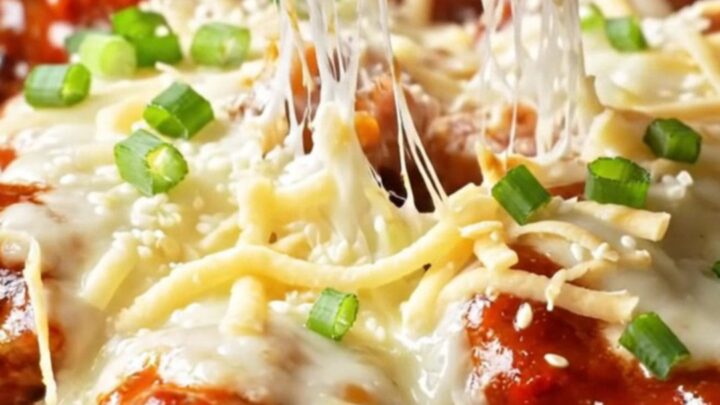
- Garnish and serveSprinkle the sliced scallions over the top. Serve immediately, using chopsticks or a fork to pull the cheese into long, satisfying strands with each bite of chicken.Look for The cheese should stretch dramatically when lifted.Tip Serve directly from the skillet to keep the cheese hot and stretchy.
The scallions add a fresh green pop against the red and gold. When lifted, the cheese should stretch into long, elastic strands. The chicken should be tender and juicy, with a fiery glaze that is balanced by the rich, milky cheese.
Common mistakes
Overcrowding the skillet is a common mistake; it traps steam and prevents the chicken from charring. Use a large pan and cook in batches if necessary.
Another pitfall is melting the cheese over too high heat, which can burn the chicken or cause the cheese to separate. Keep the heat low when melting. Finally, do not skip the torching or broiling step—it adds a crucial smoky depth and visual appeal.
How to tell it’s done
The chicken is done when it reaches an internal temperature of 165°F (74°C) and the edges are charred and the glaze is sticky.
The cheese should be fully melted and bubbly, with golden-brown blisters after torching. The dish is best served immediately while the cheese is hot and stretchy.
- Poultry: 165°F (74°C) in the thickest part
Up next · Part 3 of 3
4 variations · storage & make-ahead · 5 answers · printable card
Tips, FAQ & printable recipe (Part 3)← Back to the ingredients (Part 1)