Dinner · Part 2 of 3: Instructions
Korean Army Stew Ramyun with Melty Cheddar in One Pot Step-by-step instructions
- Prep
- Cook
- Total
- Serves
- 2
Before you start
Read the stew once through, then set out the cutting board, a chef's knife and the shallow pot or wide braising pan with its lid. Measure the broth and the gochujang so nothing scrambles once the pot starts boiling. Cut the kimchi into bite-size pieces, slice the pork belly thin, cut the smoked sausage into rounds, and cube the tofu.
Use a separate board and knife for the raw pork, wash hands, tools and surfaces well afterward, and keep the meat refrigerated until the pot goes on the heat. Have an instant-read thermometer ready, plus long chopsticks or tongs for the noodles and a ladle for serving. Pull the cheddar slices out of the wrapper so they slide on without tearing at the finish.
Ingredients at a glance (8)
- 7 oz (200 g) aged fermented kimchi, cut into bite-size pieces
- 5 oz (150 g) pork belly, sliced thin
- 3.5 oz (100 g) smoked sausage, sliced into rounds
- 1/2 block firm tofu, cut into cubes
- 2 tbsp gochujang chili paste
- 2 3/4 cups (650 ml) anchovy-kelp broth
- 1 pack ramyun noodles (seasoning packet discarded or saved for another use)
- 2 slices American cheddar
Instructions
Build the layers
- Prep the stew componentsCut the kimchi into fork-friendly pieces, slice the pork belly thin, cut the smoked sausage into rounds, and cube the tofu. Keeping every piece bite-size means everything cooks in the same short window and every spoonful of the finished stew carries a little of each ingredient.Look for The pork belly slices should be thin enough to see light through them, about 1/8 inch.Tip Well-fermented, tangy kimchi gives the deepest flavor; fresh kimchi tastes flat in a stew this quick.
- Layer the kimchi baseSpread the kimchi pieces evenly over the bottom of a shallow pot. This first layer does double duty: it seasons the broth as it softens and keeps the meat from sticking to the pan during the hard boil that comes later.Look for The kimchi should cover the pot base in a single, mostly even layer.Tip A splash of the kimchi brine from the jar deepens the tang without extra salt.
- Add the pork and sausageArrange the pork belly slices over the kimchi, then scatter the sausage rounds around them. Laying the meat on top of the acid layer rather than beneath it keeps the slices tender and lets the rendered fat drip down into the broth where it belongs.Look for No two slices should stack; each piece needs contact with the simmering liquid.Tip Handle raw pork with a separate board and knife, then wash hands, tools and surfaces well.
- Tuck in tofu and gochujangNestle the tofu cubes into open spaces around the meat, then dot the gochujang over everything in small spoonfuls. Leaving the paste in dollops instead of stirring it in lets it dissolve gradually, so the broth builds heat as it boils instead of hitting all at once.Look for The tofu should sit half-submerged, not buried, so it holds its shape.Tip Keep the gochujang dollops off the noodles' future spot so the sauce spreads evenly later.
At the end of this phase, the pot should look organized and almost decorative: an even carpet of kimchi on the bottom, pork belly and sausage slices in a single uncrowded layer above it, tofu cubes tucked into the gaps, and red gochujang dollops dotted across the top.
Nothing has been stirred, and nothing should be. Check that the pork slices are not stacked and that every piece touches the pot or sits close enough to the liquid to cook evenly, because crowning pieces stay underdone. Give the raw-pork surfaces a final glance, then move the pot straight to the stove.
Boil the broth
- Pour in the brothPour the anchovy-kelp broth down the side of the pot so it does not blast the layered arrangement apart. Aim for the liquid to just reach the top of the meat; if the pot looks dry, add a splash of water rather than losing the seasoned balance.Look for The layers should stay visible through clear broth; nothing needs stirring yet.Tip Set the lid on loosely for the trip to the stove to keep the arrangement intact.
- Boil until the pork is doneSet the pot over high heat and bring it to a rolling boil, then keep it at a strong simmer. The pork belly must reach 145°F (63°C) at its center, about 8 to 10 minutes; check the thickest slice with an instant-read thermometer, then let the meat rest at least 3 minutes before continuing.Look for The broth turns brick red, smells smoky and funky in the best way, and rolls steadily.Safe temperature 145°F (63°C) internal temperature (steaks, chops and roasts)Tip Skim any gray foam from the surface once so the final broth stays clean-tasting.
The broth should now be at a rolling, noisy boil that settles into a strong simmer, brick red and slightly opaque from the gochujang and kimchi, with a thin layer of pork fat shimmering on the surface and a little rendered foam skimmed away. The smell is smoky, funky and appetite-sharp, kimchi and pork fat together.
Before adding the noodles, verify two things: the thickest pork slice reads at least 145°F (63°C) on an instant-read thermometer and has rested at least 3 minutes, and the liquid has not dropped below the meat. Top up with a splash of water if the boil ran hard and long.
Noodles and cheddar
- Cook the ramyun noodlesSlide the ramyun noodle block straight into the bubbling stew and press it under with chopsticks. Let it boil hard for about 4 minutes, separating the strands as they soften, until the noodles are chewy and fully coated in the red broth.Look for The noodles bend without snapping and no hard white core remains in the center.Tip Stir from the bottom with a wide spoon so the gochujang does not catch or scorch.
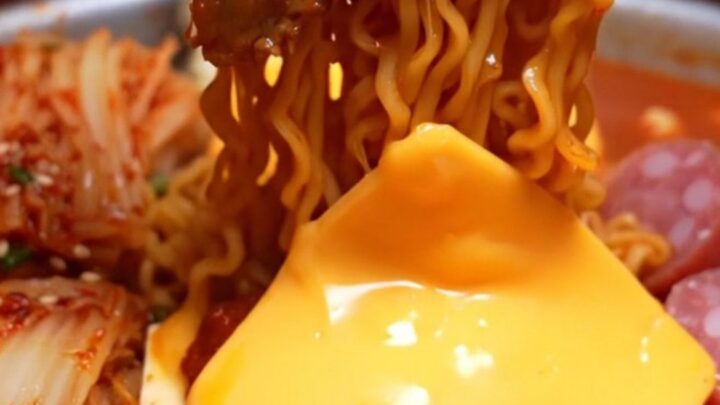
- Melt the cheddar and serveLay the cheddar slices directly on top of the noodles and bubbling broth, cover the pot, and let the residual steam melt the cheese for about a minute. Ladle the stew into deep bowls, making sure each one gets noodles, pork, kimchi and a stretch of cheese.Look for The cheese slumps and drapes over the noodles, glossy and molten, not browned.Tip Serve straight from the pot at the table, Korean pocha style, while the cheese is still flowing.
The finished stew should look glossy and thickened, the noodles brick red and springy, draped with folds of completely melted cheddar, with pork, sausage, tofu and kimchi visible throughout. Lift a strand: it should bend without snapping and carry a coat of sauce. The aroma at this point is the whole promise of the dish, spicy, tangy, smoky and cheesy at once. Taste the broth for salt one last time, check that the cheese has slumped rather than browned, and carry the pot to the table while everything is still bubbling and the cheese still stretches.
Common mistakes
The most common slip is bloated noodles: they go in too early or cook past four minutes, drinking up the broth you need. Hold them until the pork is fully cooked, then time them precisely. Another trap is stirring early; stirring collapses the layers and breaks the tofu, so leave the pot alone until the noodles demand attention.
Undersalted broth is common when the seasoning packet is discarded, so taste after the boil and adjust with a pinch of salt rather than the packet. Finally, do not crank the cheese under direct high heat, which browns and breaks it; a covered minute of steam melts it properly.
How to tell it’s done
The stew is done when the noodles are chewy with no hard core, the pork belly reads at least 145°F (63°C) at its thickest point, and the broth is a uniform brick red with a layer of rendered fat shimmering on top. The tofu should look plump and the kimchi softened but not dissolved. The cheddar is fully melted when it slumps over the noodles in glossy folds rather than sitting as a defined slice. Ladle into deep bowls while the cheese still stretches, and cool leftovers no more than 2 hours before refrigerating.
- Steaks, chops and roasts: 145°F (63°C) in the thickest part, then a 3-minute rest
Up next · Part 3 of 3
4 variations · storage & make-ahead · 5 answers · printable card
Tips, FAQ & printable recipe (Part 3)← Back to the ingredients (Part 1)