Dinner · Part 1 of 3: Ingredients
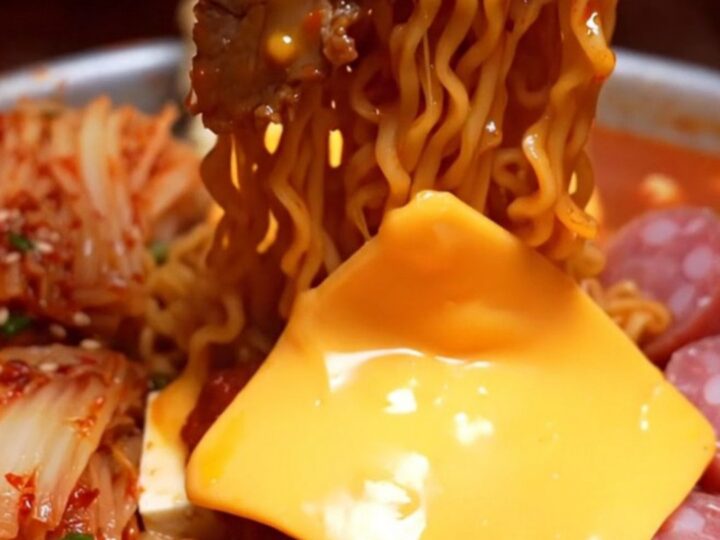
Korean Army Stew Ramyun with Melty Cheddar in One Pot
- Prep
- Cook
- Total
- Serves
- 2
Rainy-day heaven comes together in one shallow pot: aged kimchi, thin-sliced pork belly, smoky sausage and gochujang bubbling in anchovy-kelp broth, with chewy ramyun noodles stirred through and two slices of American cheddar melted right on top. Every spoonful hits spicy, tangy, smoky and cheesy at once, and the whole thing lands on the table in about 35 minutes.
Budae jjigae, the Korean army stew, was born from making something generous out of whatever was on hand, and that spirit makes this version workable on a weeknight. The ingredient list is short and almost entirely pantry-and-fridge staples: well-fermented kimchi, pork belly and smoked sausage from the meat case, half a block of tofu, a tub of gochujang, and a pack of ramyun.
The method is just as forgiving. Everything is layered into a wide, shallow pot, covered with a quick anchovy-kelp broth, and boiled hard until the meat is cooked through and the broth turns brick red. The noodles go in for only four minutes at the end, so they stay chewy rather than bloated, and slices of cheddar melt over the top in the last minute of steam.
Ingredients
- 7 oz (200 g) aged fermented kimchi, cut into bite-size pieces
- 5 oz (150 g) pork belly, sliced thin
- 3.5 oz (100 g) smoked sausage, sliced into rounds
- 1/2 block firm tofu, cut into cubes
- 2 tbsp gochujang chili paste
- 2 3/4 cups (650 ml) anchovy-kelp broth
- 1 pack ramyun noodles (seasoning packet discarded or saved for another use)
- 2 slices American cheddar
Why this recipe works
Layering instead of stirring is the trick that separates a good army stew from a muddled one. The kimchi goes down first, where it softens against the hot pot and seasons every drop of broth from below, while its acidity keeps the pork belly slices from sticking.
The meat sits above the acid rather than in it, so the belly renders its fat into the liquid instead of seizing up, and the gochujang stays in dollops so it dissolves gradually, building heat steadily instead of shocking the pot all at once.
The timing is engineered for texture. A hard boil in a shallow, wide pot gives the broth maximum surface area, which means the pork cooks through fast and the kimchi breaks down quickly into the liquid. Holding the noodles until the very end, for just four minutes, keeps them springy and chewy, the way a good ramyun should be.
Finishing with cheddar under a lid uses trapped steam rather than direct heat, so the cheese slumps and drapes over the noodles without breaking or browning. Nothing overcooks, and every element arrives at the table at its best.
Notes and substitutions
Choose kimchi that is deeply fermented, tangy and slightly sour; the older and funkier it is, the better the stew, because this quick broth has no long simmer to develop depth on its own. Ask for pork belly sliced thin at the meat counter, or partially freeze a slab for fifteen minutes to slice it yourself. Any plain smoked sausage works, and frankfurters are the classic choice. Firm tofu holds its cube shape better than silken; press it briefly if it feels wet.
A wide, shallow pot or braising pan matters more than it seems: the layers need surface area so everything cooks evenly in the short time. If anchovy-kelp broth is not on hand, water seasoned with a teaspoon of fish sauce and a brief kelp steep gets close.
Discard the ramyun seasoning packet, since the gochujang and kimchi already carry the salt; taste the broth before adding anything else. Cheddar is traditional here for its melt, but any mild slicing cheese behaves the same way.
- anchovy-kelp broth: Combine 2 3/4 cups water with 1 tsp fish sauce and a piece of dried kelp simmered 5 minutes, then remove the kelp.
- smoked sausage: Use sliced hot dogs or frankfurters, the classic army-stew choice, cut on the bias.
- American cheddar: Any mild melting cheese works; a slice of Monterey Jack or mozzarella gives the same stretch.
- pork belly: Thin-sliced pork shoulder or boneless pork chops cut across the grain, cooked to the same safe temperature.
Equipment
- shallow pot or wide braising pan with lid
- cutting board
- chef's knife
- ladle
- long chopsticks or tongs
Up next · Part 2 of 3
8 steps · 20 min of cooking · what to look for at each stage
Step-by-step instructions (Part 2)