Dinner · Part 3 of 3: Tips & recipe card
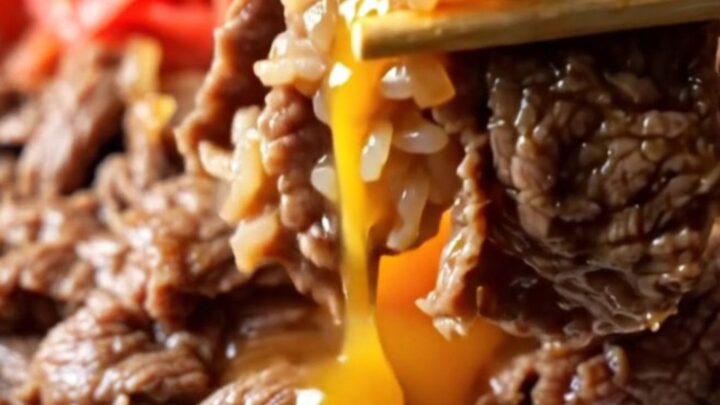
Japanese Beef Gyudon Rice Bowl with Soft-Poached Onsen Egg Tips, FAQ & printable recipe
- Prep
- Cook
- Total
- Serves
- 2
Tips for success
For the best texture, use fresh, high-quality dashi. If using dashi powder, dissolve it completely in hot water before adding to the pan.
Adjust the sweetness by adding more or less sugar to taste. The broth should be balanced—neither too salty nor too sweet.
When cooking the beef, use chopsticks or a fork to separate the slices as they hit the hot broth. This prevents clumping and ensures even cooking.
If you prefer a thicker sauce, let the broth simmer a few minutes longer after removing the beef, but be careful not to reduce it too much.
Variations
- Chicken Gyudon: Substitute the beef with thinly sliced chicken breast or thigh. Cook the chicken for 4-5 minutes until cooked through, and adjust the cooking time accordingly. The rest of the recipe remains the same.
- Spicy Gyudon: Add 1 teaspoon of gochujang or sriracha to the broth for a spicy kick. Increase the amount to taste. The heat balances well with the sweet soy-mirin mixture.
- Vegetarian Gyudon: Replace the beef with thinly sliced mushrooms (such as shiitake or king oyster) and use vegetable broth instead of dashi. Simmer the mushrooms for 5 minutes. Add a splash of soy sauce for extra umami.
- Cheese Gyudon: Top the finished gyudon with a slice of melting cheese, such as mozzarella or cheddar, and cover the bowl for a minute to let it melt. This is a popular variation in Japan, adding a creamy, savory layer.
Storage and make-ahead
- Fridge
- Store leftover gyudon in an airtight container for up to 3 days. Keep the egg separate and add fresh when serving.
- Freezer
- Freeze the beef and broth mixture (without rice or egg) in a freezer-safe container for up to 2 months. Thaw overnight in the refrigerator and reheat gently.
- Reheat
- Reheat the beef and broth in a saucepan over medium heat until bubbling. Add a little water if the sauce is too thick.
Leftover gyudon can be stored in an airtight container in the refrigerator for up to 3 days. The rice will absorb some of the broth, so add a splash of water or dashi when reheating. The eggs should be stored separately and added fresh when serving.
The broth and beef can be cooked up to 2 days ahead and stored in the refrigerator. Reheat gently in a pan, adding a little water if needed.
The rice can also be cooked ahead and kept warm, or reheated in the microwave with a damp paper towel. Onsen eggs are best made fresh, but they can be stored in the refrigerator for up to 2 days in a bowl of cold water.
Serving ideas
Serve the gyudon immediately after assembling, while the beef is hot and the egg is still silky.
The contrast of temperatures—warm beef and rice with a slightly cooler egg—is part of the experience. Place the bowls on a tray with chopsticks and a spoon for the broth.
For a complete meal, serve with a small side of pickled vegetables or a simple cucumber salad. The pickled ginger adds a bright, tangy contrast to the rich beef. A bowl of miso soup would also complement the flavors nicely.
Frequently asked questions
What is dashi broth and can it be substituted?
How do you make onsen eggs at home?
Can this recipe be made with regular sliced beef?
Is there a way to make this dish gluten-free?
Can the gyudon be frozen?
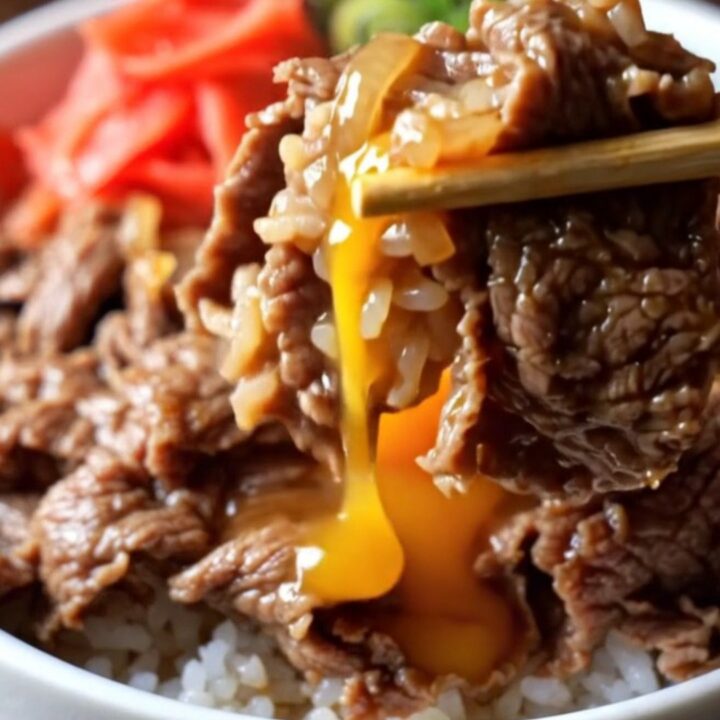
Japanese Beef Gyudon Rice Bowl with Soft-Poached Onsen Egg
Ingredients
- 12 oz thinly shaved beef ribeye or brisket
- 1 medium onion, sliced
- 3/4 cup dashi broth
- 3 tbsp soy sauce
- 2 tbsp mirin
- 1 tbsp sake
- 1 tbsp sugar
- 2 cups steamed Japanese white rice
- 2 soft-poached onsen eggs or raw egg yolks
- Beni shoga (pickled red ginger), for serving
- Sliced scallions, for serving
Instructions
- In a large skillet or shallow pan, combine the dashi broth, soy sauce, mirin, sake, and sugar. Stir to dissolve the sugar, then bring the mixture to a simmer over medium heat. Add the sliced onions and cook for 5 minutes, stirring occasionally, until they become soft and translucent.
- Add the thinly shaved beef to the simmering broth, separating the slices gently with chopsticks or a fork so they cook evenly. Let the beef simmer for 3 minutes, stirring occasionally, until it is just cooked through and tender. Do not overcook, as the slices are thin and will toughen. Let it rest for 3 minutes before slicing.
- Divide the hot steamed Japanese rice between two serving bowls. Using a ladle, spoon generous heaps of the beef and onion mixture over the rice, making sure each bowl gets an equal amount of meat and onions. Then spoon extra broth over the top, letting it soak into the rice.
- Gently nestle one soft-poached onsen egg (or a raw egg yolk) in the center of each bowl. Sprinkle with beni shoga and sliced scallions. Serve immediately while the beef and rice are hot and the egg is still warm and silky.
Estimated nutrition per serving
- Calories
- 620
- Protein
- 35 g
- Carbohydrates
- 65 g
- Fat
- 25 g
Next recipe

Turkish Karadeniz Pidesi with Buttery Ground Beef Filling
See the recipe → →This recipe is based on a short cooking video and is published under the pen name Clara Weller. It was checked before publication, but errors can slip through. Nutrition, when shown, is an estimate. Read more in our editorial policy and on our food safety page.
More recipes to try

Loaded Buffalo Cauliflower Mac and Cheese Skillet
Total time: 50 min
Szechuan Dan Dan Noodles with Crispy Pork and Spicy Peanut Chili Oil
Total time: 25 min
Crispy Honey Sriracha Brussels Sprouts with Bacon
Total time: 35 min
Creamy Garlic Parmesan Tuscan Chicken Pasta Bake
Total time: 45 min
Hünkar Beğendi: Sultan's Delight with Slow-Braised Veal
Total time: 1 h 50 min