Dinner · Part 2 of 3: Instructions
Japanese Beef Gyudon Rice Bowl with Soft-Poached Onsen Egg Step-by-step instructions
- Prep
- Cook
- Total
- Serves
- 2
Before you start
Before cooking, make sure the beef is thinly sliced and the onion is sliced into thin strips. Have the dashi broth, soy sauce, mirin, sake, and sugar measured and ready.
If using onsen eggs, prepare them ahead of time: place the eggs in a 145°F (63°C) water bath for 45 minutes, then cool and peel. Alternatively, separate pasteurized egg yolks and keep them in the refrigerator until ready to use. Steam the rice and keep it warm.
Ingredients at a glance (11)
- 12 oz thinly shaved beef ribeye or brisket
- 1 medium onion, sliced
- 3/4 cup dashi broth
- 3 tbsp soy sauce
- 2 tbsp mirin
- 1 tbsp sake
- 1 tbsp sugar
- 2 cups steamed Japanese white rice
- 2 soft-poached onsen eggs or raw egg yolks
- Beni shoga (pickled red ginger), for serving
- Sliced scallions, for serving
Instructions
Build the Broth and Cook the Beef
- Simmer the Broth and OnionsIn a large skillet or shallow pan, combine the dashi broth, soy sauce, mirin, sake, and sugar. Stir to dissolve the sugar, then bring the mixture to a simmer over medium heat. Add the sliced onions and cook for 5 minutes, stirring occasionally, until they become soft and translucent.Look for The onions turn glossy and the broth smells sweet and savory.Tip Keep the heat at a gentle simmer so the onions cook evenly without browning.
- Add the Beef and SimmerAdd the thinly shaved beef to the simmering broth, separating the slices gently with chopsticks or a fork so they cook evenly. Let the beef simmer for 3 minutes, stirring occasionally, until it is just cooked through and tender. Do not overcook, as the slices are thin and will toughen. Let it rest for 3 minutes before slicing.Look for The beef turns brown and the broth becomes rich and glossy.Safe temperature 145°F (63°C) internal temperature (steaks, chops and roasts)Tip If the beef is in large clumps, break it apart gently with the chopsticks while it cooks.
The broth is simmering with a sweet-savory aroma, and the onions are turning translucent. The beef is added and gently separated, cooking quickly until just browned. The pan should look glossy, with the beef and onions coated in a thin, flavorful sauce.
Assemble the Bowls
- Assemble the Rice BowlsDivide the hot steamed Japanese rice between two serving bowls. Using a ladle, spoon generous heaps of the beef and onion mixture over the rice, making sure each bowl gets an equal amount of meat and onions. Then spoon extra broth over the top, letting it soak into the rice.Look for The rice is covered with a mound of saucy beef and onions.Tip Warm the bowls beforehand to keep the dish hot longer.
The rice is steaming in bowls, and the beef and onions are ladled over in generous portions. The broth soaks into the rice, creating a flavorful base. The bowls look colorful, with the brown beef and onions contrasting with the white rice.
Finish with Egg and Garnishes
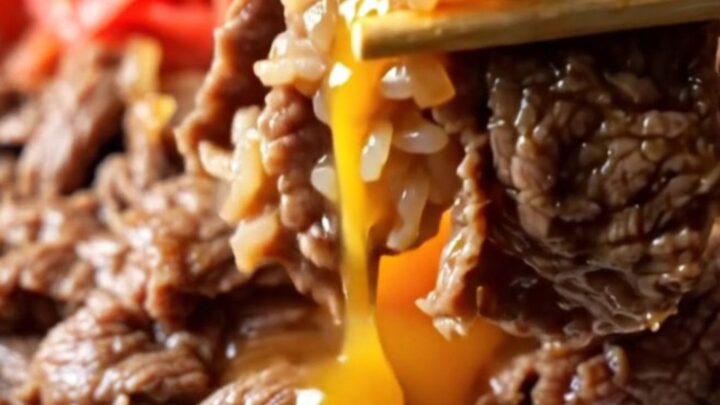
- Add the Egg and GarnishesGently nestle one soft-poached onsen egg (or a raw egg yolk) in the center of each bowl. Sprinkle with beni shoga and sliced scallions. Serve immediately while the beef and rice are hot and the egg is still warm and silky.Look for The egg sits proud in the center, surrounded by red ginger and green scallions.Safe temperature 160°F (71°C) internal temperature (egg dishes)Tip For a perfect onsen egg, cook at 145°F (63°C) for 45 minutes, or use pasteurized yolks.
The egg is placed in the center, its yolk intact and glossy. Beni shoga and scallions add bright red and green accents. The dish is ready to serve, with the egg still warm and the beef hot. The presentation is inviting and appetizing.
Common mistakes
One common mistake is overcooking the beef, which makes it tough and chewy. Keep a close eye on the time and remove the pan from heat as soon as the beef is no longer pink.
Another mistake is adding the onions and beef at the same time; the onions need a few minutes to soften before the beef goes in.
Also, be careful not to add too much broth, as the dish should be saucy but not soupy. Finally, don't skip the egg—it adds essential richness.
How to tell it’s done
The beef is done when it is just cooked through and no longer pink, which should take about 3 minutes. The onions should be soft and translucent. If using a meat thermometer, the beef should reach 145°F (63°C).
The broth should be slightly reduced and glossy. The eggs are cooked through when the whites are set and the yolks are firm, reaching 160°F (71°C) if you prefer them fully cooked, but for this dish they are served soft and silky.
- Steaks, chops and roasts: 145°F (63°C) in the thickest part, then a 3-minute rest
- Egg dishes: 160°F (71°C) in the thickest part
Up next · Part 3 of 3
4 variations · storage & make-ahead · 5 answers · printable card
Tips, FAQ & printable recipe (Part 3)← Back to the ingredients (Part 1)