Dinner · Part 2 of 3: Instructions
12-Minute Honey Garlic Shrimp Lo Mein in One Skillet Step-by-step instructions
- Prep
- Cook
- Total
- Serves
- 4
Before you start
Ten minutes of prep makes the twelve-minute cook possible. Set a large pot of water heating for the noodles. Whisk the soy sauce, honey, oyster sauce, garlic, and sesame oil into a smooth glaze and park it beside the stove. Wipe the shiitakes with a damp paper towel and slice them; string the snow peas. Rinse nothing — simply pat the shrimp very dry with paper towels, since surface water is the enemy of a caramelized sear.
Ingredients at a glance (10)
- 1/4 cup soy sauce (60 ml)
- 3 tbsp wildflower honey (45 ml)
- 1 tbsp oyster sauce
- 6 cloves garlic cloves, minced
- 1 tsp toasted sesame oil
- 14 oz peeled jumbo shrimp (400 g), patted dry
- 14 oz fresh egg lo mein noodles (400 g)
- 6 oz shiitake mushrooms, sliced
- 6 oz snow peas, trimmed
- 1 tbsp toasted sesame seeds
Instructions
Sauce and prep
- Whisk the honey garlic sauceAdd the soy sauce, honey, oyster sauce, minced garlic, and toasted sesame oil to a small bowl and whisk until the honey dissolves completely and the mixture looks uniform and glossy. Keep the bowl next to the stove; the sauce goes in fast once the shrimp are seared, so there is no time to measure anything later.Look for The glaze should pour in one smooth amber ribbon with no honey pooling at the bottom of the bowl.Tip Warm the honey for ten seconds in the microwave if it has crystallized; warm honey whisks in within seconds.
- Prep noodles, mushrooms, and shrimpBring a pot of water to a boil and cook the fresh egg lo mein noodles according to the package directions, just until springy, then drain well in a colander. While the water heats, wipe the shiitakes clean, slice them, and pull the strings from the snow peas. Pat the shrimp completely dry with paper towels on both sides.Look for Noodles should be flexible and chewy with a slight resistance at the center; the shrimp should feel dry, not slick.Tip Do not rinse the drained noodles; their surface starch helps the glaze cling in the final toss.
At the end of the first phase, the sauce should sit in the bowl as a glossy amber liquid with the minced garlic suspended evenly and no honey pooling at the bottom. The noodles are drained and still glossy, springy when bitten, not mushy. The shiitake slices are even, about a quarter inch thick, and the snow peas trimmed and dry. The shrimp are dry to the touch — this matters more than anything else in the recipe.
Sear the shrimp
- Heat the skillet properlySet a large skillet or wok over high heat and let it get properly hot for a full two minutes; a drop of water should skitter and evaporate on contact. A screaming-hot surface is what gives the shrimp a caramelized sear instead of a gray, steamed exterior, so resist the urge to add the shrimp early.Look for A faint shimmer of heat rising from the surface and water droplets dancing and vanishing instantly.Tip Have the shrimp bowl, a plate for transfers, and the tongs lined up within arm's reach before the heat goes on.
- Sear the shrimpAdd the shrimp in a single uncrowded layer and sear undisturbed for about 2 minutes, until the undersides turn pink and deeply caramelized. Flip and cook 1 to 2 minutes more, until the shrimp are opaque throughout and register 145°F (63°C) at the thickest part. Transfer them to a plate immediately so they carryover gently.Look for Loose C-shaped curls, golden-brown edges, and no translucent gray patches anywhere on the bodies.Safe temperature 145°F (63°C) internal temperature (shellfish)Tip If the shrimp crowd the pan, sear in two batches; steamed shrimp never recover their caramelized edges.
The shrimp are done searing when they are opaque white and pink throughout, curled into loose C shapes, with deep golden-brown edges where they touched the pan. An instant-read thermometer in the thickest shrimp should read 145°F (63°C).
They should smell sweet and nutty, with a faint caramel note from the hot pan — no fishy aroma at all. Transfer them to a plate right away rather than leaving them in the skillet; residual heat keeps cooking them.
Glaze and toss
- Stir-fry the vegetablesAdd the sliced shiitakes and snow peas to the hot skillet, tossing for about 1 minute in the browned bits the shrimp left behind. The mushrooms should brown at the edges and the snow peas turn vivid green while staying crisp. If the pan looks dry, a spoonful of the whisked sauce loosens everything beautifully.Look for Brown mushroom edges, bright green peas, and a nutty, toasty smell rising from the pan.Tip Keep the vegetables moving constantly; they only need color, not softness, before the sauce arrives.
- Reduce the glazePour the honey garlic sauce into the skillet and let it bubble over high heat for about 30 seconds, stirring, until it thickens slightly and turns glossy. The honey concentrates quickly, so keep everything moving. The glaze is ready when it coats the back of a spoon before the noodles go in.Look for A syrupy sheen and a clean path left behind for a moment when the spoon drags across the pan bottom.Tip If the garlic starts to darken, the noodles can go in a few seconds early without harm.
- Toss in the noodles and shrimpAdd the drained noodles and return the seared shrimp with any collected juices. Toss constantly with tongs for 1 to 2 minutes, lifting from the bottom of the pan, until every strand is coated and the glaze reduces to a sticky sheen that clings to the noodles rather than pooling beneath them.Look for The sauce stops sliding and starts dragging; the noodles glisten and squeak slightly against the pan.Tip Lift high with the tongs rather than stirring in circles; this folds the glaze through instead of scraping it off.
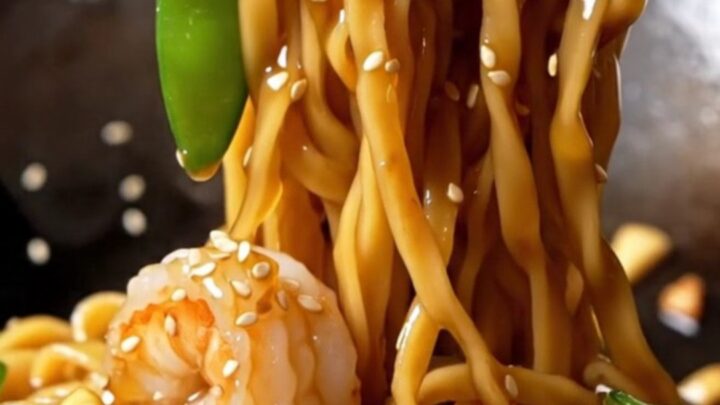
- Finish with sesame seedsTurn off the heat, scatter the sesame seeds over the top, and give one final toss. Lift a high tangle of noodles with the tongs; it should hold together, glossy and slow-dripping. Taste and adjust with a small drizzle of honey or a splash of soy sauce if the balance needs it.Look for Every strand shines amber, the seeds cling to the glaze, and drips fall slowly from the lifted tangle.Tip Sesame seeds added off the heat keep their toast; over direct heat they can scorch in seconds.
- Plate and serve hotSlide the lo mein onto warm plates or into bowls straight from the skillet, twirling the noodles into loose nests and topping each with the caramelized shrimp. Serve immediately while the glaze is hot and glossy; lo mein waits for no one, and the texture is at its best within the first few minutes.Look for Steam rising from the bowls and the glaze still liquid enough to shine under the kitchen light.Tip Warm the bowls with hot tap water while the noodles finish; a cold plate stiffens the glaze fast.
The finished lo mein should glisten: every noodle coated in a sticky amber glaze that clings rather than pools at the bottom of the pan. The shrimp sit caramelized on top, the snow peas bright green and snappy, the shiitakes browned and glossy.
Lift a tangle with the tongs — it should hold together, with drips falling slowly. The aroma is sweet garlic first, then toasted sesame, then the savory depth of soy. Taste a noodle: it should be springy, well seasoned, and gently sticky.
Common mistakes
The most common failure is crowding: shrimp piled on top of each other release water and steam gray instead of searing. The second is walking away during the glaze stage — honey burns in seconds over high heat, and burnt honey tastes bitter, with no way back.
Overcooked shrimp turn tight and rubbery, so pull them early and trust the thermometer. Soggy noodles come from overboiling; stop one bite before the package says done, because they keep softening in the glaze.
How to tell it’s done
Shrimp are done at 145°F (63°C) internal temperature, opaque throughout, with edges caramelized and bodies curled into loose C shapes — a tight O means overcooked. The noodles should be springy with no chalky core, glazed and glossy rather than slick with liquid.
The shiitakes should be browned at the edges and tender; the snow peas vivid green with some bite. The sauce is right when it coats the back of a spoon and a dragged tongs leaves a momentary clean path across the pan bottom.
- Shellfish: 145°F (63°C) in the thickest part
Up next · Part 3 of 3
4 variations · storage & make-ahead · 5 answers · printable card
Tips, FAQ & printable recipe (Part 3)← Back to the ingredients (Part 1)