Dinner · Part 1 of 3: Ingredients
12-Minute Honey Garlic Shrimp Lo Mein in One Skillet
- Prep
- Cook
- Total
- Serves
- 4
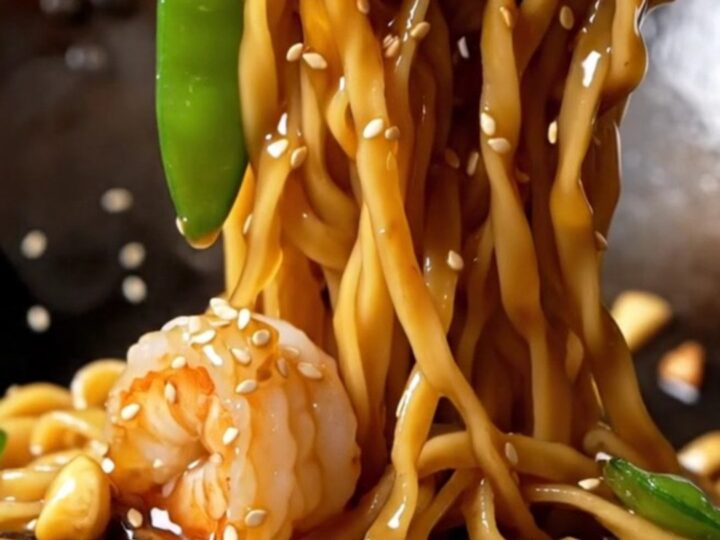
Twelve minutes, one skillet, and dinner tastes like it came from a wok station on a busy Cantonese side street. Jumbo shrimp sear until the edges caramelize, then a glossy glaze of honey, soy, and six cloves of garlic clings to every springy egg noodle. Shiitakes bring the savory depth, snow peas the snap, and a scatter of sesame seeds the finish. It is sweet, garlicky, and reliably better than takeout.
Twelve minutes is a real promise here, not a marketing trick. The sauce is whisked in one bowl while the noodles boil, the shrimp sear for barely four minutes in a violently hot skillet, and everything else happens in the same pan in a rush of steam and sizzle.
What comes out is a glossy, sticky lo mein — sweet from honey, sharp with six cloves of garlic, savory from soy and oyster sauce — tangled with shiitakes and snow peas. Every component cooks in the order that makes it taste its best, and the whole thing lands on the table before takeout could even answer the phone. No deep fryer, no wok expertise, no long marinade: just heat, timing, and a sauce that does the heavy lifting.
Ingredients
Honey garlic sauce
- 1/4 cup soy sauce (60 ml)
- 3 tbsp wildflower honey (45 ml)
- 1 tbsp oyster sauce
- 6 cloves garlic cloves, minced
- 1 tsp toasted sesame oil
- 14 oz peeled jumbo shrimp (400 g), patted dry
- 14 oz fresh egg lo mein noodles (400 g)
- 6 oz shiitake mushrooms, sliced
- 6 oz snow peas, trimmed
- 1 tbsp toasted sesame seeds
Why this recipe works
The method leans on three things that professional wok cooks know well. First, the skillet must be genuinely hot before the shrimp go in: at that temperature the proteins sear and caramelize in about two minutes per side instead of slowly releasing moisture and steaming.
Second, the shrimp come out of the pan the moment they are done, because they finish glossing in the glaze later — this is what keeps them plump instead of rubbery. Third, the honey garlic sauce reduces in the same pan, picking up the browned bits the shrimp left behind, so the glaze tastes twice as deep as its short ingredient list suggests.
The order of the toss matters just as much. The noodles go in last, after the sauce has already bubbled down to a syrup, so they absorb the glaze rather than diluting it. Fresh egg noodles carry a fine layer of starch from the pot, and that starch emulsifies into the honey and soy, thickening the sauce on contact without any cornstarch.
The shiitakes and snow peas cook for only a minute — long enough to brown the mushroom edges and set the peas' bright green color, short enough that they stay crisp against the soft, chewy noodles. Every texture lands distinct in the final forkful.
Notes and substitutions
Choose plump jumbo shrimp, peeled and deveined, ideally 16 to 20 per pound; smaller shrimp cook too fast to caramelize properly. Fresh egg lo mein noodles from the refrigerated section give the best springy chew, but any fresh egg noodle works.
Use a mild honey such as wildflower so the garlic stays in front, and a standard oyster sauce for savory depth. Toasted sesame oil goes in the sauce, never the pan — it burns at searing temperatures. If the soy sauce is a light or low-sodium one, add a generous pinch of salt to the noodle water to keep the seasoning balanced.
A wide, heavy skillet or carbon-steel wok is the one piece of equipment that matters here: the shrimp need a single uncrowded layer to sear rather than steam. A small bowl and whisk for the sauce, tongs for tossing, and a colander for the noodles round out the setup. If fresh lo mein noodles are unavailable, use 14 ounces of dried spaghetti or linguine cooked one minute short of the package time — the glaze clings almost as well. Cremini mushrooms can stand in for shiitakes, and sugar snap peas for snow peas, with no other change to the method.
- wildflower honey: Pure maple syrup works in the same amount, giving a slightly darker, woodsy glaze; keep the heat a touch lower since maple syrup caramelizes even faster than honey.
- shiitake mushrooms: Cremini mushrooms brown the same way and taste milder; slice them a quarter inch thick so the edges catch color in the one-minute toss.
- snow peas: Sugar snap peas hold the same snappy texture and bright green color; trim the strings and add them at the same moment.
- fresh egg lo mein noodles: Fourteen ounces of dried spaghetti or linguine, cooked one minute short of the package time, clings to the glaze almost as well.
Equipment
- Large skillet or carbon-steel wok
- Small mixing bowl
- Whisk
- Kitchen tongs
- Colander
- Chef's knife
- Cutting board
Up next · Part 2 of 3
9 steps · 12 min of cooking · what to look for at each stage
Step-by-step instructions (Part 2)