Dinner · Part 2 of 3: Instructions
Guinness Onion Brown Gravy Chuck Roast Step-by-step instructions
- Prep
- Cook
- Total
- Serves
- 8
Before you start
Before starting, make sure the slow cooker is clean and ready. If the pearl onions are not already peeled, bring a small pot of water to a boil, add the onions for 1 minute, then drain and slip off the skins. Measure out the gravy and have the butter at hand.
Pat the chuck roast dry with paper towels; this helps it brown if you choose to sear it. If you're using a liner, place it in the slow cooker now. The prep is quick, so have all the ingredients within reach. This recipe is truly dump-and-go, but a little organization makes it even smoother.
Ingredients at a glance (6)
- 3 1/2 lb beef chuck roast
- 1 cup pearl onions, peeled
- 12 fl oz Guinness stout
- 2 cups rich brown gravy
- 4 tbsp unsalted butter
- 8 brioche slider buns, toasted
Instructions
Layer and Start
- Layer the RoastPlace the beef chuck roast in the center of the slow cooker. Scatter the pearl onions around the roast. Pour the Guinness stout over everything. Add the rich brown gravy, then dot the top with the butter.Look for The liquid should come about halfway up the roast; the meat is not fully submerged.Tip For deeper flavor, sear the roast in a hot skillet until browned on all sides before adding it to the slow cooker.
- Cover and CookCover the slow cooker and cook on low for 8 to 10 hours, or on high for 4 to 5 hours, until the beef is fork-tender and easily shreds. Let it rest for 3 minutes before slicing.Look for The meat should be deeply browned and the gravy bubbling gently around it.Safe temperature 145°F (63°C) internal temperature (steaks, chops and roasts)Tip Avoid lifting the lid during cooking to keep the heat steady.
The raw roast sits in the slow cooker surrounded by pearl onions, with the dark stout and gravy creating a deep, aromatic liquid. The butter pats are visible on top. The kitchen smells of malt and beef. Before moving on, ensure the roast is mostly submerged in liquid, and the slow cooker is set to the desired heat.
Cook and Shred
- Shred the BeefOnce the roast is tender, remove it to a cutting board. Let it rest for at least 3 minutes. Then shred the beef with two forks, discarding any large fat pieces.Look for The beef pulls apart easily with little resistance.Safe temperature 145°F (63°C) internal temperature (steaks, chops and roasts)Tip Resting the meat keeps it juicy; don't skip this step.
- Skim and Season GravySkim excess fat from the surface of the gravy in the slow cooker. Taste the gravy and adjust seasoning with salt and pepper if needed.Look for The gravy should be glossy and rich, with a deep malty aroma.Tip If the gravy is too thin, whisk in a slurry of 1 tablespoon cornstarch and 2 tablespoons cold water, then cook on high for 15 minutes.
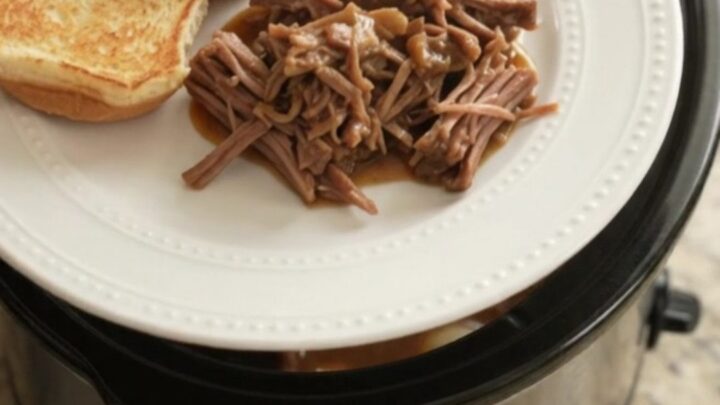
After hours of slow cooking, the meat is visibly tender and the gravy is bubbling gently. The beef pulls apart easily with a fork, and the onions are soft and glistening. The aroma is rich and savory. Check that the meat is fully cooked and shreds without effort, and skim any excess fat from the surface.
Toast and Serve
- Toast the BunsToast the brioche slider buns in a toaster or under the broiler until golden and crisp.Look for The buns are lightly browned and fragrant.Tip Butter the cut sides before toasting for extra richness.
- Assemble and ServePile the shredded beef onto the bottom halves of the toasted buns. Spoon a generous amount of the Guinness onion gravy over the beef, then top with the other half of each bun.Look for The beef is moist and the gravy soaks into the bun.Tip Serve extra gravy on the side for dipping.
The toasted brioche buns are golden and crisp. When the beef is piled on, it's moist and glistening, with gravy soaking into the bread. The dish looks inviting, with the deep brown beef contrasting with the pale buns. Serve immediately while warm, with extra gravy on the side.
Common mistakes
One common mistake is lifting the lid frequently to check on the roast, which lets heat escape and lengthens cooking time. Another is cooking on high for too short a time, which won't break down the collagen properly.
If the roast is tough, it needs more time. Also, be careful not to overcook the beef to the point where it becomes mushy — you want it tender but still with some texture. Finally, don't skip skimming the fat from the gravy; it can make the dish greasy.
How to tell it’s done
The roast is done when it is fork-tender and easily shreds. Insert a fork into the center; it should twist easily and the meat should pull apart with little resistance.
The internal temperature should read at least 145°F (63°C) for whole-cut meat, but because it's cooked low and slow, it will likely be higher — that's fine.
Let the meat rest for at least 3 minutes before shredding to allow the juices to redistribute. The gravy should be thick enough to coat a spoon; if it's too thin, simmer on the stovetop or use a cornstarch slurry.
- Steaks, chops and roasts: 145°F (63°C) in the thickest part, then a 3-minute rest
Up next · Part 3 of 3
4 variations · storage & make-ahead · 5 answers · printable card
Tips, FAQ & printable recipe (Part 3)← Back to the ingredients (Part 1)