Dinner · Part 1 of 3: Ingredients
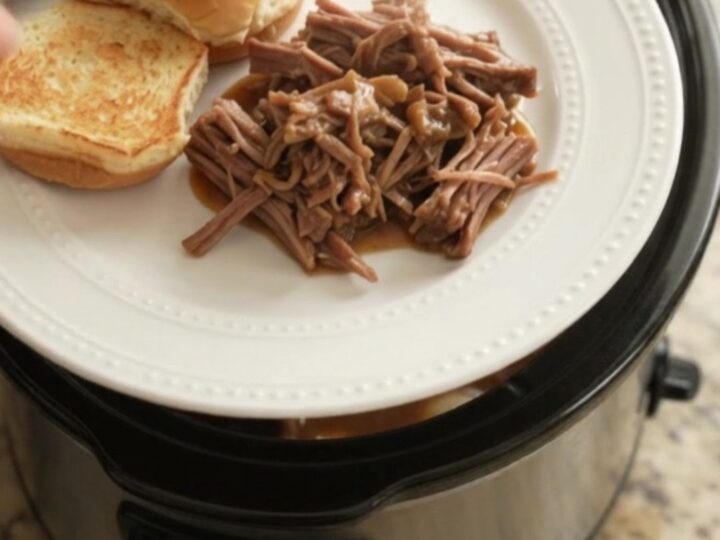
Guinness Onion Brown Gravy Chuck Roast
- Prep
- Cook
- Total
- Serves
- 8
This slow-cooker Guinness onion brown gravy chuck roast is the kind of dinner that feels like a special occasion but comes together with almost no effort.
A well-marbled chuck roast simmers low and slow in a rich blend of stout, pearl onions, and savory brown gravy until it falls apart at the touch of a fork. Pile it onto toasted brioche sliders for a hearty meal that's perfect for game day or a cozy weeknight.
This recipe takes the classic pot roast and gives it an Irish twist with a full bottle of Guinness stout. The dark beer adds a subtle bitterness and malty sweetness that pairs beautifully with the rich beef and savory gravy. Pearl onions soften into buttery bites, and the slow-cooking process turns an inexpensive chuck roast into a meltingly tender centerpiece.
The hands-on time is minimal: just layer the ingredients in the slow cooker and let it work its magic. The result is a versatile dish that can be served over mashed potatoes, on slider buns, or simply in a bowl with a spoon. It's the kind of meal that makes the whole house smell wonderful.
Ingredients
- 3 1/2 lb beef chuck roast
- 1 cup pearl onions, peeled
- 12 fl oz Guinness stout
- 2 cups rich brown gravy
- 4 tbsp unsalted butter
For serving
- 8 brioche slider buns, toasted
Why this recipe works
Slow cooking is the secret to transforming a tough, well-exercised cut like chuck roast into fork-tender perfection.
The low heat and long cooking time break down the collagen in the meat, turning it into gelatin that enriches the gravy and gives the beef its luscious, melt-in-your-mouth texture. Because the roast is cooked in liquid, it stays moist and absorbs the flavors of the Guinness and aromatics.
The combination of Guinness and brown gravy creates a deeply savory sauce with layers of complexity. The stout contributes roasted, coffee-like notes that complement the beef without overwhelming it.
Pearl onions hold their shape during the long cook, becoming soft and sweet, and they add little bursts of flavor throughout. The butter adds a silky finish to the gravy, tying everything together.
Notes and substitutions
Choose a well-marbled chuck roast for the best results; the fat keeps the meat moist and adds flavor. If you can't find pearl onions, substitute a large yellow onion cut into wedges. For the gravy, use a good-quality store-bought beef gravy or make your own with beef broth and a roux.
Guinness is the classic choice, but any dark stout or porter will work. If you prefer to avoid alcohol, use a non-alcoholic stout or replace with beef broth. The brioche slider buns are optional — the roast is equally delicious served over mashed potatoes or egg noodles. Toasting the buns adds a nice crunch that contrasts with the tender beef.
- Guinness stout: Use a non-alcoholic stout or beef broth for a milder flavor; reduce liquid slightly if using broth.
- Pearl onions: Substitute with a large yellow onion, cut into wedges, or frozen pearl onions (thawed).
- Brioche slider buns: Use any soft slider rolls or dinner rolls; for a gluten-free option, use gluten-free rolls.
- Rich brown gravy: Use a store-bought beef gravy or make a quick gravy from beef broth and cornstarch.
Equipment
- Slow cooker (6-quart or larger)
- Measuring cups
- Tongs or forks for shredding
- Serving spoon
- Small bowl for onions (if peeling)
- Cutting board
Up next · Part 2 of 3
6 steps · 8 h of cooking · what to look for at each stage
Step-by-step instructions (Part 2)