Dinner · Part 3 of 3: Tips & recipe card
French Onion Meatloaf with Bubbly Gruyère Topping Tips, FAQ & printable recipe
- Prep
- Cook
- Total
- Serves
- 8
Tips for success
Start the onions before anything else, because they set the pace of the whole recipe and cannot be hurried. If the pan base darkens faster than the onions soften, add a tablespoon of water and scrape — the fond dissolves back in rather than burning.
Salting the onions at the start draws out moisture that then evaporates, concentrating the sweetness without extra fat.
Grate the cheese fresh; pre-shredded cheese carries anti-caking starch that melts into a grainy layer instead of glossy strands.
For the deepest browning on the cap, finish under the broiler for the final minute and stay at the oven door — the line between golden and scorched is a matter of seconds. Slice with one smooth stroke of a sharp knife, and wipe the blade between slices for clean edges.
Variations
- Individual Mini Loaves: Divide the mixture among six mini loaf pans and reduce the first bake to about 25 minutes. Each serving gets more browned edge and its own cheese cap, and the smaller loaves reach temperature faster on a weeknight.
- Mushroom-Onion Version: Swap half a pound of the onions for finely chopped cremini mushrooms, cooking them with the onions until their moisture evaporates. The loaf turns earthier and even more moist, and the cheese topping stays exactly the same.
- Cheddar-Dijon Topping: Replace the Gruyère with sharp cheddar and brush the loaf with a tablespoon of Dijon before the cheese goes on. The result is tangier and sharper, closer to a bistro-style meatloaf than the soup-inspired original.
- Free-Form Drip Loaf: Shape the meat on a rimmed baking sheet instead of a loaf pan and leave the drippings in place. The edges brown deeply on all sides, and the juices mix with the onions for spooning over each slice at the table.
Storage and make-ahead
- Fridge
- Wrap tightly and refrigerate within 2 hours of cooking; keeps 3 to 4 days and slices cleanly cold for sandwiches.
- Freezer
- Freeze the baked loaf, whole or in slices, wrapped well for up to 3 months. Thaw overnight in the refrigerator before reheating.
- Reheat
- Cover slices and warm in a 325°F (165°C) oven for 15 to 20 minutes, or microwave gently in short bursts until heated through.
Cool leftovers for no more than 2 hours on the counter, then wrap the loaf or individual slices tightly and refrigerate. The flavors deepen overnight, and the loaf slices cleanly straight from the fridge for sandwiches. Use within 3 to 4 days.
The caramelized onions can be cooked up to 3 days ahead; cool them no more than 2 hours, then refrigerate in a covered container and keep them chilled until mixing.
The full loaf can be shaped a day in advance, covered and held in the refrigerator, then baked straight from cold — add 5 to 10 minutes to the first bake and rely on the thermometer rather than the clock for the finish.
Serving ideas
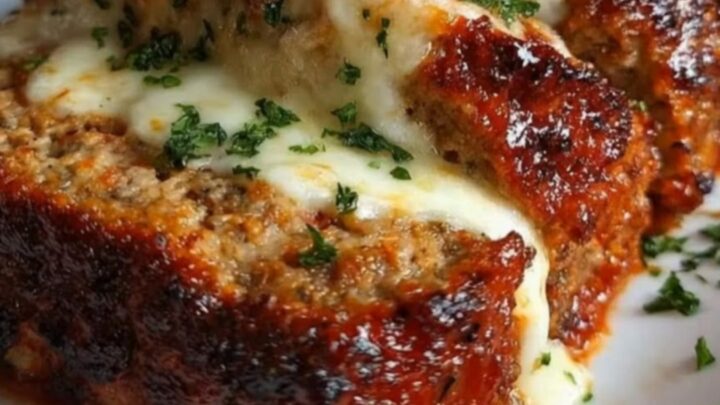
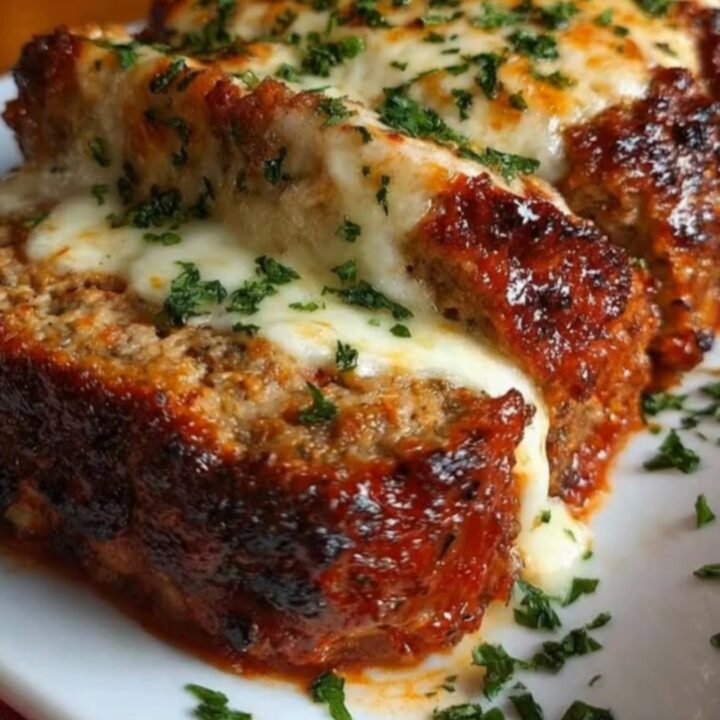
Serve the loaf in thick slices, lifted with a wide metal spatula so the melted cheese cap stays intact and stretches over the edge of each portion. Spoon any pan drippings back over the top, and scatter the chopped parsley at the table so its color stays vivid against the browned cheese.
This is a dinner that wants simple, starchy company: creamy mashed potatoes, buttered egg noodles or a crusty loaf of bread to catch the juices, plus a sharp green salad or green beans to cut the richness.
A cold glass of the same broth-friendly flavors — a simple side of roasted carrots works too — rounds out the plate without competing with the onions and cheese.
Frequently asked questions
Can the caramelized onions be made ahead?
Why did the cheese brown before the loaf finished cooking?
Can this be frozen after baking?
How is doneness checked without a thermometer?
Can the loaf be shaped free-form instead of in a pan?
French Onion Meatloaf with Bubbly Gruyère Topping
Ingredients
- 3 tbsp unsalted butter
- 2 lb yellow onions, thinly sliced
- 1 1/2 tsp kosher salt, divided
- 1/2 cup beef broth
- 3 garlic cloves, minced
- 1 tbsp fresh thyme leaves
- 1 tbsp Worcestershire sauce
- 2 lb ground beef, 80/20
- 2 large eggs, lightly beaten
- 3/4 cup plain breadcrumbs
- 1/2 tsp freshly ground black pepper
- 1 1/2 cups shredded Gruyère cheese
- Fresh parsley, chopped, for serving
Instructions
- Melt the butter in a large skillet over medium heat. Add the sliced onions and 1/2 tsp of the kosher salt, and toss so every strand picks up a little fat. Cook, stirring every few minutes, letting the onions soften and release their liquid before the real browning begins.
- Lower the heat to medium-low and keep cooking the onions for 30 to 35 minutes, stirring more often as the bottom picks up color. Scrape the browned bits off the pan base each time; they melt back into the onions and build the deep, sweet flavor that makes this loaf taste like the soup.
- Pour in the beef broth and scrape the skillet bottom clean, letting the liquid bubble away until mostly absorbed. Stir in the garlic, thyme and the remaining 1 tsp salt, and cook 1 minute more. Transfer the onion mixture to a shallow bowl and set it aside to cool while the oven heats.
- Heat the oven to 375°F (190°C). In a large bowl, gently combine the ground beef, eggs, breadcrumbs, Worcestershire sauce and black pepper with your hands. Stop as soon as the mixture looks uniform — overworking the meat is what turns a meatloaf dense and crumbly instead of tender.
- Add the cooled caramelized onions to the bowl, reserving a generous spoonful for the top. Fold them through the meat with a few deliberate turns so ribbons of onion run through every slice rather than disappearing into the mix. The mixture should feel moist but not sticky.
- Transfer the mixture to a 9x5-inch loaf pan or shape it free-form on a rimmed baking sheet, pressing gently into an even loaf about 2 1/2 inches tall. Smooth the top, then spread the reserved onions over it. Keep the meat cold until it goes into the oven.
- Bake the loaf for 40 minutes, until the internal temperature reaches 150°F (66°C) on an instant-read thermometer and the top looks set. The onions on top will darken at the edges and the fat will pool visibly around a free-form loaf. Keep the thermometer handy from here on.
- Take the loaf out and scatter the shredded Gruyère evenly over the top, pushing it to the edges. Return it to the oven for 8 to 10 minutes, until the cheese is fully melted, bubbly and browned in spots, and the meat registers 160°F (71°C) at the center — the safe temperature for ground meat and for the eggs binding it.
- Let the meatloaf rest for 10 minutes on a cutting board. The juices redistribute during this wait, so the first slice comes out moist instead of pooling liquid on the board. Scatter the chopped parsley over the melted cheese just before serving.
- Cut the loaf into thick slices and lift each one with a metal spatula so the melted cheese stretches and stays on top. Serve right away while the cheese is still glossy and the onions are steaming, with the pan juices spooned over if a free-form loaf left any behind.
Estimated nutrition per serving
- Calories
- 520
- Protein
- 34 g
- Carbohydrates
- 14 g
- Fat
- 36 g
- Sodium
- 780 mg
Next recipe

Creamy Sun-Dried Tomato Chicken Meatballs in One Skillet
See the recipe → →This recipe is based on a short cooking video and is published under the pen name Clara Weller. It was checked before publication, but errors can slip through. Nutrition, when shown, is an estimate. Read more in our editorial policy and on our food safety page.
More recipes to try

Oven Roasted Sausage and Potatoes: One Pan, Crispy in 40 Minutes
Total time: 48 min
5-Minute Spicy Garlic Chili Oil Ramen
Total time: 5 min
Spicy Lamb Birria Pizzadilla with Crispy Consomé Tortillas
Total time: 22 min
Birria Crunchwrap Supreme: Crispy, Juicy and Layered
Total time: 20 min
Crispy Fried Avocado Tacos with Habanero Hot Honey
Total time: 45 min