Breakfast · Part 2 of 3: Instructions
Flaky Poppy Seed Çörek Buns with Sweet Black Layers Step-by-step instructions
- Prep
- Cook
- Total
- Serves
- 8
Before you start
Before starting, gather all your ingredients and measure them out. Warm the milk to about 110°F (43°C) to activate the yeast. Make sure the butter for the filling is melted and slightly cooled. Have a clean, floured surface ready for kneading and rolling.
Line a baking sheet with parchment paper. Set out a clean kitchen towel to cover the dough while it rests. Read through the entire recipe so you know what to expect at each step. This recipe takes about 1 hour and 35 minutes from start to finish, including resting time.
Ingredients at a glance (12)
- 1 1/2 cups warm milk (300ml)
- 1/2 cup vegetable oil (100ml)
- 3 tbsp granulated sugar
- 1 tsp salt
- 1 packet active dry yeast (11g)
- 1 large egg
- 4 1/2 cups all-purpose flour
- 1 cup black poppy seed paste (haşhaş ezmesi)
- 125 g unsalted butter, melted
- 1/2 cup vegetable oil
- 4 tbsp granulated sugar
- 1 egg yolk, beaten
Instructions
Dough and Filling
- Make the DoughIn a large bowl, whisk together the warm milk, vegetable oil, sugar, salt, yeast, and egg. Let sit for 5 minutes until foamy. Gradually add the flour, stirring with a wooden spoon until a soft dough forms. Turn out onto a floured surface and knead for 8-10 minutes until smooth and elastic. Place in a greased bowl, cover with a towel, and let rest for 40 minutes.Look for The dough should be soft, slightly sticky, and pull away from the sides of the bowl.Tip If the dough is too sticky, add a little more flour, one tablespoon at a time.
- Prepare the FillingWhile the dough rests, make the filling. In a medium bowl, mix the black poppy seed paste with the melted butter, vegetable oil, and granulated sugar. Stir until well combined and smooth. Set aside at room temperature.Look for The filling should be spreadable but not runny.Tip If the filling is too thick, add a tablespoon of warm water to loosen it.
After mixing and kneading, the dough should be smooth, elastic, and slightly tacky. It should have doubled in size after resting. The filling should be smooth, spreadable, and well combined.
It should smell nutty and sweet. The dough should be soft and pliable, not sticky. If the dough springs back when poked, it's ready to roll.
Shaping the Buns
- Roll and Fill the DoughAfter the dough has rested, punch it down and divide it into two equal portions. On a lightly floured surface, roll each portion into a large rectangle, about 1/4-inch thick. Spread half of the poppy seed filling evenly over each rectangle, leaving a small border. Roll each rectangle tightly into a log, starting from the long side. Pinch the seams to seal.Look for The dough should be rolled evenly and the filling should be spread to the edges.Tip Use a bench scraper to help lift the dough if it sticks.
- Slice and Twist the StripsUsing a sharp knife, slice each log into 1-inch wide strips. Take each strip and twist it several times to create a spiral rope. Then coil the twisted strip into a round snail bun, tucking the end underneath. Place the buns on a baking sheet lined with parchment paper, leaving space between them.Look for The strips should be twisted tightly and the buns should hold their shape.Tip If the dough is too sticky to twist, lightly flour your hands.
- Brush with Egg WashIn a small bowl, beat the egg yolk with a tablespoon of water. Brush the tops of the buns generously with the egg wash. This will give them a shiny, golden crust as they bake.Look for The buns should be evenly coated with the egg wash.Tip For an extra glossy finish, brush a second coat after 10 minutes of baking.
The dough should roll out easily without tearing. The filling should spread evenly, leaving a border. When sliced and twisted, the strips should hold their shape and show distinct spirals. The buns should be evenly spaced on the baking sheet, with enough room to expand. The egg wash should give them a glossy shine.
Baking to Golden
- Bake the BunsPreheat the oven to 375°F (190°C). Bake the buns for 25 minutes, or until they are deeply golden brown and sound hollow when tapped on the bottom. If the tops brown too quickly, cover loosely with foil.Look for The buns should be puffed up, golden, and fragrant.Safe temperature 160°F (71°C) internal temperature (egg dishes)Tip Rotate the baking sheet halfway through baking for even browning.
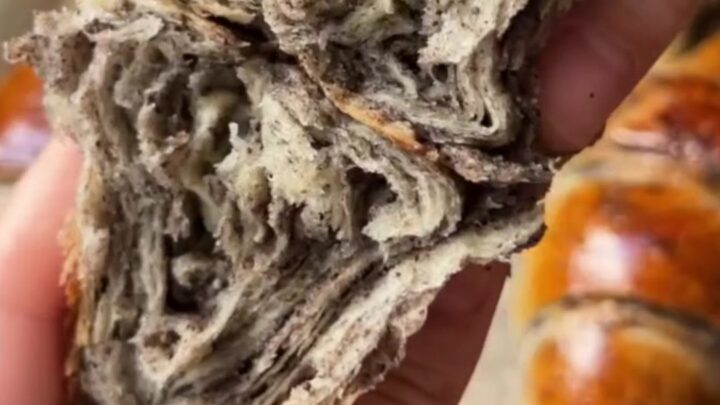
- Cool and Pull ApartRemove the buns from the oven and let them cool on the baking sheet for 5 minutes. Then transfer to a wire rack to cool slightly. Serve warm, pulling apart the flaky layers to reveal the sweet poppy seed filling.Look for The layers should pull apart easily, showing the dark, sweet filling.Tip These buns are best enjoyed warm, but they are also delicious at room temperature.
The buns should puff up and turn deeply golden brown. The kitchen will smell warm and yeasty. When tapped, they should sound hollow. The internal temperature should reach at least 160°F (71°C). The tops should be glossy and the layers visible. Let them cool slightly before serving so the filling sets.
Common mistakes
One common mistake is using milk that's too hot, which kills the yeast and prevents the dough from rising. Another is over-flouring the dough, making it dry and tough. When rolling and twisting, work quickly so the dough doesn't dry out.
If the filling is too runny, it can leak out during baking; chill it briefly if needed. Don't skip the resting time—it's essential for a light, airy texture. Finally, resist the urge to open the oven too often while baking, as this can cause the buns to sink.
How to tell it’s done
The buns are done when they are deeply golden brown on top and sound hollow when tapped on the bottom. An instant-read thermometer inserted into the center of a bun should read at least 160°F (71°C). The internal temperature ensures the eggs in the dough are fully cooked.
If the tops brown too quickly, cover loosely with foil and continue baking. The buns should feel firm to the touch but still slightly springy. Let them cool for a few minutes before pulling apart to enjoy the flaky layers.
- Egg dishes: 160°F (71°C) in the thickest part
Up next · Part 3 of 3
4 variations · storage & make-ahead · 5 answers · printable card
Tips, FAQ & printable recipe (Part 3)← Back to the ingredients (Part 1)