Breakfast · Part 1 of 3: Ingredients
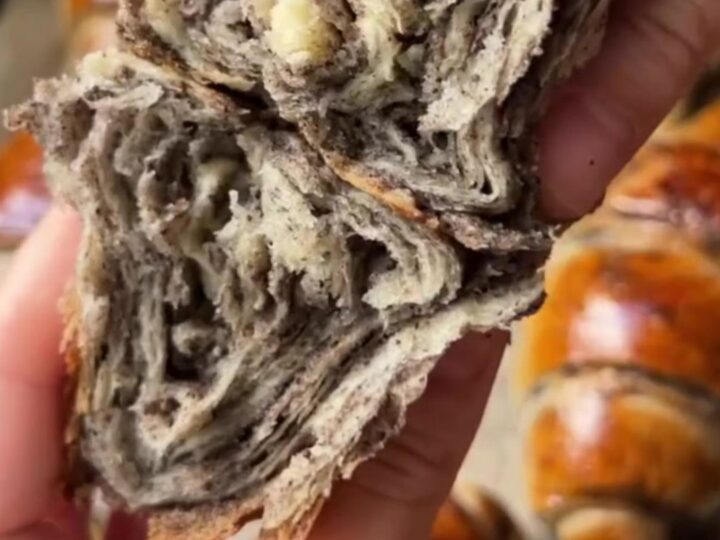
Flaky Poppy Seed Çörek Buns with Sweet Black Layers
- Prep
- Cook
- Total
- Serves
- 8
Imagine pulling apart a warm, golden bun to reveal dozens of flaky, sweet black poppy seed layers. These çörek buns are a Turkish classic, made with a soft, enriched dough and a rich, buttery poppy paste.
The spiral shape isn't just pretty—it creates pockets of filling in every bite. Perfect for breakfast, brunch, or an afternoon tea, these buns are surprisingly simple to make. With a few basic ingredients and a little patience, you can enjoy bakery-quality results at home.
This recipe transforms simple pantry staples into a stunning, pull-apart bread that feels special. The dough, enriched with milk, oil, and egg, becomes tender and slightly sweet. The filling, made from black poppy seed paste, melted butter, and sugar, is rich and nutty.
Twisting the dough into spirals creates those beautiful, flaky layers that make çörek so distinctive. Whether you're new to yeast baking or a seasoned pro, these buns come together with minimal fuss. The result is a batch of golden, aromatic buns that are best shared—though you might want to keep them all for yourself.
Ingredients
- 1 1/2 cups warm milk (300ml)
- 1/2 cup vegetable oil (100ml)
- 3 tbsp granulated sugar
- 1 tsp salt
- 1 packet active dry yeast (11g)
- 1 large egg
- 4 1/2 cups all-purpose flour
Filling
- 1 cup black poppy seed paste (haşhaş ezmesi)
- 125 g unsalted butter, melted
- 1/2 cup vegetable oil
- 4 tbsp granulated sugar
For brushing
- 1 egg yolk, beaten
Why this recipe works
The dough is enriched with warm milk, oil, and egg, which creates a tender, soft crumb. The milk adds richness and helps the dough rise evenly, while the oil keeps the buns moist for days.
Kneading develops the gluten, giving the buns structure and that satisfying pull-apart texture. Resting the dough allows the yeast to work, producing airy, light layers that are a hallmark of good çörek.
The filling is a simple mix of black poppy seed paste, melted butter, and sugar. The butter adds richness and helps the filling spread easily, while the sugar balances the slightly bitter, nutty flavor of the poppy seeds.
Twisting the dough into spirals ensures every bite has a ribbon of filling, creating those dramatic, flaky layers. Baking at a moderate temperature allows the buns to cook through without burning, resulting in a deeply golden, glossy crust.
Notes and substitutions
Black poppy seed paste, also known as haşhaş ezmesi, is available at Middle Eastern or Turkish grocery stores. It has a thick, spreadable consistency and a distinctive, nutty flavor. If you can't find it, you can substitute with ground black poppy seeds mixed with a little honey and milk. The filling should be spreadable but not runny, so adjust the liquid accordingly.
Use a good-quality active dry yeast for the best rise. Make sure the milk is warm, not hot, to avoid killing the yeast. All-purpose flour works well here, but bread flour will give a slightly chewier texture. If the dough feels too sticky, add a little more flour, but be careful not to overdo it—a soft, slightly tacky dough yields the most tender buns.
- black poppy seed paste: Use 1 cup finely ground black poppy seeds mixed with 1/4 cup honey or maple syrup and 2 tbsp milk if paste is unavailable.
- vegetable oil: Use any neutral oil like canola or sunflower oil.
- all-purpose flour: Bread flour can be used for a chewier texture; reduce to 4 cups and adjust with extra flour if needed.
Equipment
- Large mixing bowl
- Whisk
- Measuring cups and spoons
- Clean kitchen towel
- Rolling pin
- Knife or bench scraper
- Baking sheet
- Pastry brush
Up next · Part 2 of 3
7 steps · 25 min of cooking · what to look for at each stage
Step-by-step instructions (Part 2)