Dinner · Part 2 of 3: Instructions
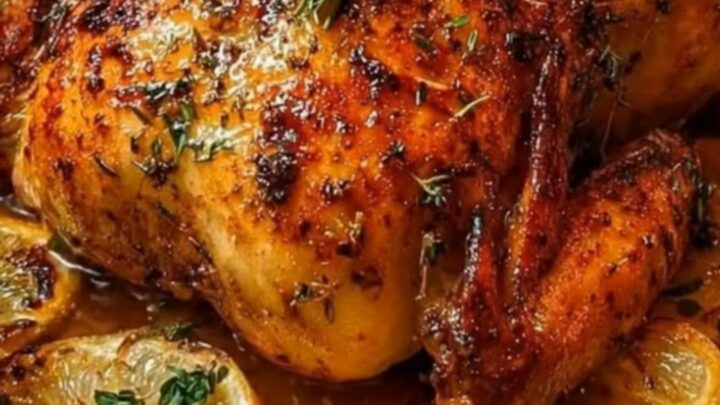
Crispy Lemon Herb Roasted Chicken with Golden Butter Baste Step-by-step instructions
- Prep
- Cook
- Total
- Serves
- 6
Before you start
Before you begin cooking, retrieve the whole chicken from the refrigerator and let it sit at room temperature for about 20 to 30 minutes. This takes the chill off the meat, ensuring it cooks evenly from the edges to the center.
Gather your unsalted butter and make sure it is softened to room temperature so it blends easily with the herbs. Slice the lemons into even wheels and chop the fresh rosemary. Prepare your roasting pan and kitchen twine so everything is within arm's reach once you handle the raw poultry.
Ingredients at a glance (4)
- 1 whole chicken (4 to 5 pounds)
- 1/2 cup unsalted butter, softened
- 4 sprigs fresh rosemary, divided
- 3 medium lemons, sliced into wheels
Instructions
Preparation and Buttering
- Prepare the Chicken and Herb ButterPreheat the oven to 425°F (218°C). Pat the whole chicken completely dry with paper towels to ensure the skin gets crispy. In a small bowl, mix the softened unsalted butter with chopped fresh rosemary. Gently loosen the skin over the chicken breasts and thighs with your fingers, then spread half of this herb butter directly under the skin. Rub the remaining butter all over the outside of the chicken skin.Look for The skin should be completely dry before applying the butter.Tip Drying the skin thoroughly is the single most important step for achieving a crackling texture.
- Arrange the Lemon BedScatter the lemon wheels and remaining fresh rosemary sprigs across the bottom of a heavy roasting pan to create a fragrant bed. Place the prepared whole chicken on top of the lemon slices, breast side up. If desired, tuck the wing tips behind the back and tie the legs together with kitchen twine to ensure even cooking.Look for The chicken should sit directly on top of the lemon slices.Tip Trussing the legs helps the chicken cook more evenly and keeps the cavity moist.
At the end of this phase, the chicken should be thoroughly dried and completely coated in the fragrant herb butter. You will see the butter tucked neatly beneath the skin of the breasts, and the bird will rest securely on a colorful bed of sliced lemon wheels and fresh rosemary sprigs in the roasting pan.
The First Roast and Basting
- Roast and BastePlace the roasting pan in the preheated oven and roast for 30 minutes. Carefully pull the pan out and use a basting spoon or pastry brush to scoop up the melted herb butter and sizzling pan juices, spooning them generously over the entire bird. Scatter additional lemon wheels around the chicken in the pan juices to caramelize.Look for The skin will begin to turn a light golden color during the first roast.Tip Basting redistributes the fat and juices, keeping the breast meat incredibly tender.
At this checkpoint, the kitchen will fill with the incredible aroma of roasting herbs and citrus. The chicken skin will have started to turn a light golden color, and a pool of sizzling herb butter and lemon juices will have gathered at the bottom of the roasting pan, ready to be basted back over the bird.
Final Roasting, Resting, and Carving
- Final Roast and Temperature CheckReturn the chicken to the oven and roast for another 40 to 45 minutes, basting once more halfway through. The chicken is cooked when a meat thermometer inserted into the thickest part of the thigh, avoiding the bone, registers a safe internal temperature of 165°F (74°C). The skin should be deeply golden and crackling, and the juices must run completely clear.Look for Look for crackling golden skin and sizzling pan juices.Safe temperature 165°F (74°C) internal temperature (poultry)Tip Always measure the temperature in the thickest part of the thigh without touching the bone.
- Rest and CarveRemove the roasting pan from the oven. Transfer the roasted chicken to a cutting board and let it rest for 15 minutes before carving. This resting period allows the steaming juices to redistribute throughout the meat, ensuring every slice remains tender and moist. Carve the chicken and serve alongside the caramelized lemon wheels and pan juices.Look for Do not skip the resting step, or the juices will escape when carved.Tip Resting guarantees that the juices stay in the meat rather than running onto your cutting board.
By the end of this final phase, the chicken skin will be a deep, crackling golden-brown color. The pan juices will be bubbling vigorously around caramelized, slightly charred lemon wheels.
After resting for fifteen minutes, carving into the breast will release a cloud of aromatic steam and clear, rich juices.
Common mistakes
The most common mistake is roasting a wet chicken, which steams the skin instead of crisping it; always pat the bird completely dry with paper towels. Another error is skipping the resting period.
Carving the chicken immediately out of the oven forces all the hot, pressurized juices to run out onto the cutting board, leaving the meat dry. Finally, avoid roasting at too low a temperature, which prevents the skin from rendering its fat and becoming crispy.
How to tell it’s done
Determining perfect doneness requires a digital meat thermometer. Insert the probe into the thickest part of the chicken thigh, taking care not to touch the bone, which can give a false hot reading.
The chicken is perfectly cooked and safe to eat when the thermometer registers exactly 165°F (74°C). The juices running from the cavity and the thigh joint should be completely clear, with no trace of pink, and the drumsticks should wiggle easily in their joints.
- Poultry: 165°F (74°C) in the thickest part
Up next · Part 3 of 3
2 variations · storage & make-ahead · 3 answers · printable card
Tips, FAQ & printable recipe (Part 3)← Back to the ingredients (Part 1)