Dinner · Part 1 of 3: Ingredients
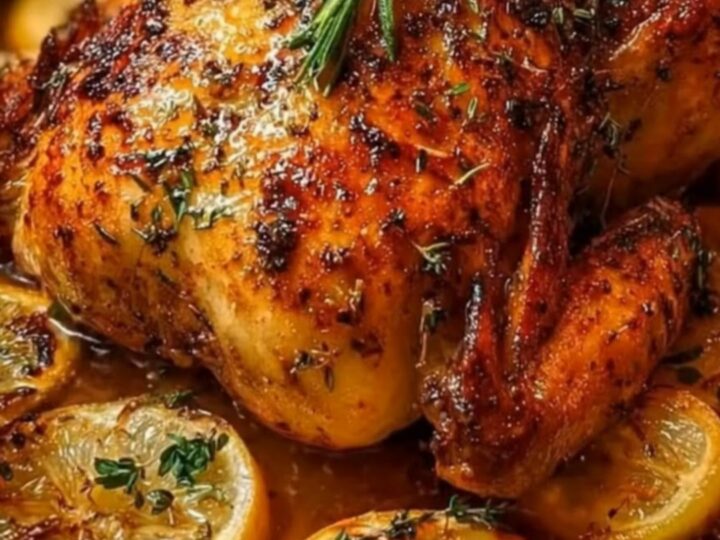
Crispy Lemon Herb Roasted Chicken with Golden Butter Baste
- Prep
- Cook
- Total
- Serves
- 6
Nothing beats the comforting aroma of a whole chicken roasting in the oven, especially when it is infused with bright citrus and earthy herbs. This recipe delivers the ultimate sensory experience: crackling golden skin on the outside and incredibly juicy, tender meat on the inside. By combining rich herb butter with a bed of caramelized lemon slices, you create a self-basting masterpiece that makes any dinner feel special.
Roasting a whole bird can feel intimidating, but the process is remarkably straightforward when you focus on key techniques. The secret lies in prep work and temperature control. By drying the skin thoroughly and applying a fragrant herb butter both under and over the skin, you guarantee maximum flavor infusion and a beautiful, even brown color.
As the chicken roasts, the lemons underneath caramelize, releasing sweet and tangy juices that combine with the melted butter to form a rich pan sauce. This dish is perfect for Sunday dinners or meal prep.
Ingredients
- 1 whole chicken (4 to 5 pounds)
- 1/2 cup unsalted butter, softened
- 4 sprigs fresh rosemary, divided
- 3 medium lemons, sliced into wheels
Why this recipe works
The method works beautifully because the herb butter is placed directly under the skin, which puts the fat and herbs in direct contact with the breast meat. This prevents the lean white meat from drying out during the high-heat roasting process.
Meanwhile, the butter on the exterior of the skin melts and fries the skin as it cooks, resulting in that coveted, crackling-crisp texture that seals in the natural steam and juices.
Elevating the chicken on a bed of sliced lemon wheels serves two critical functions. First, it acts as a natural roasting rack, preventing the bottom of the chicken from becoming soggy in the pan drippings.
Second, as the lemons caramelize under the intense heat, their sugars concentrate and their juices mingle with the rendered chicken fat and herb butter, creating a built-in, deeply flavorful pan sauce perfect for spooning over the carved meat.
Notes and substitutions
When choosing a chicken, look for a plump, high-quality whole bird weighing between four and five pounds. Ensure it is completely thawed before starting. For the herb butter, unsalted butter is preferred to allow the fresh rosemary and bright lemon flavors to shine.
Fresh rosemary is highly recommended over dried herbs, as the fresh sprigs release aromatic oils that withstand the long roasting time without burning or becoming bitter.
Equipment plays a vital role in your success. A heavy-duty roasting pan or a large cast-iron skillet distributes heat evenly and prevents the pan juices from burning. A reliable instant-read digital meat thermometer is non-negotiable; it is the only way to guarantee the chicken reaches the safe internal temperature of 165 degrees Fahrenheit without overcooking and drying out the delicate breast meat.
- unsalted butter: ghee or olive oil for a dairy-free option, though butter provides the classic rich flavor and golden browning
- fresh rosemary: fresh thyme or oregano, which pair beautifully with lemon and poultry
Equipment
- Roasting pan
- Meat thermometer
- Carving knife
- Basting spoon
- Kitchen twine
Up next · Part 2 of 3
5 steps · 1 h 15 min of cooking · what to look for at each stage
Step-by-step instructions (Part 2)