Dinner · Part 2 of 3: Instructions
Crispy Korean Gochujang Sticky Popcorn Chicken Step-by-step instructions
- Prep
- Cook
- Total
- Serves
- 4
Before you start
Before you start, set up your frying station: a large pot with oil and a thermometer, a wire rack over a baking sheet for draining, and a wok or skillet for the glaze. Cut the chicken into uniform 1-inch pieces so they cook evenly. Grate the ginger and mince the garlic.
Measure out all the glaze ingredients so they are ready to go when the chicken comes out of the fryer. Have the sesame seeds and scallions prepped for the final garnish. The oil should be heated to 340°F (170°C) for the first fry, then increased to 375°F (190°C) for the second. Keep the cooked chicken warm on the rack while you finish frying the remaining batches.
Ingredients at a glance (13)
- 1 1/2 lb boneless, skinless chicken thighs, cut into 1-inch pieces
- 2 tbsp soy sauce
- 1 tbsp fresh ginger, grated
- 1 cup potato starch
- 4 cups vegetable oil, for frying
- 3 tbsp gochujang (Korean chili paste)
- 2 tbsp ketchup
- 2 tbsp honey
- 1 tbsp brown sugar
- 1 tbsp soy sauce
- 3 cloves garlic, minced
- 1 tbsp toasted sesame seeds
- 2 scallions, thinly sliced
Instructions
Marinate, Coat, and First Fry
- Marinate and Coat the ChickenIn a large bowl, combine the chicken pieces with 2 tablespoons soy sauce and the grated ginger. Toss well to coat, then cover and refrigerate for at least 15 minutes (or up to 2 hours). When ready to cook, place the potato starch in a shallow dish. Working in batches, dredge each piece of chicken in the starch, pressing lightly so it adheres and forms craggy flakes. Shake off any excess and set the coated pieces on a plate.Look for The chicken is evenly coated with a thick, powdery layer of starch that clings in craggy flakes.Tip Let the coated chicken sit for 5 minutes before frying; this helps the starch adhere and prevents it from falling off in the oil.
- First Fry at 170°C (340°F)In a large pot, heat the vegetable oil over medium-high heat until a deep-fry thermometer reads 340°F (170°C). Carefully lower about one-third of the chicken pieces into the hot oil, making sure not to overcrowd the pot. Fry for 4 minutes, turning occasionally, until the coating is pale golden and the chicken is cooked through. Use a spider strainer to transfer the chicken to a wire rack set over a baking sheet. Repeat with the remaining batches.Look for The chicken is lightly golden and floats; the oil bubbles steadily around it.Safe temperature 165°F (74°C) internal temperature (poultry)Tip Keep the oil temperature steady; if it drops too low, the coating will absorb oil and become greasy.
- Second Fry at 190°C (375°F)Increase the oil temperature to 375°F (190°C). Working in batches again, return the fried chicken to the hot oil and fry for 90 seconds, until the coating is deep amber, shatteringly crisp, and the chicken is heated through. Transfer back to the wire rack to drain. The chicken should reach an internal temperature of 165°F (74°C) if checked with an instant-read thermometer.Look for The coating turns a deep amber color and makes a crisp sound when tapped.Safe temperature 165°F (74°C) internal temperature (poultry)Tip Do not skip the second fry; it is what creates the extra-crunchy, crackling crust.
The chicken is marinated in soy and ginger, then dredged in potato starch until every piece is heavily coated with powdery craggy flakes. The first fry at 340°F (170°C) cooks the chicken through, leaving it pale golden and tender. The oil should bubble steadily, and the chicken should float when done. The pieces are not yet deeply browned; that comes in the second fry. At this point, the chicken is cooked but not yet crispy.
Second Fry and Glaze
- Simmer the Gochujang GlazeIn a wok or large skillet, combine the gochujang, ketchup, honey, brown sugar, 1 tablespoon soy sauce, and minced garlic. Place over medium heat and bring to a simmer, stirring constantly. Cook for 2 to 3 minutes, until the glaze thickens, becomes shiny, and forms a frothy, bubbling layer across the surface. Remove from heat.Look for The glaze is thick enough to coat the back of a spoon, glossy, and bubbling gently.Tip If the glaze becomes too thick, add a teaspoon of water at a time to loosen it.
- Toss the Chicken in the GlazeAdd the hot, crispy chicken to the wok with the glaze. Using tongs or a spatula, toss vigorously so every piece is coated in the sticky crimson sauce. The chicken should be evenly glazed but still hold its crunch. Immediately transfer to a serving platter.Look for Each piece is coated in a shiny, sticky red glaze that clings to the craggy surface.Tip Work quickly; the longer the chicken sits in the sauce, the softer the crust becomes.
The second fry at 375°F (190°C) transforms the coating into a deep amber, shatteringly crisp shell. The chicken makes a hard, crackling sound when tapped. The glaze simmers until thick, shiny, and frothy, with a sweet-spicy aroma.
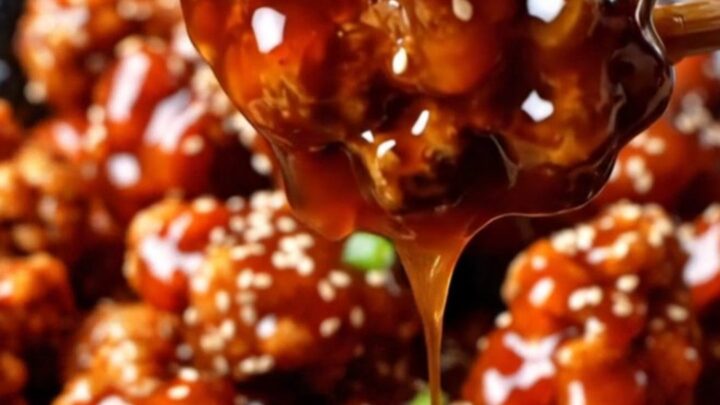
When the hot chicken hits the glaze, it sizzles and coats every craggy surface. The kitchen smells of caramelized sugar, garlic, and chili. The chicken should be tossed quickly to maintain its crunch.
Garnish and Serve
- Garnish and ServeSprinkle the glazed chicken with toasted sesame seeds and sliced scallions. Serve immediately while the chicken is still hot and crispy, with extra gochujang or a side of pickled radish if desired (not shown in video).Look for The sesame seeds and scallions add color and a nutty, fresh contrast to the sticky glaze.Tip Serve right away for the best crunch; leftovers will soften but still taste great.
The finished chicken is glossy, sticky, and studded with sesame seeds and green scallions. Each piece glistens with the crimson glaze. The texture is crunchy, then juicy, then sticky-sweet with a lingering heat. Serve immediately while the crust is at its peak. The contrast between the crackling exterior and the tender interior is the defining feature of this dish.
Common mistakes
One common mistake is overcrowding the pot, which drops the oil temperature and leads to soggy, greasy chicken. Fry in small batches and let the oil come back to temperature between batches. Another issue is coating the chicken too lightly; the starch should form a thick, craggy layer.
If the glaze is too thin, it will soak into the crust and soften it; simmer it until it is thick and bubbling. Finally, do not skip the second fry—it is essential for that extra-crunchy texture.
How to tell it’s done
The chicken is done when the coating is deep amber and shatteringly crisp, and the internal temperature reaches 165°F (74°C) on an instant-read thermometer. The glaze is ready when it coats the back of a spoon and has a glossy, frothy appearance.
After tossing, each piece should be evenly coated but still crunchy. If you bite into a piece and hear a loud crack, you have achieved the perfect texture. Serve immediately for the best experience.
- Poultry: 165°F (74°C) in the thickest part
Up next · Part 3 of 3
4 variations · storage & make-ahead · 5 answers · printable card
Tips, FAQ & printable recipe (Part 3)← Back to the ingredients (Part 1)