Dinner · Part 3 of 3: Tips & recipe card
Crispy Chicken Caesar Pasta Salad: Quick Summer Lunch Tips, FAQ & printable recipe
- Prep
- Cook
- Total
- Serves
- 4
Tips for success
For the crispiest chicken, make sure the oil is hot enough before adding the chicken. Test with a pinch of breadcrumbs—they should sizzle immediately.
Also, let the chicken rest for a few minutes after frying; this helps the crust set and keeps the meat juicy. If you’re making this ahead, keep the dressing separate and toss just before serving.
To keep the salad fresh, store the components separately in the refrigerator. The chicken can be reheated in a toaster oven or air fryer to restore crispiness, but it’s best enjoyed fresh. Feel free to add extra shaved parmesan or a squeeze of lemon at the table for a bright finish.
Variations
- Grilled Chicken Version: Skip the breading and instead season the chicken with salt, pepper, and garlic powder, then grill or pan-sear until cooked through. Slice and add to the salad for a lighter, still-flavorful option.
- Add Bacon: Cook 4 slices of bacon until crisp, chop, and sprinkle over the salad. The smoky salty flavor pairs beautifully with the Caesar dressing and adds extra crunch.
- Make It a Wrap: Use the salad as a filling for large flour tortillas. Roll tightly, slice in half, and enjoy as a portable lunch or picnic option.
- Add Avocado: Dice a ripe avocado and gently fold it into the salad just before serving. The creamy texture complements the crispy chicken and tangy dressing.
Storage and make-ahead
- Fridge
- Store leftovers in an airtight container in the refrigerator for up to 2 days. Keep the dressing separate if possible.
- Freezer
- Not recommended for freezing, as the lettuce and dressing will not hold up well.
- Reheat
- Reheat the chicken strips in a toaster oven or air fryer at 350°F (175°C) for a few minutes to restore crispiness. Do not reheat the whole salad.
Leftover salad can be stored in an airtight container in the refrigerator for up to 2 days. The lettuce will wilt and the chicken will lose some crispness, but it still tastes good.
For best texture, store the dressing separately and toss with the salad just before eating. If the salad has already been dressed, it’s still fine to store, but the romaine will soften.
You can prepare the chicken, pasta, and dressing up to a day ahead. Cook the chicken, let it cool, and store it in the refrigerator in a sealed container. Cook and cool the pasta, then toss with a little olive oil to prevent sticking.
Whisk the dressing and refrigerate. When ready to serve, slice the chicken, chop the romaine, halve the tomatoes, and toss everything together with the dressing.
Serving ideas
Serve this pasta salad as a main dish for lunch or a light dinner. It’s substantial enough on its own, but you could also pair it with crusty bread or a simple green salad. The recipe makes about 4 generous servings, so it’s perfect for a family meal or for meal prep for the next day.
For a prettier presentation, arrange the sliced chicken on top of the salad rather than tossing it all together.
Garnish with extra shaved parmesan and a few cracks of black pepper. If you like, add a squeeze of fresh lemon juice over the top just before serving for a bright pop of flavor.
Frequently asked questions
Can this pasta salad be made ahead of time?
Why does the chicken lose its crispiness?
Can this be made gluten-free?
How should leftovers be stored?
Can the dressing be made without raw eggs?
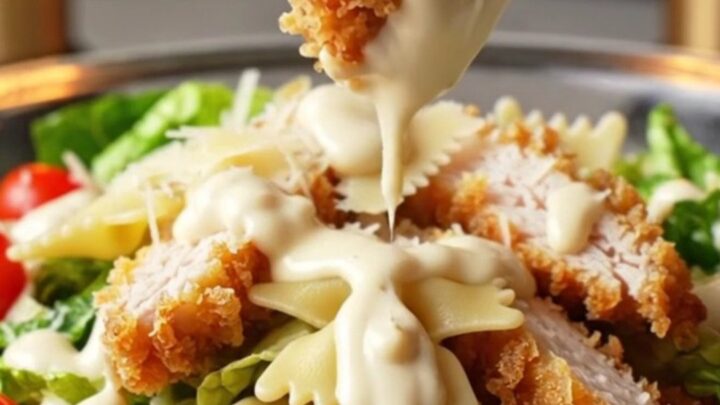
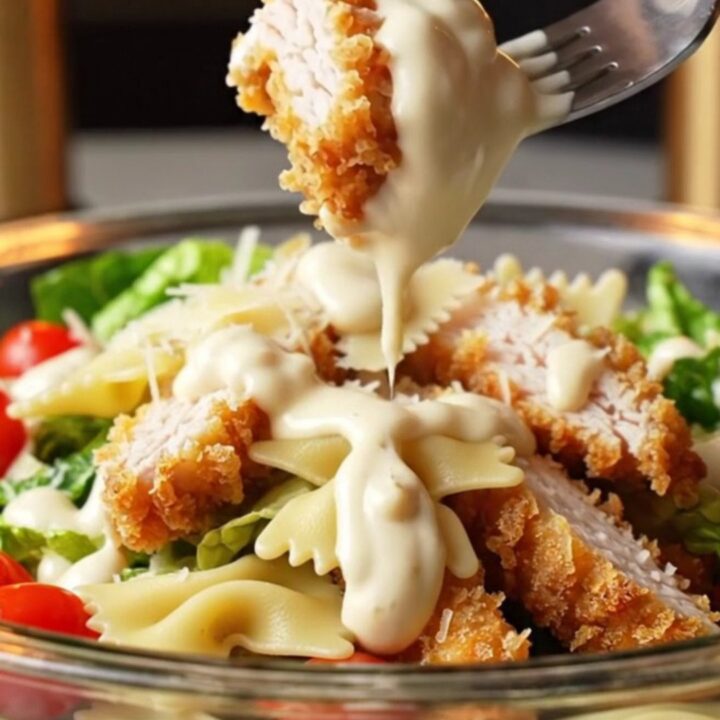
Crispy Chicken Caesar Pasta Salad: Quick Summer Lunch
Ingredients
- 1 1/2 lb boneless, skinless chicken breasts
- 2 large eggs
- 1 1/2 cups panko breadcrumbs
- 1 tsp garlic powder
- 1/2 cup grated parmesan cheese
- 1/2 cup olive oil
- 1/2 cup mayonnaise
- 1 tbsp Dijon mustard
- 1 tsp Worcestershire sauce
- 1 clove garlic, grated
- 2 tbsp fresh lemon juice
- 1/4 cup grated parmesan cheese
- 1/2 tsp black pepper
- 12 oz bowtie (farfalle) pasta
- 2 hearts romaine lettuce, chopped
- 1 cup cherry tomatoes, halved
- 1/2 cup shaved parmesan cheese
Instructions
- Place the chicken breasts between two sheets of plastic wrap and pound to an even 1/2-inch thickness. Set up a breading station: one dish with the beaten eggs, and another with the panko, garlic powder, and 1/2 cup grated parmesan mixed together. Dip each chicken breast in the egg, letting the excess drip off, then press firmly into the panko mixture until evenly coated.
- Heat the olive oil in a large skillet over medium-high heat. When the oil shimmers, add the breaded chicken in a single layer (work in batches if needed). Cook for 3-4 minutes per side, until golden brown and the internal temperature reaches 165°F (74°C). Transfer to a paper towel-lined plate and let rest for a few minutes before slicing.
- In a small bowl, whisk together the mayonnaise, Dijon mustard, Worcestershire sauce, grated garlic, lemon juice, 1/4 cup grated parmesan, and black pepper. Whisk until smooth and creamy. Set aside in the refrigerator while you prepare the pasta and vegetables.
- Bring a large pot of salted water to a boil. Add the bowtie pasta and cook according to package directions until al dente, usually 10-12 minutes. Drain and rinse briefly under cold water to stop the cooking and cool the pasta quickly. Set aside.
- Once the chicken has rested, slice it into thin strips. The crust should be very crispy and the interior juicy. Set aside.
- In a large bowl, combine the cooled pasta, chopped romaine, cherry tomatoes, sliced chicken, and shaved parmesan. Drizzle the Caesar dressing over the top and toss gently with tongs until everything is evenly coated.
- Transfer the salad to serving plates or a large platter. Finish with an extra sprinkle of shaved parmesan and a few cracks of black pepper if desired. Serve right away so the chicken stays crispy.
Estimated nutrition per serving
- Calories
- 780
- Protein
- 42 g
- Carbohydrates
- 68 g
- Fat
- 38 g
Next recipe

Viral Crown Pizza with Braided Stuffed Crust
See the recipe → →This recipe is based on a short cooking video and is published under the pen name Clara Weller. It was checked before publication, but errors can slip through. Nutrition, when shown, is an estimate. Read more in our editorial policy and on our food safety page.
More recipes to try
Shatteringly Crispy Garlic Parmesan Chicken Tenders with Sweet Chili Dip
Total time: 30 min
5-Minute Pourable Batter Gözleme with Melted Cheese
Total time: 25 min
Crispy Chipotle Chicken Mini Tacos Recipe
Total time: 35 min
Crockpot Butternut Squash Gratin with Goat Cheese and Sage
Total time: 4 h 20 min
Cheesy Marinara Crockpot Meatballs with Mozzarella Pearls
Total time: 3 h 15 min