Desserts · Part 3 of 3: Tips & recipe card
Crispy Antep Pistachio Baklava with Forty Phyllo Layers Tips, FAQ & printable recipe
- Prep
- Cook
- Total
- Serves
- 24
Tips for success
For the best texture, make sure the syrup is completely cool before pouring it over the hot baklava. The temperature contrast is what creates the signature crackle and keeps the layers crisp.
If the syrup is even slightly warm, it can make the phyllo soggy. Also, pour the syrup slowly and evenly, letting it run over the entire surface and into the cuts. This ensures every piece is evenly saturated.
When cutting the baklava, use a very sharp, thin-bladed knife and cut with a gentle sawing motion. Wipe the knife clean between cuts to avoid dragging phyllo. If the phyllo tears, don't worry—the layers will still bake together.
After baking, let the baklava rest for at least 30 minutes, but ideally a few hours, so the syrup fully penetrates and the layers set. This makes cutting and serving cleaner.
Variations
- Walnut Baklava: Replace the pistachios with finely chopped walnuts. Toast them lightly before using to deepen the flavor. The syrup can be flavored with a cinnamon stick or a few cloves for a spiced variation.
- Rose-Scented Syrup: Add 1 teaspoon of rose water to the syrup after it has cooled. This floral note pairs beautifully with pistachios. Omit the lemon juice if desired, or use orange blossom water for a different aroma.
- Chocolate Pistachio Baklava: Sprinkle 1/2 cup of finely chopped dark chocolate over the pistachio layer before adding the top phyllo sheets. The chocolate melts during baking, adding a rich, bittersweet contrast to the syrup.
- Coconut Baklava: Mix 1/2 cup of unsweetened shredded coconut into the pistachio filling. Toast the coconut lightly to enhance its flavor. The coconut adds a chewy texture and a subtle tropical note.
Storage and make-ahead
- Fridge
- Refrigerate only if the baklava is not consumed within a week; store in an airtight container to prevent moisture absorption.
- Freezer
- Freeze unbaked assembled baklava for up to 3 months; bake directly from frozen, adding 10 minutes.
- Reheat
- Reheat baked baklava in a 300°F (150°C) oven for 5-8 minutes to refresh crispness.
Store baklava in an airtight container at room temperature for up to one week. The layers will stay crisp for the first few days; after that, they may soften slightly but will still be delicious.
If the baklava becomes too soft, you can reheat it in a 300°F (150°C) oven for 5 minutes to restore some crunch. Do not refrigerate, as this will make the phyllo soggy.
The syrup can be made up to a week ahead and stored in the refrigerator. The baklava can be assembled and cut, then covered and refrigerated for up to 24 hours before baking.
If baking from cold, add 5-10 minutes to the baking time. The finished baklava also keeps well at room temperature for several days, making it a great make-ahead dessert for gatherings.
Serving ideas
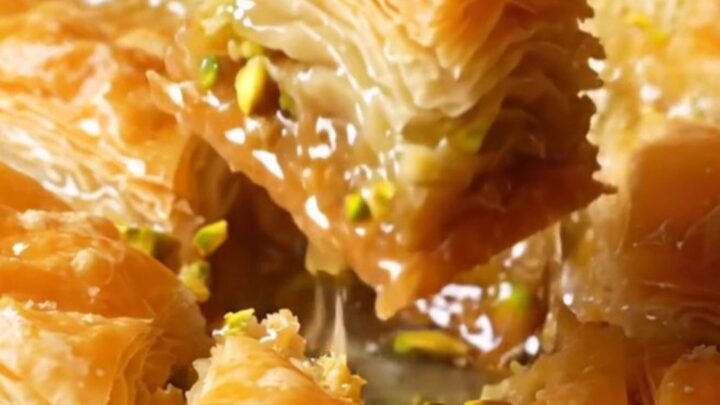
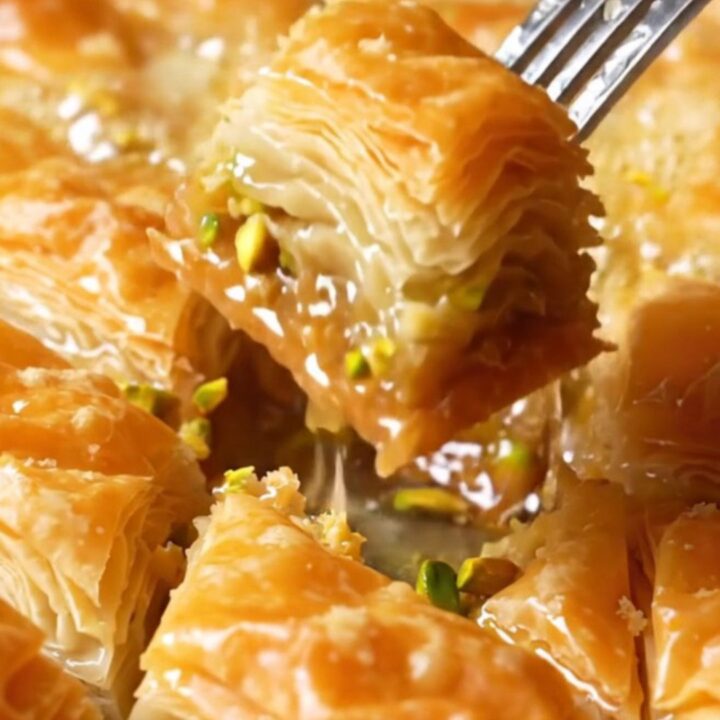
Serve baklava at room temperature or slightly warm. Arrange the diamond pieces on a platter, and if desired, garnish with a few extra finely ground pistachios. The contrast of the golden, syrup-glazed layers and the bright green nuts is stunning. Baklava is traditionally served with Turkish tea or strong coffee, which balances the sweetness.
For a special presentation, place each piece in a small paper baking cup. The baklava is rich, so one or two pieces per person is usually enough. It pairs beautifully with a dollop of clotted cream or a scoop of vanilla ice cream, though it is equally delicious on its own. The shattering layers and nutty filling are the stars.
Frequently asked questions
Why is the syrup poured cold over hot baklava?
Can this baklava be made with regular phyllo dough?
How long does baklava stay fresh?
Can the baklava be frozen before baking?
What is the best way to cut baklava into diamonds?
Crispy Antep Pistachio Baklava with Forty Phyllo Layers
Ingredients
- 40 sheets tissue-thin baklava phyllo dough
- 1 1/2 cups clarified butter, melted
- 2 1/2 cups finely ground Antep pistachios
- 2 cups granulated sugar
- 1 cup water
- 1 tbsp fresh lemon juice
Instructions
- In a small saucepan, combine the sugar and water. Bring to a boil over medium heat, stirring until the sugar dissolves. Reduce the heat and simmer for 10 minutes. Remove from heat and stir in the lemon juice. Let the syrup cool completely to room temperature. Meanwhile, grind the pistachios in a food processor until very fine, but not pasty.
- Preheat the oven to 340°F (170°C). Brush the bottom and sides of a large round or rectangular baking pan with some of the clarified butter. Lay one sheet of phyllo in the pan, pressing it gently into the corners. Brush the entire sheet with clarified butter. Repeat with 19 more sheets, brushing each one generously with butter.
- Sprinkle the finely ground pistachios evenly over the top of the 20 phyllo layers, spreading them to the edges. Gently press the pistachios down with your hands or a flat spatula to create an even, compact layer.
- Layer the remaining 20 phyllo sheets on top of the pistachios, brushing each sheet with clarified butter exactly as before. Ensure the top sheet is well-brushed so it browns evenly.
- Using a very sharp knife, cut the assembled baklava into diamond shapes. First, cut vertical lines about 1 1/2 inches apart, then cut diagonal lines crossing them to form diamonds. Cut all the way through to the bottom layer.
- Pour the remaining clarified butter evenly over the entire surface, making sure it seeps into all the cut lines. Let the baklava sit for a few minutes so the butter soaks into the cuts.
- Bake in the preheated oven for 50 minutes, or until the top is deep golden amber and the layers look crisp and puffed. Rotate the pan halfway through for even browning.
- Remove the baklava from the oven and immediately pour the cooled syrup evenly over the hot pastry. Listen for the sizzle as the syrup hits the hot layers. Let the baklava absorb the syrup for at least 30 minutes before serving.
Estimated nutrition per serving
- Calories
- 280
- Protein
- 4 g
- Carbohydrates
- 30 g
- Fat
- 17 g
Next recipe
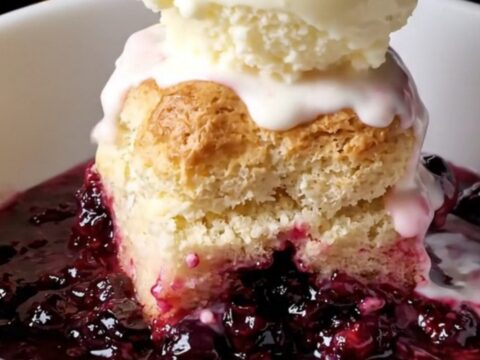
Skillet Blueberry Cobbler with Buttermilk Biscuits
See the recipe → →This recipe is based on a short cooking video and is published under the pen name Clara Weller. It was checked before publication, but errors can slip through. Nutrition, when shown, is an estimate. Read more in our editorial policy and on our food safety page.
More recipes to try
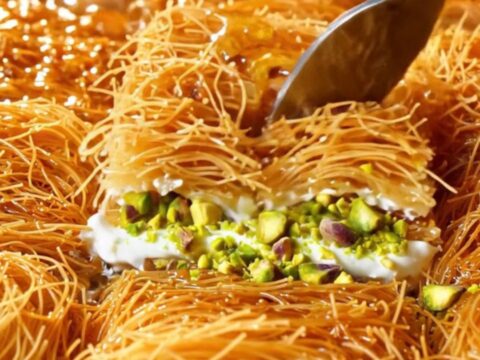
Crispy Turkish Kadayıf Baklava with Clotted Cream & Pistachios
Total time: 1 h 30 min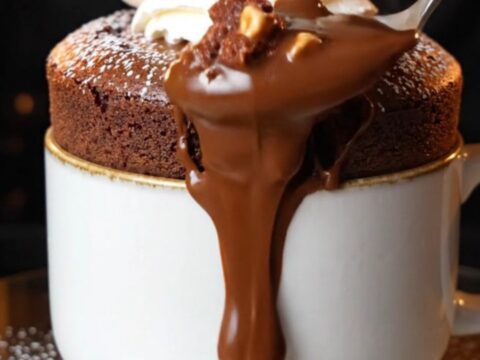
Molten Chocolate Hazelnut Lava Mug Cake in 90 Seconds
Total time: 7 min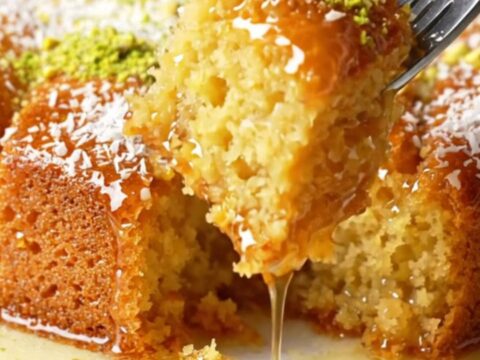
Moist Turkish Revani Cake with Lemon Syrup
Total time: 1 h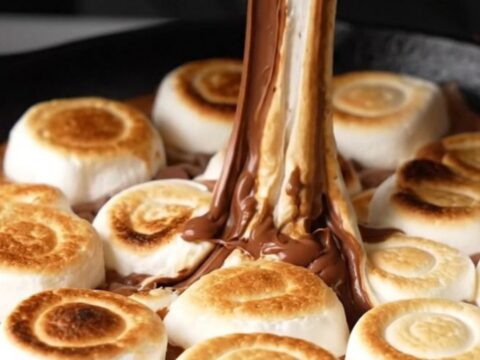
Campfire S'mores Skillet Dip with Graham Crackers
Total time: 13 min
Brown Butter Chocolate Chip Skillet Pizookie with Sea Salt
Total time: 33 min