Desserts · Part 1 of 3: Ingredients
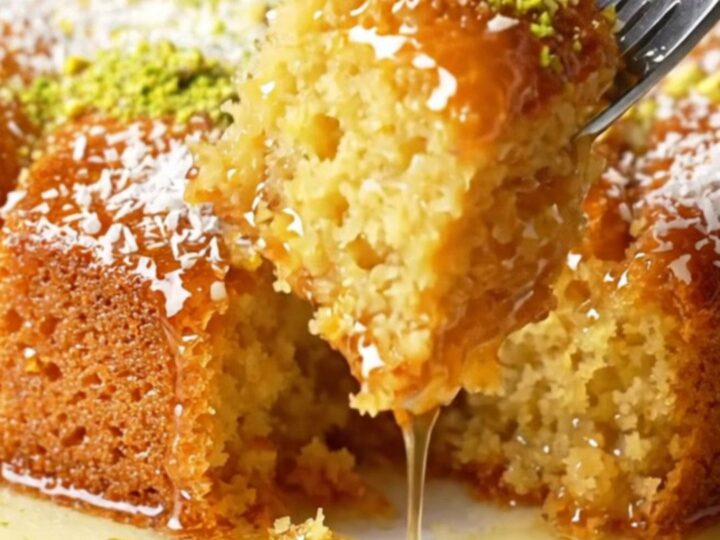
Moist Turkish Revani Cake with Lemon Syrup
- Prep
- Cook
- Total
- Serves
- 12
Turkish Revani is a beloved Ottoman dessert that combines a tender semolina sponge with a bright, lemony syrup. The cake is baked until golden, then soaked while warm so every crumb becomes moist and fragrant.
A final shower of coconut and pistachios adds texture and a delightful nutty contrast. This recipe is straightforward, using everyday ingredients, and yields a dessert that feels both comforting and special. Perfect for tea time, holidays, or any occasion that calls for a touch of sweetness.
Revani is a classic Turkish cake that has been enjoyed for centuries. It features a light, airy crumb made with semolina and flour, which is then drenched in a lemon-scented syrup. The result is a dessert that is both moist and tender, with a refreshing citrus note.
This version stays true to the traditional preparation, using simple ingredients that come together quickly. The cake is baked in a rectangular dish and cut into diamond shapes, making it easy to serve and share. Whether served warm or at room temperature, it is a delightful treat.
Ingredients
Cake
- 3 large eggs
- 1/2 cup granulated sugar
- 1/2 cup plain Turkish yogurt or Greek yogurt
- 1/2 cup vegetable oil
- 1 cup semolina (irmik)
- 1 cup all-purpose flour
- 1 tbsp baking powder
- 1 lemon, zested
Lemon Syrup
- 2 cups granulated sugar
- 2 1/2 cups water
- 1/2 cup fresh lemon juice
For the topping
- 1/2 cup shredded coconut
- 1/4 cup crushed pistachios
Why this recipe works
The combination of semolina and all-purpose flour gives the cake its characteristic texture. Semolina adds a slight graininess that soaks up the syrup beautifully, while flour provides structure. The eggs and sugar are whisked together until pale and fluffy, creating a light base that keeps the cake airy. Yogurt adds moisture and a subtle tang, while oil ensures the crumb stays tender.
Pouring cooled syrup over the warm cake allows the cake to absorb it gradually, ensuring even saturation without becoming soggy. The lemon juice in the syrup brightens the flavor and balances the sweetness.
Letting the cake rest after soaking allows the syrup to distribute throughout, so every bite is consistently moist and fragrant. This method is the key to achieving the perfect revani texture.
Notes and substitutions
Use fine semolina for the best texture; coarse semolina will make the cake grittier. Plain Turkish yogurt is traditional, but Greek yogurt works well too. Make sure it is at room temperature to blend smoothly. For the syrup, fresh lemon juice is ideal for a vibrant flavor. The syrup must be completely cool before pouring over the cake, as hot syrup can make the cake overly soft.
A 9x13-inch baking dish is ideal for this recipe, but an 8x8-inch dish can be used for a thicker cake; adjust the baking time accordingly. The cake is best served the same day, but it keeps well in the refrigerator for up to three days.
If the syrup is not fully absorbed, let the cake rest longer before garnishing. The coconut and pistachios add the final touch, but they can be adjusted to taste.
- Turkish yogurt: Plain Greek yogurt or regular plain yogurt works well; use full-fat for best texture.
- Semolina: Fine semolina is traditional; medium-grind semolina also works, but the texture will be slightly coarser.
- Vegetable oil: Canola, sunflower, or a neutral oil like grapeseed can replace vegetable oil.
- Lemon juice: Bottled lemon juice is fine in a pinch, but fresh lemon juice gives the brightest flavor.
Equipment
- Mixing bowls
- Whisk
- 9x13-inch baking dish
- Saucepan
- Ladle
- Knife
Up next · Part 2 of 3
8 steps · 30 min of cooking · what to look for at each stage
Step-by-step instructions (Part 2)