Breakfast · Part 2 of 3: Instructions
Crispy Turkish Tokat Katmeri: 50 Flaky Layers Step-by-step instructions
- Prep
- Cook
- Total
- Serves
- 8
Before you start
Before starting, measure all ingredients and have them at room temperature. Clear a large work surface for rolling. Set a damp kitchen towel nearby to cover the dough balls. Melt the butter and keep it warm so it stays liquid for brushing.
Have a heavy skillet or griddle ready on the stove. If serving with cheese and tea, prepare those as well. This recipe moves quickly once the dough is rested, so having everything within reach ensures a smooth process.
Ingredients at a glance (4)
- 4 cups all-purpose flour
- 1 1/2 cups water
- 1 tsp salt
- 1/2 cup unsalted butter, melted (for brushing)
Instructions
Phase 1: Dough Prep
- Make the DoughIn a large bowl, combine the flour and salt. Gradually add the water, mixing with your hands until a shaggy dough forms. Turn it out onto a lightly floured surface and knead for about 8 minutes, until smooth and pliable. Divide the dough into 8 equal balls, cover with a damp towel, and let rest for 15 minutes.Look for The dough should be smooth, not sticky, and spring back when pressed.Tip If the dough feels too dry, add water a tablespoon at a time; if too sticky, add a little flour.
- Rest the DoughCover the dough balls with a damp kitchen towel and let them rest at room temperature for 15 minutes. This relaxes the gluten, making the dough easier to roll thin.Look for After resting, the dough should be very elastic and easy to stretch without tearing.Tip Do not skip the rest—it is key to getting paper-thin layers.
After kneading, the dough should be smooth, elastic, and not sticky. The eight balls should be uniform in size. After resting, the dough should be very pliable and easy to stretch without tearing.
If it springs back too much, let it rest a few minutes longer. This phase sets the foundation for the flaky layers.
Phase 2: Rolling and Shaping
- Roll Out ThinOn a lightly floured surface, roll one dough ball into a very thin circle, about 12 inches in diameter. It should be almost translucent. Brush the surface generously with melted butter.Look for The dough should be thin enough to see your hand through it.Tip Keep the other dough balls covered while you work so they don't dry out.
- Shape the SpiralStarting from one edge, roll the buttered dough into a tight log. Then coil the log into a spiral, tucking the end underneath. Flatten slightly with your palm, then roll it out again into a disk about 8 inches wide and 1/4 inch thick.Look for The spiral pattern should be visible on the surface of the disk.Tip Roll gently to avoid squeezing out the butter, which creates the flaky layers.
Each rolled circle should be nearly translucent, and the butter should be evenly brushed. When you roll the log and coil it into a spiral, the pattern should be visible. The final disk should be about 8 inches wide and 1/4 inch thick. If the dough feels tough, it may need a few more minutes of rest.
Phase 3: Cooking and Serving
- Cook the KatmerHeat a heavy skillet over medium-high heat. Place the rolled katmer in the dry skillet and cook for 1-2 minutes, until bubbles form on the surface. Flip and cook the other side until golden brown spots appear. Brush both sides with melted butter as they cook, flipping again if needed, until deep golden and crisp.Look for The bread should puff slightly and develop dark golden spots on both sides.Tip Adjust the heat if the bread browns too quickly—you want it crisp all the way through.
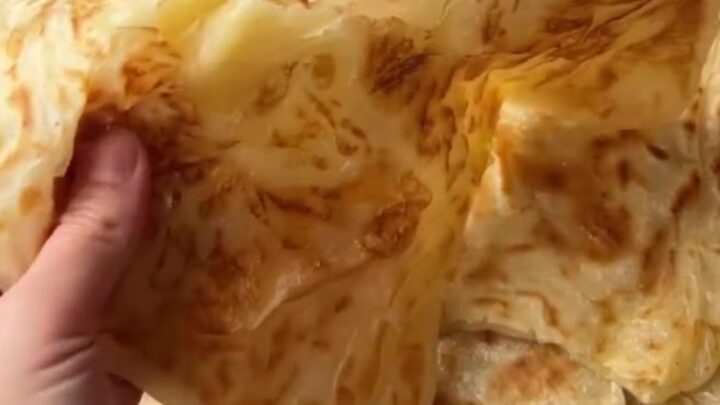
- Crush and ServeTransfer the cooked katmer to a plate and immediately crush it with your hands to reveal the shattering layers. Serve warm with Turkish cheese and hot tea, if desired.Look for The layers should separate easily and shatter when squeezed.Tip Crushing while hot helps the layers stay crisp and releases the buttery steam.
The katmer should be deep golden brown with darker spots, and it should feel crisp and light. When you crush it, the layers should separate with a satisfying shatter. The aroma of butter and toasted flour should fill the kitchen. Serve immediately for the best texture.
Common mistakes
A common mistake is rolling the dough too thick, which prevents the layers from forming properly. Take your time and roll as thin as possible without tearing. Another issue is not brushing enough butter—this is what creates the flaky layers, so be generous.
Also, avoid overcrowding the skillet; cook one katmer at a time to ensure even browning. If the bread browns too quickly, lower the heat so the inside cooks through without burning.
How to tell it’s done
The katmer is done when it is deep golden brown on both sides and feels crisp to the touch. When you press on it, the layers should crackle and shatter. If you're unsure, you can peek at the edges—they should be visibly flaky and browned.
There is no protein in this recipe, so no internal temperature check is needed. Trust your eyes and ears: the sizzle and the golden color are your cues.
Up next · Part 3 of 3
4 variations · storage & make-ahead · 5 answers · printable card
Tips, FAQ & printable recipe (Part 3)← Back to the ingredients (Part 1)