Dinner · Part 2 of 3: Instructions
Creamy Korean Rabokki with Mozzarella Step-by-step instructions
- Prep
- Cook
- Total
- Serves
- 2
Before you start
Gather all ingredients and have them measured and prepared before you start the heat. Slice the fish cakes into bite-sized strips and mince the garlic finely.
If using a soft-boiled egg, prepare it in advance so it is ready to be placed on top of the dish as a final garnish. Ensure your skillet is large enough to hold all the components comfortably without overcrowding.
Ingredients at a glance (13)
- 250 grams chewy Korean cylinder rice cakes
- 4 fish cakes, sliced
- 3 garlic cloves, minced
- 2 tbsp gochujang (Korean chili paste)
- 1 tbsp gochugaru (Korean chili flakes)
- 1 tbsp sugar
- 250 ml heavy cream
- 150 ml dashi broth
- 1 pack ramen noodles
- 3 mini sausages
- 120 grams mozzarella cheese
- 1 soft-boiled egg, for serving
- sesame seeds, for serving
Instructions
Building the Flavor Base
- Prepare the BasePlace the rice cakes, sliced fish cakes, minced garlic, gochujang, gochugaru, and sugar into a large skillet. Add the dashi broth and begin to simmer over medium heat until the sauce starts to thicken and the rice cakes soften.Look for The sauce should start bubbling and thickening slightly around the rice cakes.Safe temperature 145°F (63°C) internal temperature (fish)Tip Ensure the rice cakes are separated so they cook evenly throughout the simmer.
The sauce should be bubbling vigorously and the rice cakes should start to become pliable. The garlic should be fragrant and the fish cakes should have absorbed some of the spicy color from the gochujang.
Creamy Noodle Integration
- Incorporate Cream and NoodlesPour in the heavy cream, stirring gently to combine with the spicy base. Once the mixture reaches 198°F (92°C), add the ramen noodles and mini sausages. Cook for approximately 3 minutes, ensuring the noodles are tender but still have a slight bite.Look for The sauce will turn a glossy coral-pink color and the noodles will absorb the liquid.Safe temperature 160°F (71°C) internal temperature (ground meat)Tip Keep the heat steady to maintain the temperature for the sauce to emulsify properly.
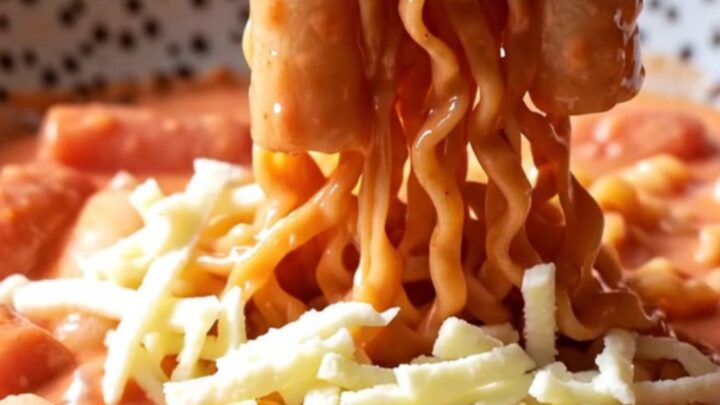
The sauce will transform into a creamy coral color. The noodles should be fully submerged and softening, while the sausages are heated through and the mixture smells rich and savory.
Melting and Final Touch
- Add Cheese and ServeSprinkle the mozzarella over the top of the skillet. Reduce the heat and allow the cheese to melt completely into the sauce. Garnish with a soft-boiled egg and a sprinkle of sesame seeds before serving immediately to ensure the best texture.Look for The mozzarella should be fully melted and stretchy throughout the sauce.Safe temperature 160°F (71°C) internal temperature (egg dishes)Tip Serve directly from the skillet to keep the cheese hot and gooey.
The mozzarella will be fully melted into the sauce, creating a stringy, cheesy consistency. The dish should look vibrant and cohesive, ready for the final garnish of egg and sesame seeds.
Common mistakes
Avoid overcooking the ramen noodles, as they will become mushy if left in the sauce too long.
Keep a close eye on the sauce thickness; if it becomes too thick before the noodles are cooked, add a small splash of water or extra broth.
Ensure the heat is not too high when adding the cream to prevent the sauce from breaking or separating during the simmering process.
How to tell it’s done
The rabokki is ready when the sauce is glossy, thickened, and coats the noodles and rice cakes evenly. The rice cakes should be soft and chewy, not hard, and the ramen noodles should be cooked through but firm.
The sausages must reach an internal temperature of 160°F (71°C), and the cheese should be completely melted and bubbly.
- Ground meat: 160°F (71°C) in the thickest part
- Egg dishes: 160°F (71°C) in the thickest part
- Fish: 145°F (63°C) in the thickest part
Up next · Part 3 of 3
2 variations · storage & make-ahead · 3 answers · printable card
Tips, FAQ & printable recipe (Part 3)← Back to the ingredients (Part 1)