Dinner · Part 2 of 3: Instructions
Creamy Garlic Parmesan Chicken Pasta Bake with Golden Cheese Crust Step-by-step instructions
- Prep
- Cook
- Total
- Serves
- 6
Before you start
Set up before the first pan touches the heat. Cut the chicken into even 1-inch pieces and pat them dry — dry surfaces sear, wet ones steam. Mince the garlic, grate the parmesan, shred the mozzarella and chop the parsley, and line them up within reach, because the sauce comes together quickly once the skillet is hot.
Fill the pasta pot with well-salted water and set it over high heat so it boils while the chicken sears. Check that the instant-read thermometer is working; the chicken's doneness depends on it. Finally, place the baking dish on a sturdy sheet pan so it can move from counter to oven without juggling.
Ingredients at a glance (13)
- 1 1/2 lb boneless skinless chicken breasts, cut into bite-size pieces
- 1 1/2 tsp kosher salt, divided
- 1/2 tsp black pepper
- 2 tbsp olive oil
- 1 lb penne pasta
- 3 tbsp unsalted butter
- 5 garlic cloves, minced
- 3 tbsp all-purpose flour
- 2 cups heavy cream
- 1 cup chicken broth
- 1 cup grated parmesan cheese, divided
- 2 cups shredded mozzarella cheese
- 2 tbsp chopped fresh parsley
Instructions
Sear and par-cook
- Season the chickenPat the chicken pieces dry with paper towels, then season all over with 1 tsp of the kosher salt and the black pepper. Drying the surface first is what allows a real sear rather than a steam. Toss the pieces with your hands so every piece is coated evenly.Look for The pieces glisten lightly and no water pools on the plate beneath them.Tip Cut the chicken into even 1-inch pieces so every bite cooks at the same rate.
- Sear the chickenHeat the olive oil in a large skillet over medium-high heat until it shimmers. Add the chicken in a single layer and sear, turning once, until golden on both sides and cooked through, 6 to 8 minutes. Check the center of the largest piece with an instant-read thermometer: it must read 165°F (74°C). Transfer the chicken to a plate.Look for Deep golden spots on both sides and the juices run clear when a piece is pressed.Safe temperature 165°F (74°C) internal temperature (poultry)Tip Crowd the pan and the chicken steams; work in two batches if the skillet is small.
- Cook the pastaBring a large pot of salted water to a boil and cook the penne for one minute less than the package directs. Reserve 1/2 cup of the pasta water, then drain. The pasta finishes in the oven, so firm now means perfectly tender later, never mushy.Look for The penne bends without breaking and shows a firm, pale core at the center.Tip Salt the water until it tastes like seasoned broth; this is the pasta's only chance to absorb flavor.
By the end of phase one, the chicken pieces are deeply golden on both sides and verified at 165°F (74°C) at the center, resting on a plate while their juices settle. The kitchen smells of browned butter-adjacent fond.
The penne is drained and slightly firm — bend one: it should flex without snapping. Before moving on, confirm the thermometer reading, taste a piece of pasta for firmness, and check that the skillet still holds a thin sheen of browned bits; those will flavor the sauce in the next phase.
Sauce and fold
- Build the garlic baseReturn the skillet to medium heat and melt the butter. Add the minced garlic and cook, stirring, until fragrant, about 1 minute — it should smell sweet and nutty, never sharp. Sprinkle in the flour and stir for another minute to coat and cook out the raw taste.Look for The garlic smells toasted and the flour-butter paste looks like wet sand.Tip Garlic burns fast; if it darkens, start over, because burnt garlic turns the whole sauce bitter.
- Make the parmesan cream sauceWhisk in the chicken broth, then the heavy cream, scraping the browned bits from the bottom of the skillet. Simmer gently for 3 to 4 minutes until it coats the back of a spoon, then whisk in 3/4 cup of the parmesan until smooth. Season with the remaining salt.Look for The sauce coats a spoon in a velvety layer and the parmesan has fully melted in.Tip Keep the heat at a lazy simmer; boiling cream sauce can thin it back out and dull the flavor.
- Fold everything togetherAdd the drained penne, the seared chicken and any resting juices back to the skillet and fold gently until every piece is coated. If the sauce looks tight, loosen it with a splash of the reserved pasta water — it should move slowly, like thick velvet.Look for No dry pasta at the bottom and the sauce clings to every piece.Tip Fold with a spatula rather than stirring hard so the pasta keeps its shape.
The sauce should now be smooth, glossy and thick enough to coat a spoon in a velvety layer, with the parmesan fully melted and no floury taste. The garlic smells sweet and nutty, never sharp or burnt. After folding, every piece of penne and chicken glistens with sauce, and no dry pasta hides at the bottom of the skillet. Taste now: this is the last easy moment to adjust salt, since the cheese layer on top will add saltiness of its own during the bake.
Bake and crust
- Assemble and topHeat the oven to 400°F (200°C). Transfer the pasta to a 9x13-inch ceramic baking dish and level the surface. Scatter the mozzarella over the top in an even layer, then finish with the remaining 1/4 cup of parmesan so the crust browns deeply.Look for The cheese covers the pasta edge to edge with no gaps where sauce can dry out.Tip Even coverage matters more than extra cheese; thin spots burn while thick spots stay pale.
- Bake until goldenBake uncovered for 20 to 25 minutes, until the crust is deep golden in spots and bubbling at the edges. Rest the dish for 5 minutes before serving — the sauce settles and every portion holds together. Shower with the parsley, cut with the spatula and serve hot.Look for Bubbles break the surface at the edges and the cheese shows amber freckles.Tip For extra color, slide the dish under the broiler for the final minute, watching constantly.
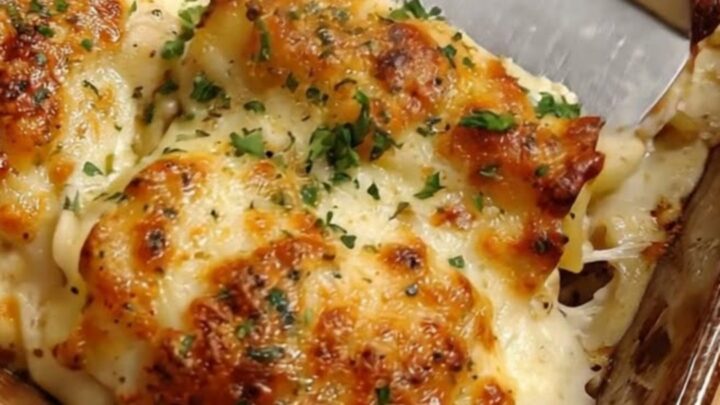
Out of the oven, the mozzarella crust is deep golden with amber freckles, the sauce bubbles steadily at the edges, and the whole dish trembles slightly when nudged. After the 5-minute rest, a spatula cuts through cleanly and the first scoop reveals the steam and the elastic cheese pull underneath. Check that the center is as bubbling as the edges — if it is not, return the dish for a few more minutes before serving.
Common mistakes
Three issues account for most failed pasta bakes. First, overcooked pasta: boiling the penne fully before it ever meets the oven guarantees a soft, collapsed texture — pull it a minute early and let the bake finish the job. Second, a thin sauce: skipping the flour or rushing the simmer leaves a watery base that separates during baking, so simmer until the sauce genuinely coats a spoon.
Third, pale cheese: pre-shredded mozzarella coated in anti-caking starch melts unevenly and can stay rubbery, and a layer applied in thick mounds browns only at the peaks. Spread the cheese edge to edge in an even blanket. Finally, do not skip the rest — cut too soon and the sauce runs, leaving the plate soupy.
How to tell it’s done
The chicken is done when the center of the largest piece reads 165°F (74°C) on an instant-read thermometer, with clear juices and no pink. The pasta should be springy with a barely firm core before baking, fully tender after.
The finished bake is ready when the mozzarella crust is deep golden in spots, the sauce bubbles visibly at the edges of the dish, and a spatula lifting a corner meets no resistance. After a 5-minute rest, portions cut cleanly and the cheese pulls in long strands rather than sliding off. If the top browns before the center bubbles, tent it loosely with foil and give it a few more minutes.
- Poultry: 165°F (74°C) in the thickest part
Up next · Part 3 of 3
4 variations · storage & make-ahead · 5 answers · printable card
Tips, FAQ & printable recipe (Part 3)← Back to the ingredients (Part 1)