Dinner · Part 1 of 3: Ingredients
Creamy Garlic Parmesan Chicken Pasta Bake with Golden Cheese Crust
- Prep
- Cook
- Total
- Serves
- 6
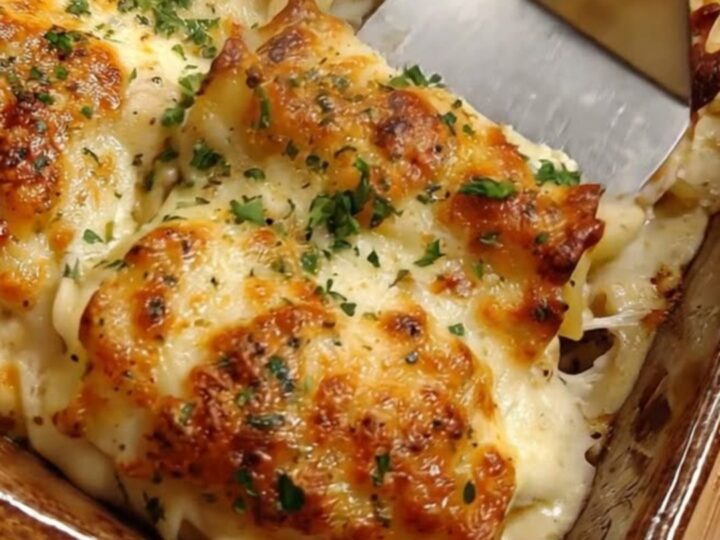
A golden mozzarella crust that pulls in long, glossy strands, a cream sauce that tastes of toasted garlic and parmesan, and tender chicken in every forkful — this pasta bake delivers all three from one dish. The penne cooks briefly on the stove, finishes in the oven, and comes out saucy rather than dry. It is the kind of dinner that feeds six and quietly disappears.
This creamy garlic parmesan chicken pasta bake is built for real weeknights: one skillet for the sear and the sauce, one pot for the pasta, one baking dish for the finish. The method is deliberately simple. Chicken is seared in bite-size pieces so it browns fast and stays juicy, the penne is boiled a minute less than usual so it can absorb sauce in the oven, and a flour-thickened garlic cream ties everything together.
A full layer of mozzarella bakes into a crust that turns deep gold at the edges while the middle stays molten. Fresh parsley over the top cuts through the richness. The result plates like a restaurant dish but comes from a single ceramic baking dish on a Tuesday, with about twenty minutes of hands-on work and nothing beyond a skillet and a whisk.
Ingredients
- 1 1/2 lb boneless skinless chicken breasts, cut into bite-size pieces
- 1 1/2 tsp kosher salt, divided
- 1/2 tsp black pepper
- 2 tbsp olive oil
- 1 lb penne pasta
- 3 tbsp unsalted butter
- 5 garlic cloves, minced
- 3 tbsp all-purpose flour
- 2 cups heavy cream
- 1 cup chicken broth
- 1 cup grated parmesan cheese, divided
- 2 cups shredded mozzarella cheese
- 2 tbsp chopped fresh parsley
Why this recipe works
The method works because each component is handled where it performs best. Searing the chicken in a hot skillet develops browned fond — the caramelized residue that later dissolves into the cream sauce — which a bake alone never achieves.
Undercooking the pasta by one minute looks like a small detail, but it is the difference between penne that drinks sauce and stays springy and penne that swells and slumps. Pasta keeps absorbing liquid as it bakes, so it needs headroom.
The sauce itself is a classic roux-thickened cream, and the flour step is non-negotiable. Butter and flour cook together for a minute, the broth and cream go in gradually, and the result is a sauce stable enough to survive twenty minutes in a hot oven without breaking or weeping.
Dividing the parmesan — most into the sauce, some on top — does double duty: it seasons the pasta from within and builds a crust that browns instead of merely melting.
Notes and substitutions
Choose heavy cream for the sauce; it resists breaking and gives the glossy, clingy texture that makes each bite feel rich. Grate the parmesan yourself if possible — pre-grated cheese carries anti-caking starch that can make the sauce grainy.
Low-moisture mozzarella is the right choice for the top; fresh mozzarella releases water and keeps the crust pale. A 9x13-inch ceramic baking dish holds the heat evenly and serves at the table, which is half the appeal.
Boneless thighs substitute well for breasts and stay juicier through the bake. If the sauce tightens while you fold, the reserved pasta water loosens it without diluting flavor — the starch in that water helps the sauce cling. For a deeper savory note, a pinch of red pepper flakes can go in with the garlic, though the dish stands perfectly without heat.
- heavy cream: Half-and-half works, but whisk in an extra tablespoon of flour so the sauce still thickens and stays creamy through the bake.
- chicken breasts: Boneless skinless chicken thighs stay juicier; cook them the same way and verify 165°F (74°C) at the center.
- penne pasta: Rigatoni, ziti or rotini all hold the cream sauce well; keep the same weight and undercook by one minute.
- fresh parsley: Dried parsley can be used in a pinch; add 2 tsp to the sauce rather than on top so it softens in the oven.
Equipment
- large skillet
- large pot
- 9x13-inch ceramic baking dish
- metal spatula
- whisk
- instant-read thermometer
Up next · Part 2 of 3
8 steps · 45 min of cooking · what to look for at each stage
Step-by-step instructions (Part 2)