Dinner · Part 3 of 3: Tips & recipe card
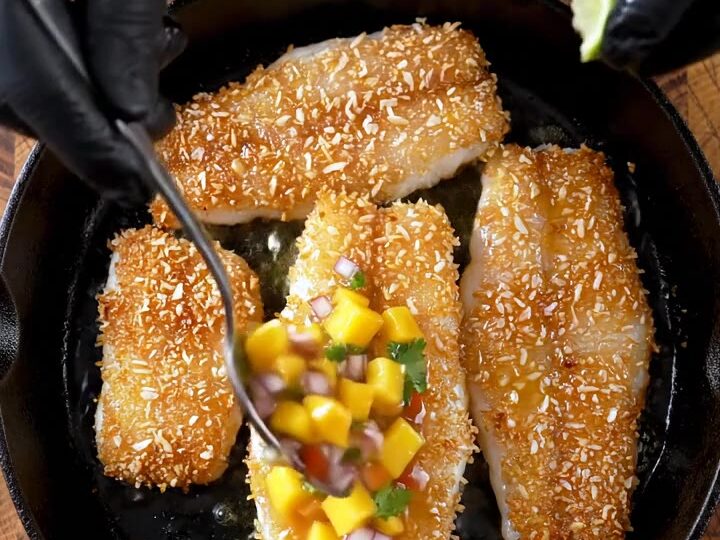
Coconut-Crusted Mahi-Mahi with Mango Salsa in One Skillet Tips, FAQ & printable recipe
- Prep
- Cook
- Total
- Serves
- 2
Tips for success
Dry the fish thoroughly and press the coconut firmly, because these two steps decide whether the crust stays on and turns crisp. Work with one fillet at a time so the coating is secure before it touches the hot fat.
Keep the salsa cool until the end, adding it only at the last stage so the mango stays bright and the herbs keep their color. If you prepare the salsa in advance, keep it refrigerated and bring it back to room temperature before you serve, which keeps the flavors balanced without letting the fruit go soft.
Use the lime wedges generously at the table, since a fresh squeeze brightens both the salsa and the fish. Taste the salsa before serving and add a little more salt or lime juice if it tastes flat. Make sure the skillet is hot before adding the fish, and do not crowd the pan, because crowded fillets steam rather than sear.
If your fillets are very thick, give them an extra minute on each side and check the center with a fork or thermometer. Finally, clean the cutting board and knife after handling the raw fish, and wash your hands before touching the mango or the bowl for the salsa.
Variations
- Spicy lime version: Add a pinch of cayenne pepper to the coconut before coating the fish. The heat balances the sweetness of the mango, and the crust still turns golden in the same butter and oil.
- Extra herb salsa: Add a second handful of cilantro and a little finely chopped mint to the salsa. The fresh herbs make the topping greener and more aromatic, and they pair well with the lime.
- Pineapple salsa: Replace the mango in the salsa with diced fresh pineapple for a slightly tangier topping. Keep the red onion, cilantro and lime, and add the salsa over the fish as in the main method.
- Sheet pan finish: After searing both sides, transfer the fillets to a sheet pan and finish them in a hot oven for a few minutes until the fish flakes. Spoon the salsa over them at the end and serve.
Storage and make-ahead
- Fridge
- Refrigerate cooled leftovers in a sealed container for up to 1 day, and keep the salsa separate from the fish.
- Freezer
- Freezing is not recommended, because the coconut crust loses its crunch and the mango salsa becomes watery after thawing.
- Reheat
- Reheat the fish gently in a covered skillet over low heat until warmed through, then add fresh salsa on top before serving.
Leftover fish and salsa should be stored separately so the crust does not soften and the mango does not lose its texture. Let the fish cool for no more than 2 hours at room temperature before you refrigerate it in a sealed container. Keep the salsa in its own covered container in the refrigerator as well.
The coated fish is best eaten within a day, because the coconut loses its crunch once it is stored with moisture. Use clean utensils when you portion the leftovers, and avoid leaving any cooked fish out at room temperature for longer than necessary, since bacteria multiply quickly when food sits warm.
You can prepare parts of this dish in advance so that cooking is quick. Dice the mangoes, red onion and cilantro for the salsa and keep them covered in the refrigerator for up to one day, then combine them with lime juice shortly before serving. Toss the shredded coconut and keep it in an airtight container at room temperature, so it stays dry.
Season the fish just before cooking rather than long ahead, because salt draws out moisture and can make the coating less secure. The coating itself is best applied immediately before searing, since a fillet that sits coated for a long time may release moisture and lose its crisp texture. Melt the butter in advance and keep it warm, or allow it to cool and then re-melt it gently before you cook.
Serving ideas
Serve the coconut-crusted mahi-mahi straight from the skillet or on warmed plates so the crust remains crisp and the fish stays moist. Spoon the mango salsa generously over and around each fillet, then add a lime wedge to each plate for squeezing at the table. The contrast between the golden coconut and the cool, bright salsa is the centerpiece of the dish, so present the fish with the salsa visible on top.
For a complete dinner, pair the fish with simple sides that complement its tropical flavors without competing with the crust. A bowl of steamed white rice or a light green salad with lime vinaigrette works well, as does a plate of roasted vegetables seasoned with salt and pepper. Choose a crisp, unoaked white wine or a sparkling water with lime for drinks, since their acidity complements the mango and cilantro. Serve the dish immediately after cooking, while the crust is at its best.
Frequently asked questions
Can the coconut crust be made without butter?
How do you keep the coconut from falling off the fish?
Can the mango salsa be made ahead of time?
How can you tell when the mahi-mahi is cooked through?
What can you serve with coconut-crusted mahi-mahi?
Coconut-Crusted Mahi-Mahi with Mango Salsa in One Skillet
Ingredients
- 2 mahi-mahi fillets, about 6 oz each
- 1/2 tsp kosher salt, or to taste
- 1/4 tsp freshly ground black pepper
- 1 cup unsweetened shredded coconut
- 2 tbsp neutral oil, such as avocado or canola
- 2 tbsp unsalted butter, melted
- 2 ripe mangoes, halved, pitted and diced
- 1/4 cup finely diced red onion
- 1/4 cup chopped fresh cilantro
- 1 lime, halved, juiced for the salsa and the other half cut into wedges for serving
Instructions
- Pat the mahi-mahi fillets dry with paper towels. Season both sides with the kosher salt and black pepper. Keep the fish refrigerated until you are ready to coat it, and keep it out of the fridge for no more than 30 minutes before cooking.
- Spread the shredded coconut on a shallow plate or board. Press each seasoned fillet firmly into the coconut, turning it to coat both sides evenly so the crust forms on the top and the bottom.
- Dice the mangoes, then combine them in a bowl with the red onion and cilantro. Squeeze in the juice of one lime half and toss gently. Set the salsa aside while the fish cooks.
- Set a cast iron skillet over medium-high heat and add the oil. When the oil shimmers, add the melted butter and let it foam for a few seconds.
- Lay the coated fillets in the hot skillet, leaving space between them. Cook for 3 to 4 minutes, until the coconut turns golden brown on the underside.
- Carefully flip each fillet with tongs or a fish spatula. Cook for 3 to 4 minutes more, until the coconut is golden on this side too and the fish is opaque and flakes easily at the thickest part.
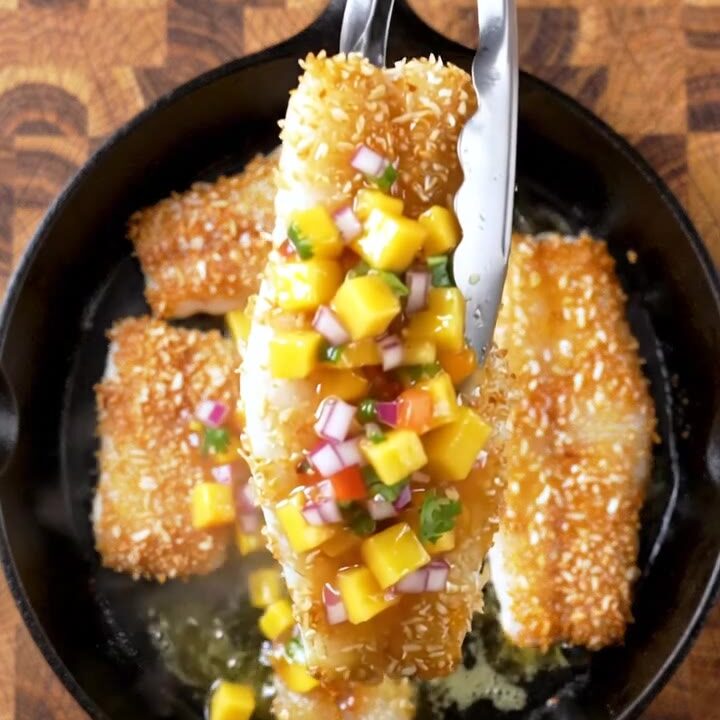
- Reduce the heat to low. Spoon the prepared mango salsa generously over and around the fillets in the hot skillet, so it warms slightly and the juices mingle with the butter.
- Transfer the fillets to plates using tongs, spooning extra salsa on top. Serve with the remaining lime half cut into wedges for squeezing over the fish.
Estimated nutrition per serving
- Calories
- 520
- Protein
- 36 g
- Carbohydrates
- 38 g
- Fat
- 25 g
- Fiber
- 5 g
- Sugar
- 26 g
- Sodium
- 650 mg
Next recipe
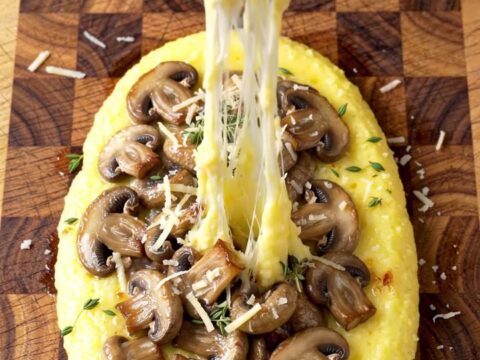
Creamy Polenta with Garlic Butter Mushrooms and Melted Cheese
See the recipe → →This recipe is based on a short cooking video and is published under the pen name Clara Weller. It was checked before publication, but errors can slip through. Nutrition, when shown, is an estimate. Read more in our editorial policy and on our food safety page.
More recipes to try
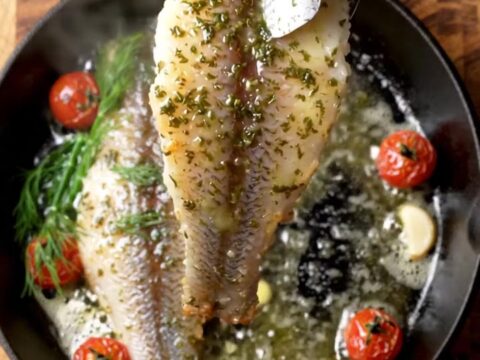
Garlic Herb Butter Pan-Seared Arctic Char with Crispy Skin
Total time: 27 min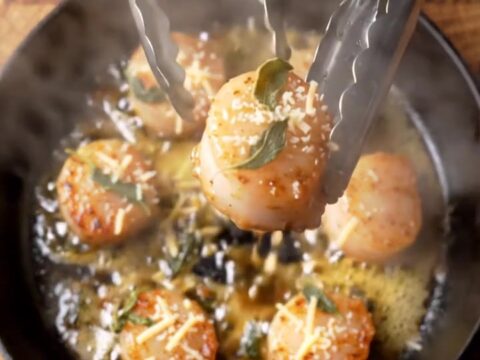
Brown Butter Seared Scallops with Squash and Sage
Total time: 45 min
Garlic Butter Mushroom and Cheese Polenta Skillet for a Rich One-Pan Dinner
Total time: 1 h 5 min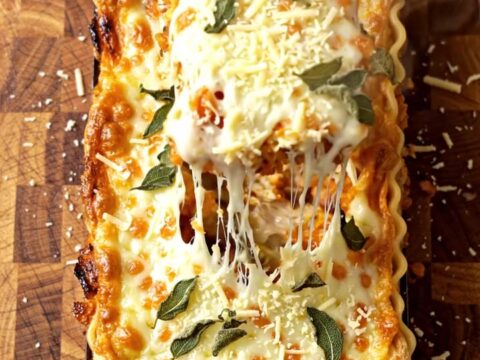
Butternut Squash Sage Lasagna in Brown Butter Fontina Skillet
Total time: 1 h 30 min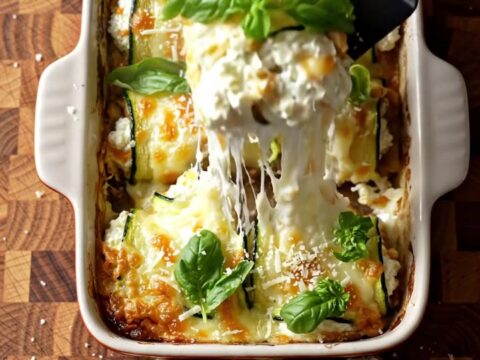
Baked Zucchini Lasagna Rolls with Ricotta and Basil
Total time: 1 h