Dinner · Part 2 of 3: Instructions
Cheesy Korean Rabokki: Spicy Ramen and Rice Cakes Step-by-step instructions
- Prep
- Cook
- Total
- Serves
- 2
Before you start
Before cooking, ensure the anchovy-kelp stock is ready and warm. If using frozen rice cakes, thaw them in the refrigerator overnight or at room temperature for 30 minutes.
Boil the egg in advance and let it cool, then peel and halve it. Have all ingredients measured and within reach: the gochujang, sugar, fish cakes, ramen, and mozzarella. This dish cooks quickly, so mise en place is key.
Ingredients at a glance (8)
- 1 2/3 cups anchovy-kelp stock
- 2 1/2 tbsp gochujang
- 1 tbsp sugar
- 7 oz Korean rice cakes
- 2 oz fish cakes, sliced
- 1 brick Korean instant ramen noodles
- 1 large egg, boiled and halved
- 1/2 cup shredded mozzarella cheese
Instructions
Phase 1: Build the Broth
- Build the brothPour the anchovy-kelp stock into a wide skillet. Add the gochujang and sugar, then whisk until the paste dissolves completely. Bring the broth to a simmer over medium-high heat, stirring occasionally.Look for The broth turns a deep brick-red and smells savory with a slight sweetness.Tip Whisking thoroughly prevents the gochujang from clumping and scorching.
- Add rice cakes and fish cakesAdd the rice cakes and fish cakes to the simmering broth. Stir gently to coat them in the sauce. Continue simmering for 2 to 3 minutes, until the rice cakes start to soften and absorb the broth.Look for The rice cakes turn slightly translucent at the edges and the sauce thickens a bit.Tip Stir occasionally to keep the rice cakes from sticking to the bottom.
The broth should be a deep, glossy red, with the gochujang fully dissolved. It should smell fragrant and slightly sweet, with a gentle simmer.
The rice cakes and fish cakes will begin to soften, and the sauce will start to thicken slightly. Give everything a stir to ensure even coating.
Phase 2: Cook the Noodles
- Add the ramenNestle the ramen brick into the skillet, pushing it down gently to submerge it in the bubbling sauce. Cook for 3 minutes, turning the noodles once, until they are just tender but still chewy.Look for The noodles separate and absorb the red sauce, turning glossy.Tip Use tongs to lift and turn the noodles so they cook evenly.
- Simmer until saucyReduce the heat to medium-low and let the rabokki simmer gently for 1 to 2 minutes, until the sauce reduces and clings to the noodles and rice cakes. The mixture should be thick and glossy, not soupy.Look for The sauce coats the back of a spoon and the noodles look saturated.Tip If the sauce gets too thick, splash in a little water to loosen it.
The ramen should be tender but still al dente, and the sauce should cling to the noodles and rice cakes. The skillet will look saucy but not soupy. The rice cakes should be soft and slightly chewy, and the fish cakes should be heated through.
Phase 3: Melt the Cheese
- Top with cheese and eggSprinkle the shredded mozzarella evenly over the hot rabokki. Place the halved boiled egg on top. Cover the skillet for 30 seconds to let the cheese melt into a bubbling blanket.Look for The cheese melts into a stretchy layer, and the egg adds a creamy contrast.Safe temperature 160°F (71°C) internal temperature (egg dishes)Tip Covering traps steam and melts the cheese without drying the noodles.
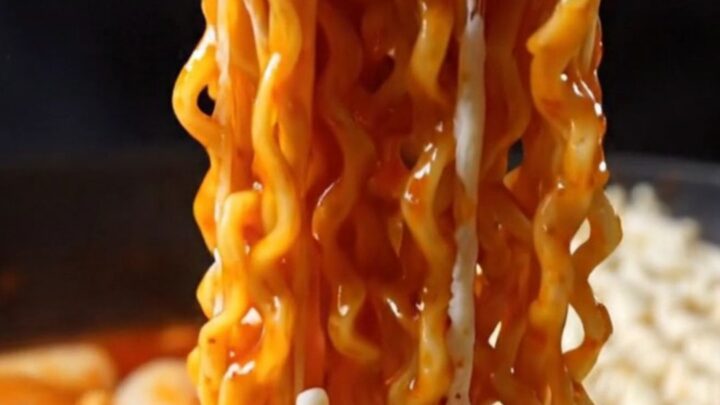
- Finish and serveRemove the skillet from the heat. Use tongs to lift a tangle of cheesy noodles and rice cakes onto plates. Serve immediately while the cheese is still stretchy and the sauce is bubbling.Look for The cheese pulls into long ribbons, and the noodles are coated in a fiery red sauce.Tip For the full experience, eat directly from the skillet with chopsticks.
The mozzarella is melted into a bubbling, golden layer. The egg adds a creamy contrast. The rabokki is ready to serve, with the cheese pulling into long ribbons and the sauce coating every bite. The aroma is spicy, savory, and irresistible.
Common mistakes
Avoid adding the ramen too early, as it can overcook and become mushy. The broth should be simmering before the noodles go in. Do not stir too vigorously after adding the rice cakes, as they can break apart.
If the sauce becomes too thick before the noodles are tender, add a splash of water to loosen it. Finally, do not skip the sugar—it balances the gochujang's heat and enhances the savory flavors.
How to tell it’s done
The rabokki is done when the noodles are tender but still chewy, the rice cakes are soft throughout, and the sauce has thickened to a glossy, coating consistency. The mozzarella should be fully melted and bubbly.
If using a boiled egg, it should be cooked through with a set yolk (160°F / 71°C). The dish is best served immediately, while the cheese is still stretchy and the sauce is hot.
- Egg dishes: 160°F (71°C) in the thickest part
- Fish: 145°F (63°C) in the thickest part
Up next · Part 3 of 3
4 variations · storage & make-ahead · 5 answers · printable card
Tips, FAQ & printable recipe (Part 3)← Back to the ingredients (Part 1)