Dinner · Part 2 of 3: Instructions
Cheesy Honey Mustard Chicken Skillet Step-by-step instructions
- Prep
- Cook
- Total
- Serves
- 4
Before you start
Before you turn on the stove, gather and measure all your ingredients to ensure a smooth and seamless cooking process. Pat the chicken breasts dry with paper towels; removing excess surface moisture is crucial for achieving a deep, golden-brown sear.
Season both sides of the chicken breasts evenly with the chicken seasoning. In a small bowl, whisk together the honey and mustard until smooth. Chop the fresh parsley and shred the cheese so everything is ready to go.
Ingredients at a glance (6)
- 4 boneless, skinless chicken breasts
- 1 tbsp chicken seasoning
- 1/3 cup honey
- 1/4 cup mustard
- 1 cup shredded cheese
- 1 tbsp chopped fresh parsley
Instructions
Searing the Seasoned Chicken
- Season the ChickenPat the chicken breasts dry with paper towels. Season both sides of the chicken breasts evenly with the chicken seasoning to ensure full flavor coverage.Look for The chicken should be completely coated with the seasoning.Tip Patting the chicken dry is essential for getting a crisp, golden sear.
- Sear the ChickenHeat a large cast-iron skillet over medium-high heat. Once hot, add the seasoned chicken breasts. Sear for about 5 to 6 minutes per side, turning once, until a deep golden-brown crust forms on both sides.Look for The chicken should have a rich, caramelized brown exterior.Tip Do not crowd the skillet; cook in batches if necessary to prevent steaming.
By the end of this phase, the seasoned chicken breasts should have a beautiful, deep golden-brown crust on both sides. The kitchen will be filled with the savory aroma of seared poultry and toasted spices. The chicken will not be fully cooked through yet, but the exterior should look beautifully caramelized and firm to the touch, with the chicken sizzling gently in the hot skillet.
Glazing and Simmering
- Prepare and Apply GlazeWhile the chicken is searing, whisk together the honey and mustard in a small bowl until smooth. Reduce the skillet heat to medium-low, and brush the warm golden honey mustard glaze generously over the top of each seared chicken breast.Look for The glaze should coat the chicken in a thick, glistening layer.Tip Using a pastry brush helps distribute the glaze evenly across the chicken.
- Simmer the Pan SaucePour any remaining honey mustard glaze into the skillet around the chicken. Let the glaze simmer and bubble gently for 2 to 3 minutes, stirring occasionally, until it thickens slightly and turns into a glossy, rich pan sauce that clings to the bottom of the pan.Look for The sauce should bubble gently and become thick and glossy.Tip Keep the heat low to prevent the honey in the glaze from burning.
At this point, the golden honey mustard glaze should be brushed generously over the chicken, and the remaining sauce in the pan should be bubbling actively. The glaze will begin to thicken and turn glossy, clinging to the chicken and creating a rich, fragrant reduction in the bottom of the skillet. The sweet, tangy aroma of warm honey and sharp mustard will fill the air as the sauce caramelizes.
Melting the Cheese and Garnishing
- Melt the CheeseEvenly distribute the shredded cheese over the top of each glazed chicken breast. Cover the skillet with a lid or foil, and cook for an additional 3 to 4 minutes, or until the cheese is completely melted, stretchy, and bubbly, and the chicken reaches an internal temperature of 165°F (74°C).Look for The cheese should be completely melted, stretchy, and bubbling around the chicken.Safe temperature 165°F (74°C) internal temperature (poultry)Tip Use a digital food thermometer inserted into the thickest part to verify doneness.
- Garnish and RestRemove the skillet from the heat. Garnish the cheesy chicken breasts with the chopped fresh parsley. Let the chicken rest in the skillet for 3 minutes before serving to allow the juices to redistribute throughout the meat.Look for The parsley should add a vibrant green contrast to the melted cheese.Tip Resting the chicken ensures every bite remains tender and juicy.
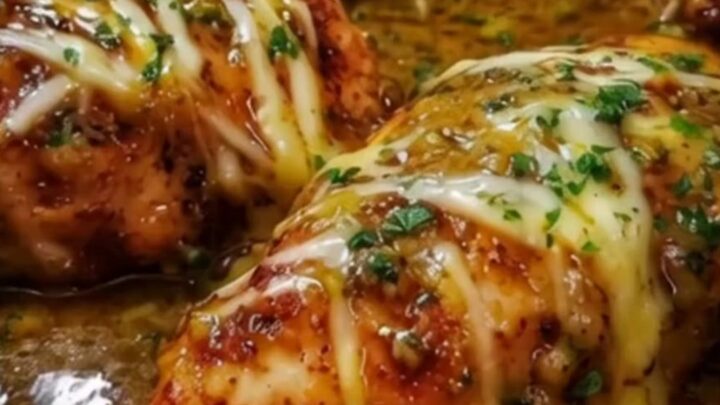
The final checkpoint is reached when the cheese is completely melted, bubbly, and slightly golden, forming a stretchy blanket over the glazed chicken. The pan sauce should be thick, glossy, and bubbling gently around the edges.
When tested with an instant-read thermometer inserted into the thickest part of the breast, the chicken must register a safe internal temperature of 165 degrees Fahrenheit (74 degrees Celsius) before serving.
Common mistakes
One common mistake is overcrowding the skillet, which lowers the pan temperature and causes the chicken to steam rather than sear, preventing that delicious golden crust from forming. Cook in batches if your skillet is not large enough to fit all the breasts comfortably.
Another error is adding the honey mustard glaze too early; the high sugar content in honey burns easily, so the chicken must be seared first before the glaze is introduced to simmer gently.
How to tell it’s done
To ensure the chicken is perfectly cooked and safe to eat, always rely on an accurate instant-read digital food thermometer rather than visual cues alone. Insert the probe into the thickest part of the chicken breast, avoiding any pockets of cheese or the hot skillet surface.
The chicken is fully cooked and safe when the thermometer registers an internal temperature of 165 degrees Fahrenheit (74 degrees Celsius). At this point, the meat will feel firm yet springy, and any juices will run completely clear.
- Poultry: 165°F (74°C) in the thickest part
Up next · Part 3 of 3
2 variations · storage & make-ahead · 3 answers · printable card
Tips, FAQ & printable recipe (Part 3)← Back to the ingredients (Part 1)