Dinner · Part 2 of 3: Instructions
Cast Iron Ribeye with Herb-Garlic Butter, One Pan in 25 Minutes Step-by-step instructions
- Prep
- Cook
- Total
- Serves
- 2
Before you start
Take the steak out of the refrigerator up to 30 minutes before cooking so it loses the deep chill; a cold center cooks unevenly and needs longer in the pan. Pat it thoroughly dry, season it, and set it on a board within reach of the stove. Measure the butter, crush the garlic cloves, and leave the herb sprigs whole — they go into the pan as they are. Set a clean plate or carving board beside the stove for the rested steak, and have the tongs and thermometer ready. Preheat the skillet fully before the oil goes in; that head start is what makes the sear.
Ingredients at a glance (8)
- 1 1/2 lb boneless ribeye steak, about 1 1/4 inches thick
- 2 tsp kosher salt, plus more to taste at the table
- 1 tsp coarsely ground black pepper, freshly cracked if possible
- 1 tbsp vegetable oil, or another neutral high-heat oil
- 4 tbsp unsalted butter, cut into pieces
- 3 garlic cloves, lightly crushed and peeled
- 2 sprigs fresh rosemary
- 4 sprigs fresh thyme
Instructions
Dry, Season and Preheat
- Dry the Steak ThoroughlyBlot the ribeye on all sides with paper towels until the surface feels completely dry, pressing into every crevice along the fat cap. Moisture steams instead of sears, so a bone-dry surface is what makes a dark crust possible.Look for The paper towels come away clean, with no damp spots anywhere on the meat.Tip A dry surface is the single biggest factor in how dark the crust gets.
- Season Every SurfaceSeason both faces and all four edges generously with kosher salt and coarsely ground black pepper, sprinkling from a few inches above so it falls evenly. A steak this thick needs full coverage on every side, edge included.Look for An even, visible layer of seasoning coats every surface, including the fat edge.Tip Coarse kosher salt grips the meat better than fine table salt and seasons more evenly.
- Preheat the Cast IronSet a cast iron skillet over medium-high heat for 4 to 5 minutes, until it just begins to smoke. Add the vegetable oil, swirl to coat, and wait for it to shimmer and slide easily across the surface.Look for Thin wisps of smoke rise, and the oil moves like water when the pan tilts.Tip Cast iron needs time to heat through; a pan that looks hot can still be cold underneath.
At the end of this phase the steak sits dry, evenly seasoned, and within reach of the stove, and the pan is properly hot with oil shimmering across its surface. Look for thin wisps of smoke rising from the oil and listen for a lively stillness before the meat goes in — the loud sizzle starts the instant the steak lands.
Check the seasoning: every face and edge should show an even, visible layer of salt and pepper. If the oil slides like water and the pan radiates heat a few inches above the surface, go on to the sear; if nothing smokes yet, give it another minute or two.
Sear, Flip and Baste
- Sear the First SideLay the steak into the pan away from you and press it down with the tongs for a few seconds so the full surface makes contact. Leave it completely undisturbed for 3 to 4 minutes while the crust forms.Look for A deep golden-brown crust releases the steak easily when nudged with the tongs.Tip If the steak sticks, it is not ready; it frees itself once the crust sets.
- Flip and Render the Fat EdgeFlip the steak and sear the second side for another 3 to 4 minutes. Tilt it on its narrow edge with the tongs and roll it briefly around the pan so the fat cap renders and browns all the way around.Look for The second side matches the first in color, and the fat edge turns golden.Tip Turn the steak with tongs, never a fork, so no juices escape through punctures.
- Baste in Herb-Garlic ButterLower the heat to medium and add the butter, garlic, rosemary and thyme. Tilt the skillet and spoon the foaming herb-garlic butter over the steak continuously for 1 to 2 minutes, until an instant-read thermometer reads 145°F (63°C) at the thickest part. Lift the steak onto a plate and let it rest for at least 3 minutes before slicing, so the juices settle back into the meat.Look for The butter foams around the herbs and smells nutty and garlicky, never acrid.Safe temperature 145°F (63°C) internal temperature (steaks, chops and roasts)Tip Keep the garlic moving in the butter; sitting still, it darkens fast.
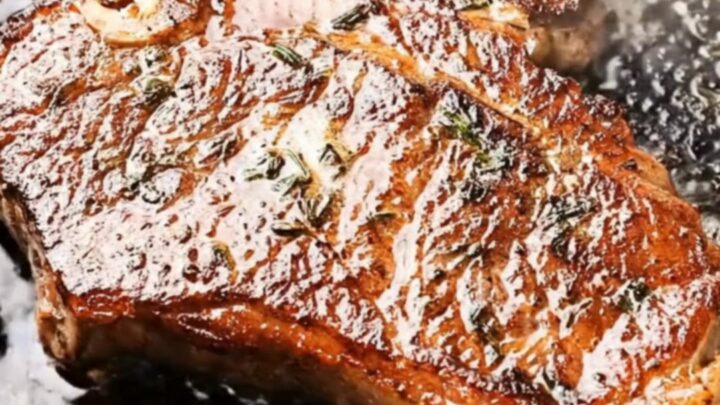
The steak should now be deeply browned on both faces and along the fat edge, coated in glossy herb-garlic butter, and reading 145°F (63°C) at its thickest point. The kitchen will smell intensely of browned butter, garlic and rosemary, and the pan will have gone from a hard sizzle to a gentler bubble once the heat came down.
Check the thermometer in two spots to be sure of the reading, and confirm the butter still smells nutty rather than burnt. The steak should lift cleanly with tongs and feel springy, not slack. If either face is pale, sear thirty seconds longer before moving on.
Rest, Slice and Serve
- Rest the SteakLift the steak onto a clean plate or carving board with the tongs and let it rest for at least 3 minutes. The juices redistribute during the rest, so the slices stay moist instead of flooding the board the moment the knife goes in.Look for Juice beads on the surface and the steak stops steaming within a couple of minutes.Tip Rest on a warm plate; a tight foil wrap traps steam and softens the crust.
- Slice and Spoon Over the ButterCut the rested steak against the grain into thick slices, arrange them on warm plates, and spoon the herbed pan butter over each slice. Serve immediately, while the crust is still crisp and the butter is still glossy.Look for The slices show a warm pink center framed by a dark, crackly crust.Tip Slice against the grain for shorter fibers and a more tender bite.
After the rest, the steak should feel firm yet yielding under gentle pressure, with a few drops of juice beading on the surface and no steam rising from the board. The slices, cut against the grain, show a warm pink center framed by a dark, crackly crust, and each one carries a sheen of pan butter.
Taste a slice before serving: the crust should be seasoned all the way through, never only on top. If the butter on the plate has gone dull or solidified, briefly rewarm the pan butter and spoon it over fresh. Serve immediately while everything is still hot and glossy.
Common mistakes
The most common failure is a wet steak: any surface moisture steams instead of sears and turns gray rather than brown. The second is an underheated pan, which produces a pale crust and a long, leaky cook. Moving the steak during the first sear is another frequent slip; lift it only when it releases on its own. Burnt butter is the last trap — if the butter foams violently and smells acrid, drop the heat immediately and add a fresh knob of butter. Finally, slicing too early undoes everything; those three minutes of rest are not negotiable.
How to tell it’s done
The reliable test is an instant-read thermometer in the thickest part of the steak, reading 145°F (63°C) for a safely cooked result with a warm pink center; the reading climbs a few degrees during the rest, so pull the steak right at that mark.
Visually, the crust should be deep golden-brown on both faces and along the fat edge, and the slices should glisten with juice rather than pool it. If the pan butter smells nutty and garlicky rather than acrid, the baste did its job. Let the steak rest at least 3 minutes before slicing so the juices settle back into the meat.
- Steaks, chops and roasts: 145°F (63°C) in the thickest part, then a 3-minute rest
Up next · Part 3 of 3
4 variations · storage & make-ahead · 5 answers · printable card
Tips, FAQ & printable recipe (Part 3)← Back to the ingredients (Part 1)