Dinner · Part 1 of 3: Ingredients
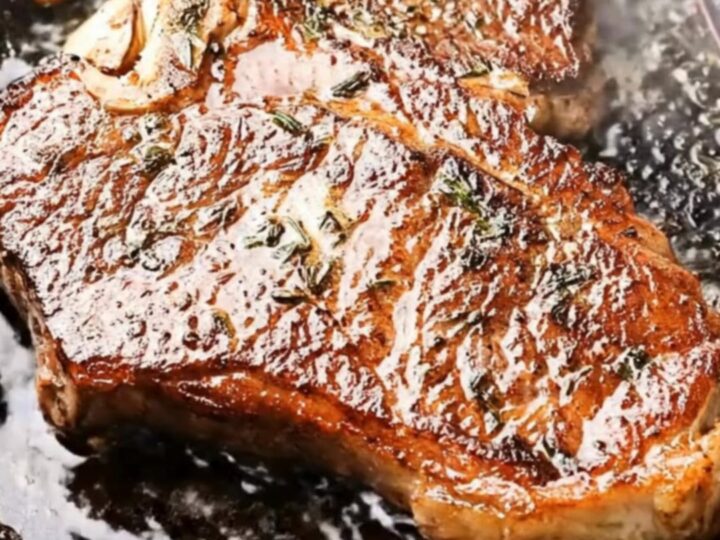
Cast Iron Ribeye with Herb-Garlic Butter, One Pan in 25 Minutes
- Prep
- Cook
- Total
- Serves
- 2
A thick ribeye with a deep golden crust and a spoonful of foaming herb-garlic butter is one of the most satisfying things to pull off at home, and it takes less than thirty minutes. The whole dish happens in one heavy skillet: a hard sear, a butter baste, a short rest, and a warm plate. This page walks through every stage so the crust comes out crackly, the interior stays juicy, and the butter does exactly what it should.
Cast iron holds heat like nothing else in a home kitchen, and that is precisely why it suits a thick-cut ribeye. The pan goes from stovetop to serving plate without losing its edge, and the browned bits left behind become the base for the garlic-herb butter baste.
The method here is deliberately simple: dry the surface, season generously, sear hard on both sides, then tilt the pan and spoon foaming butter over the steak while rosemary, thyme and crushed garlic perfume the fat. A thermometer takes the guesswork out of doneness, and a short rest keeps every slice moist. From hot pan to hot plate, the whole thing moves quickly, which makes this a reliable choice for a weeknight dinner that still feels like an occasion.
Ingredients
- 1 1/2 lb boneless ribeye steak, about 1 1/4 inches thick
- 2 tsp kosher salt, plus more to taste at the table
- 1 tsp coarsely ground black pepper, freshly cracked if possible
- 1 tbsp vegetable oil, or another neutral high-heat oil
- 4 tbsp unsalted butter, cut into pieces
- 3 garlic cloves, lightly crushed and peeled
- 2 sprigs fresh rosemary
- 4 sprigs fresh thyme
Why this recipe works
The method works because cast iron stores an enormous amount of heat and delivers it in one steady wave. A dry, well-salted surface hitting that heat triggers the Maillard reaction immediately, building hundreds of browned, savory compounds in the few minutes before the interior even warms through.
Leaving the steak untouched during that first sear matters just as much: every lift resets the contact between meat and metal, and a crust that forms in one uninterrupted stretch is thicker and more even than one fussed over. The narrow fat edge gets its own brief roll in the pan so no side of the steak misses the browning.
The butter baste is doing three jobs at once. Foaming butter conducts heat into the uneven spots on the surface, so the crust deepens even after the flip. The crushed garlic, rosemary and thyme bloom in the hot fat and coat the meat with a flavor that plain searing cannot deliver.
And finishing to a thermometer reading rather than the clock removes the guesswork that ruins so many pan steaks. The final rest is not optional; it is what keeps the juices in the meat instead of running across the cutting board the moment the knife goes in.
Notes and substitutions
Buy a boneless ribeye about 1 1/4 inches thick and roughly 1 1/2 pounds; a steak much thinner will overtake its crust before the center reaches temperature, and one much thicker needs lower, gentler heat than a screaming pan provides. Kosher salt is the right choice here because the coarse grains grip the surface and dissolve evenly.
Choose a neutral oil with a high smoke point, such as vegetable or avocado oil, since the pan runs hot enough to burn olive oil. Unsalted butter keeps the seasoning in check, letting the salt and the herbs do the talking where they belong.
A 12-inch cast iron skillet is the ideal pan, but any heavy skillet will work; stainless steel is the best alternative, though it needs a slightly longer preheat. An instant-read thermometer is worth having for this recipe more than almost any other. If fresh rosemary and thyme are unavailable, use a teaspoon each of the dried versions added with the butter. Salted butter can replace the unsalted kind; simply hold back a pinch of the kosher salt. The garlic can stay in large crushed pieces and be fished out easily after basting.
- boneless ribeye steak: New York strip or sirloin, both of which sear well; check the temperature a minute earlier since leaner cuts cook faster.
- fresh rosemary and thyme: 1 tsp each of dried rosemary and dried thyme, added straight into the butter with the garlic.
- unsalted butter: salted butter; simply hold back a pinch of the kosher salt so the pan butter does not overseason.
- vegetable oil: avocado oil or canola oil, both neutral in flavor with smoke points high enough for a hard sear.
Equipment
- 12-inch cast iron skillet
- instant-read thermometer
- kitchen tongs
- large metal spoon
- paper towels
- cutting board
- sharp chef's knife
Up next · Part 2 of 3
8 steps · 15 min of cooking · what to look for at each stage
Step-by-step instructions (Part 2)