Dinner · Part 2 of 3: Instructions
Cajun Blackened Salmon with Creamy Gulf Shrimp Skillet Step-by-step instructions
- Prep
- Cook
- Total
- Serves
- 2
Before you start
Gather everything before you turn on the heat, because the salmon sears quickly and the sauce comes together in minutes. Pat the salmon fillets and shrimp dry with paper towels, then set them on a plate in the refrigerator until the skillet is ready. Dice the celery and red bell pepper and place them in a small bowl. Grate the hard cheese on the small holes of a box grater and keep it in a separate bowl.
Measure the Cajun seasoning, butter and heavy cream and set them near the stove. Have tongs and a thermometer within reach. Fish and shrimp must stay refrigerated until you add them to the pan, and they should not sit out at room temperature for more than 30 minutes before cooking. Good preparation keeps the cooking smooth and the crust even.
Ingredients at a glance (9)
- 2 thick salmon fillets, skin removed
- 8 oz peeled Gulf shrimp, deveined
- 2 tbsp Cajun seasoning, plus more to taste
- 3 tbsp unsalted butter
- 2 stalks celery, finely diced
- 1/2 cup diced red bell pepper
- 1 cup heavy cream
- 1/2 cup finely grated hard cheese, such as Parmesan
- fresh parsley, chopped, for serving
Instructions
Season and prep the ingredients
- Season the salmon and shrimpPat the salmon fillets and shrimp dry with paper towels. Sprinkle the Cajun seasoning evenly over both sides of the salmon and toss the shrimp with a spoonful of the seasoning. Keep the fish chilled until the skillet is hot.Look for Fish surface looks evenly dusted with a red-brown coating.Tip Dry surfaces brown and char far better than wet ones.
- Prep the celery and pepperFinely dice the celery stalks and the red bell pepper so they cook quickly and blend into the sauce. Set them aside on the cutting board near the fish.Look for Small, even pieces ready in a neat pile.Tip Uniform dice ensures the vegetables soften at the same rate.
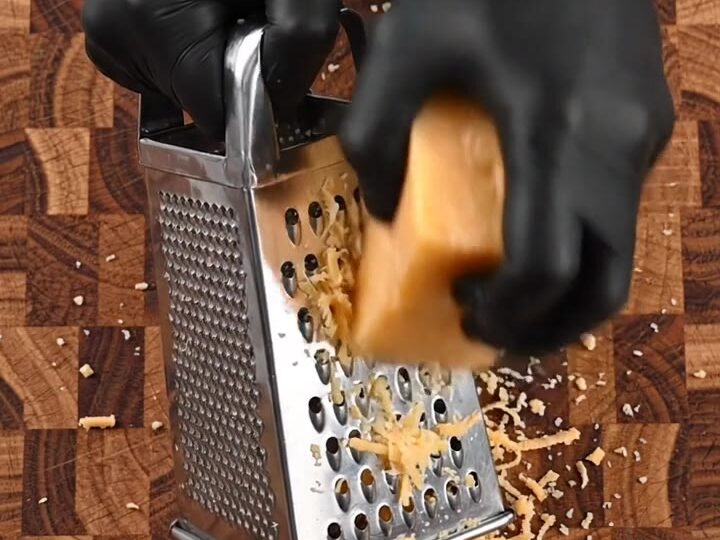
- Grate the cheese finelyGrate the hard cheese on the small holes of a box grater so it melts quickly into the cream. Grate it just before adding it to the pan.Look for Fine golden shreds fall onto the board.Tip Fine shreds melt smoothly instead of clumping in the sauce.
The salmon fillets and shrimp are seasoned, dry and chilled, with a thin, even coating of Cajun spice on both sides of the fish. The celery and red bell pepper are diced into neat, uniform pieces.
The hard cheese is finely grated into a light, fluffy pile that will melt quickly. Check that everything is within reach of the stove before you start cooking, and keep the fish refrigerated until the skillet is hot.
Build the base and sear
- Melt the butter in the skilletPlace the cast iron skillet over medium-high heat and add the butter. Let it melt and bubble before adding anything else, then add the celery and bell pepper and cook for about 2 minutes until just softened.Look for Butter bubbles and the vegetables turn bright and slightly tender.Tip Keep the heat steady so the butter does not scorch.
- Sear the salmon until blackenedLay the seasoned salmon in the skillet and sear for 3 to 4 minutes without moving it until the coating darkens and forms a charred crust. Add the seasoned shrimp around the fish and cook for 1 minute more.Look for Edges of the fish turn dark brown with a crisp, charred crust.Tip Leave the fish alone so the crust can form before flipping.
- Flip the salmon and add the sauceFlip the salmon with tongs and sear the other side for 2 to 3 minutes. Pour the heavy cream over the fish and shrimp, then scatter the grated cheese on top and simmer gently until the sauce thickens and the shrimp turn pink and curl.Look for Sauce looks glossy and orange-tinged, shrimp turn pink.Safe temperature 145°F (63°C) internal temperature (fish)Tip A gentle simmer keeps the cream from separating.
The butter has melted and bubbled in the hot cast iron skillet, and the celery and pepper have softened slightly and smell savory and buttery. The salmon has a dark, charred crust on the seared side and releases easily from the pan. The shrimp are turning opaque around the edges. Check that the fish is not sticking before you flip it, and adjust the heat so the butter does not burn.
Finish with the creamy sauce
- Spoon the sauce and finishSpoon the thick sauce over the salmon and shrimp so the fish is coated. Check that the salmon reaches 145°F (63°C) at the thickest part and the shrimp are opaque. Remove from the heat and sprinkle with chopped parsley.Look for Salmon flakes easily and the shrimp curl around the fillet.Safe temperature 145°F (63°C) internal temperature (fish)Tip Use a thermometer to confirm the thickest part of the fish.
- Serve from the skilletBring the skillet to the table and spoon the shrimp, sauce and salmon onto plates, or serve straight from the pan. Add extra Cajun seasoning to taste at the table.Look for Glossy sauce coats the fish and shrimp.Tip Serve while the crust is still crisp.
The heavy cream has been poured over the fish and shrimp and simmers gently, thickening into a glossy, orange-tinged sauce that coats a spoon. The grated cheese has melted into the cream without clumping. The shrimp have turned pink and curled, and the salmon flakes easily at its thickest point. Confirm that the fish reaches 145°F (63°C) before you move on to plating.
Common mistakes
The most common mistake is moving the salmon too soon. The crust needs several uninterrupted minutes in the hot fat, so resist the urge to shift the fish or check it constantly. Another frequent problem is wet fish: any surface moisture steams the seasoning instead of charring it, which leaves a pale, soggy coating.
Overcrowding the skillet also drops the temperature, so the salmon and shrimp turn grey instead of browning. Finally, boiling the cream too hard can make it separate, so keep the heat at a gentle simmer once the sauce is in the pan. Using pre-shredded cheese is another trap, since its anti-caking coating keeps the sauce grainy rather than smooth.
How to tell it’s done
The salmon is done when the thickest part reaches 145°F (63°C) on an instant-read thermometer. The flesh should turn opaque and separate into flakes when pressed gently with a fork, and the outside should show a dark, charred crust. The shrimp are done when they are pink and opaque all the way through and curled into loose C shapes, which takes only a few minutes.
The sauce is ready when it is glossy and thick enough to coat a spoon, with the cheese fully melted and no visible grains. Remove the skillet from the heat as soon as all three checks pass, because the fish keeps cooking in the hot pan.
- Fish: 145°F (63°C) in the thickest part
- Shellfish: 145°F (63°C) in the thickest part
Up next · Part 3 of 3
4 variations · storage & make-ahead · 5 answers · printable card
Tips, FAQ & printable recipe (Part 3)← Back to the ingredients (Part 1)