Dinner · Part 2 of 3: Instructions
Silky Roman Carbonara with Crispy Guanciale Step-by-step instructions
- Prep
- Cook
- Total
- Serves
- 4
Before you start
Before you begin, bring a large pot of salted water to a boil. Set out all your ingredients: the spaghetti, diced guanciale, egg yolks, grated Pecorino, and toasted cracked pepper. Have a measuring cup ready for the pasta water.
Place a large skillet on the stove and a mixing bowl nearby. The entire dish comes together in the time it takes to cook the pasta, so having everything prepped and within reach is essential.
Ingredients at a glance (6)
- 12 oz spaghetti alla chitarra or thick spaghetti
- 150 g guanciale, diced
- 4 large egg yolks
- 85 g Pecorino Romano, finely grated
- 2 tsp freshly toasted cracked Tellicherry black pepper
- 90 ml starchy pasta water
Instructions
Prep the pasta and egg paste
- Boil the pasta and prepare the egg mixtureBring a large pot of generously salted water to a rolling boil. Add the spaghetti and cook until just shy of al dente, about 1 minute less than the package directs. While the pasta cooks, place the egg yolks in a medium bowl. Add the finely grated Pecorino Romano and the toasted cracked black pepper. Whisk vigorously until the mixture forms a thick, golden paste with no visible streaks of cheese.Look for The egg-cheese paste is thick, glossy, and holds its shape when the whisk is lifted.Tip Whisk thoroughly so the cheese is fully incorporated — this prevents graininess later.
- Render the guanciale until glass-crispPlace the diced guanciale in a cold large skillet. Set over medium heat and cook slowly, stirring occasionally, until the fat renders and the pieces become golden and glass-crisp, about 6 to 8 minutes. The guanciale should be deeply browned but not burnt. Once crisp, remove the pan from the heat and let it sit for 1 minute.Look for The guanciale is shatteringly crisp and the rendered fat is clear and fragrant.Tip Start the guanciale in a cold pan so the fat renders gently without scorching.
At the end of this phase, the pasta is boiling, the guanciale is rendering, and the egg-cheese paste is thick and golden. The paste should be homogeneous, with no streaks of cheese.
The guanciale fat is turning clear and the pieces are starting to crisp. The kitchen smells of pork fat and toasted pepper — a promising start.
Combine off the heat for a silky sauce
- Combine pasta with guanciale and egg mixtureReserve about 1 cup of pasta water before draining. Drain the spaghetti and add it to the skillet with the guanciale. Toss quickly to coat the pasta in the rendered fat. With the pan still off the heat, pour the egg-cheese paste over the pasta. Immediately add 90 ml of the reserved starchy water. Toss and stir rapidly with tongs, lifting and turning the pasta, until the sauce becomes glossy and clings to every strand.Look for The sauce turns silky and emulsified, coating the pasta without scrambling.Safe temperature 160°F (71°C) internal temperature (egg dishes)Tip Keep the pan off the heat while tossing — the residual heat is enough to create the emulsion.
- Adjust the sauce to a silky consistencyIf the sauce looks too thick or clumpy, add another splash of the reserved pasta water, 1 tablespoon at a time, tossing vigorously after each addition. The goal is a creamy, flowing sauce that clings to the pasta but is not dry. The pasta should be glossy and the sauce should coat the back of a spoon. Continue tossing until the sauce is smooth and emulsified.Look for The sauce is fluid, glossy, and coats the pasta evenly without pooling.Tip Add pasta water gradually — too much will make the sauce thin and watery.
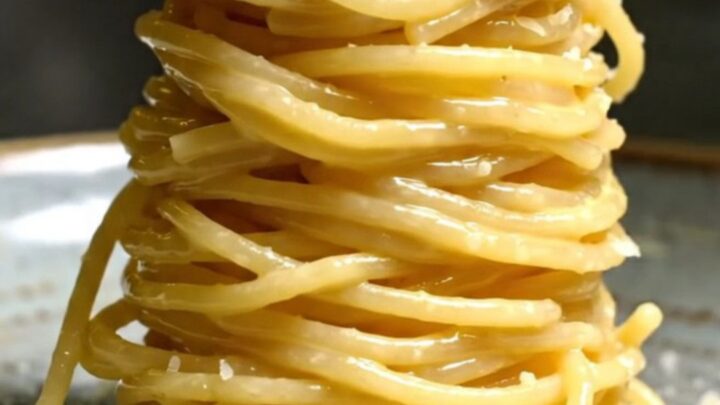
The pasta is coated in a glossy, emulsified sauce that clings to every strand. No lumps, no scrambled eggs. The guanciale is distributed throughout, and the sauce has a creamy sheen. The texture should be fluid but not watery. Taste a bite — the flavors are balanced, with the Pecorino and pepper coming through clearly.
Finish and serve with extra crunch
- Serve immediately with extra guanciale and PecorinoDivide the carbonara among warm bowls. Top each serving with extra crispy guanciale shards and a generous dusting of grated Pecorino Romano. Finish with a few cracks of black pepper. Serve at once while the sauce is still silky and warm.Look for The pasta is glossy, the guanciale shards add crunch, and the cheese dust melts slightly.Tip Warm the bowls beforehand to keep the sauce from cooling too quickly.
The carbonara is plated in warm bowls, topped with crispy guanciale shards and a dusting of Pecorino. The pasta is glossy and inviting, with a rich aroma. The sauce is still silky and warm. This is the moment to serve — carbonara waits for no one.
Common mistakes
The most common mistake is scrambling the eggs. This happens when the pan is too hot — always toss off the heat. Another pitfall is a clumpy sauce, which occurs when the cheese is not finely grated or the egg paste is not whisked thoroughly.
Adding too much pasta water can make the sauce thin, so add it gradually. Finally, do not skip toasting the pepper; it adds a depth that raw pepper cannot match.
How to tell it’s done
The carbonara is done when the sauce is glossy and clings to the pasta without pooling. The eggs must be cooked to 160°F (71°C) — this happens as the hot pasta and guanciale fat warm the sauce.
The pasta should be al dente with a slight bite, and the guanciale should be crisp but not hard. Taste a strand: the sauce should be rich, salty, and creamy, with a distinct peppery kick.
- Egg dishes: 160°F (71°C) in the thickest part
Up next · Part 3 of 3
4 variations · storage & make-ahead · 5 answers · printable card
Tips, FAQ & printable recipe (Part 3)← Back to the ingredients (Part 1)