Dinner · Part 1 of 3: Ingredients
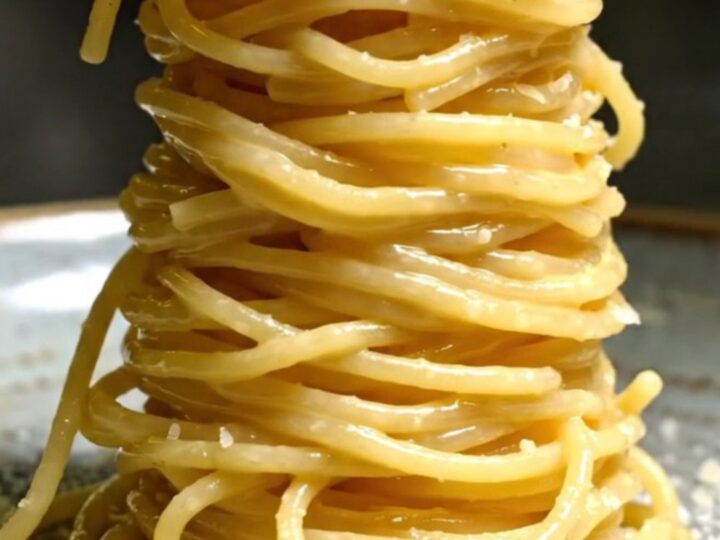
Silky Roman Carbonara with Crispy Guanciale
- Prep
- Cook
- Total
- Serves
- 4
Roman carbonara is a study in restraint: a handful of ingredients, a few careful moves, and a sauce that turns silky without a drop of cream.
This version follows the classic method exactly — egg yolks, Pecorino Romano, toasted black pepper, and guanciale rendered until glass-crisp. The result is a bowl of glossy spaghetti that tastes like a Roman trattoria, made entirely at home. No shortcuts, no cream, just technique.
Carbonara is one of Italy's most beloved pasta dishes, yet it is often muddled with cream, garlic, or parsley. This recipe respects the authentic Roman method: a thick paste of egg yolks and Pecorino, a pan of crisped guanciale, and a splash of starchy water to bind everything into a luscious sauce.
The key is tossing the pasta off the heat, allowing the residual warmth to create a silky emulsion rather than scrambled eggs. In about 25 minutes, you'll have a dinner that feels both rustic and luxurious.
Ingredients
- 12 oz spaghetti alla chitarra or thick spaghetti
- 150 g guanciale, diced
- 4 large egg yolks
- 85 g Pecorino Romano, finely grated
- 2 tsp freshly toasted cracked Tellicherry black pepper
- 90 ml starchy pasta water
Why this recipe works
The technique hinges on temperature control. When the pasta is tossed with the egg-cheese paste off the heat, the residual heat from the pasta and the rendered guanciale fat gently cooks the eggs to a safe 160°F (71°C) while keeping them creamy.
The starch from the pasta water acts as an emulsifier, binding the fat and cheese into a smooth, clinging sauce. This is why the sauce stays silky rather than turning into scrambled eggs.
The ingredients are chosen for their roles: guanciale provides rich, porky fat and crispy texture; Pecorino Romano adds sharp, salty depth; and cracked black pepper brings a fragrant heat. The starchy water is not an afterthought — it is the secret to the glossy coating. Each element works together to create a carbonara that is greater than the sum of its parts.
Notes and substitutions
Guanciale is the traditional choice, but if it is hard to find, pancetta or thick-cut bacon can step in. The flavor will be slightly different, but the texture and richness will still shine.
Spaghetti alla chitarra is ideal for its square edges that catch the sauce, but regular spaghetti or bucatini work beautifully too. Use a good-quality Pecorino Romano — it is the backbone of the dish.
Freshly cracked black pepper makes a noticeable difference. Toasting the peppercorns briefly in a dry pan before cracking intensifies their aroma. The egg yolks should be farm-fresh and at room temperature for the smoothest emulsion. If you prefer a milder cheese, you can substitute half with Parmigiano-Reggiano, but keep the Pecorino for its characteristic tang.
- guanciale: pancetta or thick-cut bacon, though the flavor will be less purely Roman
- spaghetti alla chitarra: regular spaghetti or bucatini
- Pecorino Romano: Parmigiano-Reggiano, but use half and add a pinch of salt to mimic the sharpness
Equipment
- Large pot for pasta
- Large skillet
- Mixing bowl
- Whisk
- Tongs or pasta spoon
- Microplane or fine grater
Up next · Part 2 of 3
5 steps · 15 min of cooking · what to look for at each stage
Step-by-step instructions (Part 2)