Desserts · Part 3 of 3: Tips & recipe card
Whole Lemon Loaf Cake with Lemon Glaze Tips, FAQ & printable recipe

- Prep
- Cook
- Total
- Serves
- 10
Tips for success
For the most intense lemon flavor, use a large, fragrant lemon—Meyer lemons work beautifully if available. The boiling time is crucial; if your lemon is particularly thick-skinned, boil for an extra minute or two.
When blending, stop and scrape down the sides to ensure everything is fully incorporated. The batter should be smooth and free of lumps before pouring into the pan.
To achieve a perfectly domed top, make sure your baking powder is fresh. If your oven runs hot, check the cake a few minutes early. When glazing, place the cake on a wire rack over a baking sheet to catch drips.
For clean slices, use a serrated knife and wipe it between cuts. If the glaze sets too quickly, warm it slightly over a pan of hot water to loosen it.
Variations
- Lemon Poppy Seed: Add 2 tablespoons of poppy seeds to the batter along with the flour. The poppy seeds add a pleasant crunch and nutty flavor that complements the lemon beautifully.
- Lemon Herb: Fold in 1 tablespoon of finely chopped fresh thyme or rosemary into the batter. The herbs add an unexpected savory note that pairs well with the citrus.
- Orange Loaf: Replace the lemon with a whole orange, boiled and blended the same way. Use orange juice and zest for the glaze. The flavor is sweeter and less tart.
- Gluten-Free Adaptation: Substitute the all-purpose flour with a 1:1 gluten-free baking flour blend. Add 1/4 teaspoon xanthan gum if your blend doesn't include it. Bake as directed, checking for doneness a few minutes earlier.
Storage and make-ahead
- Fridge
- Store wrapped in plastic wrap in the refrigerator for up to 1 week. Bring to room temperature before serving.
- Freezer
- Freeze unglazed loaf, wrapped tightly in plastic and foil, for up to 3 months. Thaw overnight in the refrigerator.
- Reheat
- Reheat individual slices in the microwave for 10-15 seconds, or in a 300°F oven for 5 minutes.
Store the loaf cake in an airtight container at room temperature for up to 3 days. If glazed, the glaze may become sticky but will remain flavorful.
For longer storage, wrap the unglazed cake tightly in plastic wrap and refrigerate for up to a week. Bring to room temperature before serving to restore its tender texture.
This cake can be made a day ahead. Bake and cool completely, then wrap tightly in plastic wrap and store at room temperature.
Glaze the cake on the day you plan to serve it for the freshest appearance. The glaze can be made ahead and stored in an airtight container in the refrigerator for up to 3 days; re-whisk before using.
Serving ideas
Serve this lemon loaf as a dessert with a dollop of whipped cream or a scoop of vanilla ice cream. It also shines at brunch alongside fresh berries and coffee. The bright citrus flavor pairs well with Earl Grey tea or a crisp sparkling wine.
For a more indulgent presentation, dust with extra powdered sugar just before serving. The loaf can be sliced thick or thin, depending on preference. It's equally delicious warm from the oven—just note that the glaze will melt if applied to a warm cake, so for a neat look, let it cool completely.
Frequently asked questions
Can the whole lemon be replaced with lemon juice and zest?
Why does the cake need to cool completely before glazing?
Can this cake be made without eggs?
How should the cake be stored if it has a glaze?
What if the cake sticks to the pan?
Whole Lemon Loaf Cake with Lemon Glaze
Ingredients
- 1 large whole lemon
- 1 cup granulated sugar
- 3 large eggs
- 1/2 cup milk
- 1/2 cup vegetable oil
- 2 cups all-purpose flour
- 1 packet baking powder (about 2 teaspoons)
- 1 cup confectioners' sugar
- 2 tbsp fresh lemon juice
- 1 tbsp fresh lemon zest
Instructions
- Place the whole lemon in a medium saucepan and cover with water. Bring to a boil over high heat, then reduce to a simmer and cook for 6 minutes. Drain and let cool slightly. Cut the lemon in half and remove any seeds. Transfer the lemon (including the peel) to a blender. Add the sugar, eggs, milk, and oil. Blend until completely smooth and velvety, about 30 seconds.
- In a large mixing bowl, whisk together the all-purpose flour and baking powder until well combined. Pour the lemon puree mixture into the dry ingredients. Use a whisk to combine until just smooth, being careful not to overmix. The batter will be thin and pourable.
- Preheat the oven to 320°F (160°C). Line a 9x5-inch loaf pan with parchment paper, leaving some overhang. Pour the batter into the prepared pan. Bake for 35 minutes, or until the top is golden and domed, and a toothpick inserted into the center comes out clean.
- Remove the cake from the oven and let it cool in the pan for 10 minutes. Then lift it out using the parchment overhang and transfer to a wire rack. Let it cool completely before glazing, about 1 hour.
- In a small bowl, whisk together the confectioners' sugar and fresh lemon juice until smooth and pourable. The glaze should be thick but drizzleable. If it's too thick, add a few more drops of lemon juice.
- Pour the glaze over the cooled loaf, letting it drip down the sides. Immediately sprinkle the fresh lemon zest over the top before the glaze sets. Let the glaze set for about 10 minutes before slicing.
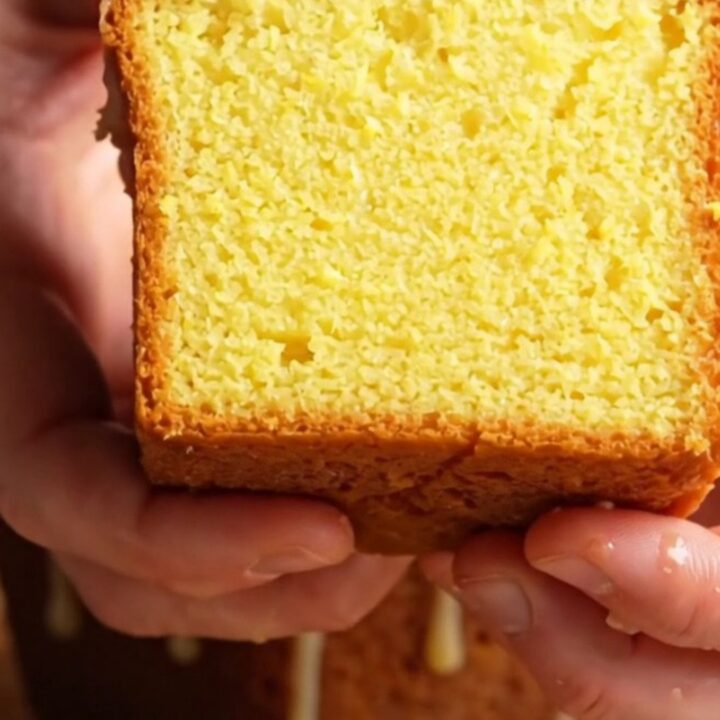
- Slice the loaf into thick, even pieces. The interior should be moist, tender, and fragrant with lemon. Serve as is or with a cup of tea.
Estimated nutrition per serving
- Calories
- 380
- Protein
- 5 g
- Carbohydrates
- 55 g
- Fat
- 16 g
Next recipe

Giant Double Chocolate Chip Cookies
See the recipe → →This recipe is based on a short cooking video and is published under the pen name Clara Weller. It was checked before publication, but errors can slip through. Nutrition, when shown, is an estimate. Read more in our editorial policy and on our food safety page.
More recipes to try

Giant Bakery-Style Chocolate Chip Cookies: Soft & Gooey
Total time: 31 min
Brown Butter Fudgy Brownies with Shiny Crinkle Top
Total time: 52 min
Coconut Lemon White Chocolate Butter Cookies: Crispy, Gooey, Zesty
Total time: 1 h 31 min
Homemade Jelly Donuts in Paper Sleeves: Zero-Mess Chocolate Bliss
Total time: 2 h
Brown Butter Brookie Cups: Fudgy Brownie & Cookie Bites
Total time: 30 min