Desserts · Part 2 of 3: Instructions
Whole Lemon Dried Fruit Loaf Cake Step-by-step instructions
- Prep
- Cook
- Total
- Serves
- 10
Before you start
Heat the oven to 320°F (160°C) and position a rack in the center. Line a 9x5-inch loaf pan with parchment paper, leaving overhang on the long sides. Measure all ingredients.
Bring a medium saucepan of water to a boil for the lemon. Prepare the dried fruit by chopping any large pieces to raisin size. Have a blender ready for the wet mixture and a large bowl for the dry ingredients.
Ingredients at a glance (10)
- 1 large whole lemon
- 1 cup granulated sugar
- 3 large eggs
- 1/2 cup whole milk
- 1/2 cup vegetable oil
- 2 cups all-purpose flour
- 2 tsp baking powder
- 1/2 tsp salt
- 3/4 cup mixed dried fruit (such as raisins, cranberries, chopped apricots)
- 1 tbsp cold butter, sliced thin
Instructions
Boil and Blend the Lemon Base
- Boil the Whole LemonPlace the whole lemon in a medium saucepan and cover with water. Bring to a boil over high heat, then reduce to a simmer and cook for 6 minutes. Drain and let cool until easy to handle, about 10 minutes. Cut the lemon in half and remove any seeds, then chop into quarters.Look for The lemon softens slightly and the peel becomes translucent; the white pith is still intact.Tip Boiling removes the harsh bitterness from the pith while keeping the aromatic oils in the peel.
- Blend the Wet IngredientsIn a blender, combine the boiled lemon (with peel), sugar, eggs, milk, and vegetable oil. Blend on high until the mixture is completely smooth and velvety, about 30 seconds. Scrape down the sides as needed.Look for The mixture turns a pale yellow and is completely liquefied with no visible bits of lemon.Tip Blending the whole lemon distributes the citrus oils and pectin, giving the cake a tender, moist crumb.
The lemon has simmered for six minutes and is slightly softened. After blending, the mixture is completely smooth, pale yellow, and smells intensely of fresh lemon.
It should be thick like a milkshake, with no visible pieces of peel or pith. If there are any lumps, blend for another 10 seconds.
Mix the Batter and Fill the Pan
- Mix the Dry IngredientsIn a large bowl, whisk together the all-purpose flour, baking powder, and salt. Make a well in the center and pour in the blended lemon mixture. Stir with a rubber spatula just until combined—lumps are fine. Fold in the mixed dried fruit.Look for The batter is thick but pourable, with no dry streaks of flour.Tip Do not overmix; overworking the gluten can make the cake tough instead of tender.
- Fill the Loaf PanPour the batter into a 9x5-inch loaf pan lined with parchment paper. Smooth the top with a spatula. Lay the thin slices of cold butter down the center line of the batter, from one end to the other.Look for The batter fills the pan about three-quarters full; the butter sits on top in a straight line.Tip The butter melts during baking and creates a classic crack down the middle of the loaf.
The batter is thick, smooth, and pourable, with the dried fruit evenly distributed. When poured into the loaf pan, it levels itself slightly. The butter slices sit in a neat line down the center. The batter should not look curdled or lumpy.
Bake and Cool the Loaf
- Bake the CakeBake in the preheated oven at 320°F (160°C) for 35 minutes, or until a toothpick inserted in the center comes out clean and the top is golden and domed. If the top browns too quickly, tent loosely with foil for the last 10 minutes.Look for The cake is golden brown, the center springs back when pressed, and a toothpick comes out clean.Safe temperature 160°F (71°C) internal temperature (egg dishes)Tip Oven temperatures vary; start checking at 30 minutes. The butter line should have created a split.
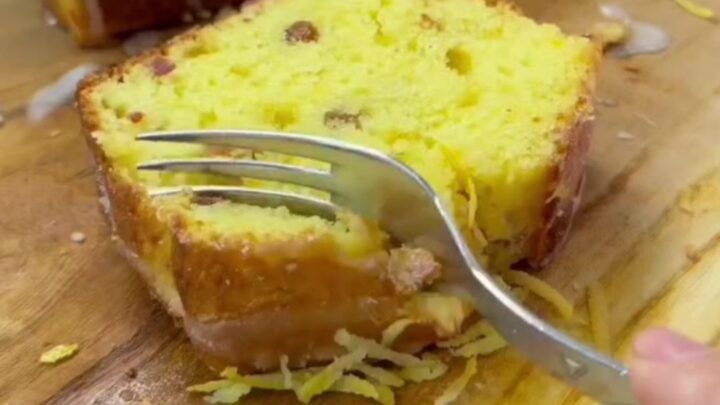
- Cool and SliceLet the cake cool in the pan on a wire rack for 10 minutes, then lift out using the parchment and cool completely on the rack. Slice thickly and serve. The crumb should be soft, tender, and moist, with visible dried fruit.Look for The cake is firm enough to slice cleanly, and the interior is pale yellow with flecks of fruit.Tip For clean slices, use a serrated knife and wipe the blade between cuts.
After 35 minutes, the cake is golden brown, domed, and a toothpick comes out clean. The butter line has created a natural crack down the middle. The kitchen smells of warm lemon and toasted sugar. The cake is firm to the touch and has pulled away from the pan edges.
Common mistakes
Overmixing the batter can develop gluten and make the cake tough; mix just until the flour is incorporated. Boiling the lemon for too long can make it mushy and overly soft, but under-boiling leaves bitterness—stick to 6 minutes.
If the dried fruit sinks to the bottom, toss it with a tablespoon of flour before folding in. Be careful not to overbake, as the cake will dry out; start checking at 30 minutes.
How to tell it’s done
The cake is done when the top is deep golden brown and domed, and a toothpick inserted into the center comes out clean or with just a few moist crumbs. The internal temperature should reach 160°F (71°C) to ensure the eggs are fully set.
The cake will pull away slightly from the sides of the pan. If the top browns too quickly, tent loosely with foil. Let cool in the pan for 10 minutes before transferring to a rack.
- Egg dishes: 160°F (71°C) in the thickest part
Up next · Part 3 of 3
4 variations · storage & make-ahead · 5 answers · printable card
Tips, FAQ & printable recipe (Part 3)← Back to the ingredients (Part 1)