Dinner · Part 1 of 3: Ingredients
White Truffle Mushroom Lasagna with Crispy Sage
- Prep
- Cook
- Total
- Serves
- 8
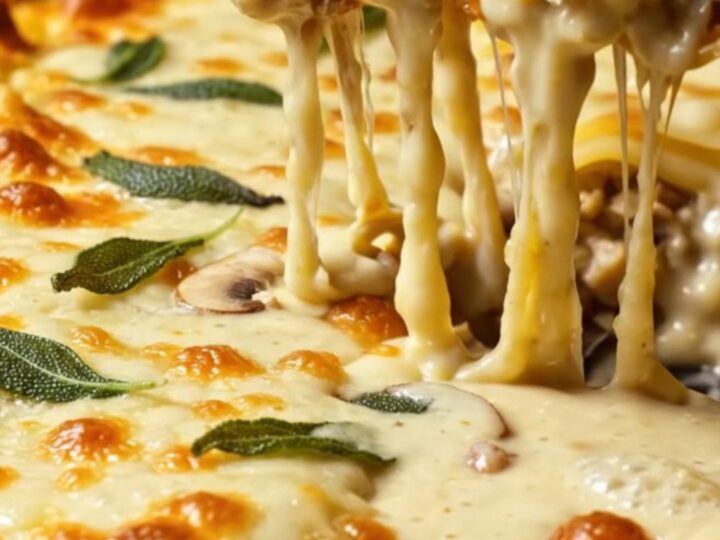
No red sauce needed in this decadent white lasagna. Sautéed porcini, cremini, and oyster mushrooms meet a truffle-scented Fontina béchamel, then bake under fresh pasta sheets until the top blisters into golden-brown peaks. A crown of crispy fried sage and shaved black truffle turns a humble pan of pasta into the kind of slice worth posting about.
White lasagna lives or dies by its sauce, and this one leans on a béchamel enriched with Fontina and truffle-infused milk. The result is velvety rather than gluey, with enough body to hold clean slices and enough slack to feel spoonable. Earthy mushrooms, cooked hard until they brown instead of steam, bring the depth that a tomato-based version would get from slow-simmered sauce.
Fresh pasta sheets keep the layers tender and delicate, and a final blast in a 385°F oven blisters the top into those coveted golden peaks. Fried sage leaves add a crackling, savory finish, and a few shavings of black truffle at the end make the whole dish fragrant without any extra work. Everything happens in one skillet, one saucepan, and one baking dish.
Ingredients
Mushrooms and béchamel
- 4 tbsp unsalted butter, divided
- 1 1/2 lb mixed mushrooms (porcini and cremini), sliced
- 3 cloves garlic, minced
Topping
- 12 fresh sage leaves, plus extra for serving
Mushrooms and béchamel
- 1/3 cup all-purpose flour
- 3 cups whole milk, truffle-infused if available, warmed
- 7 oz Fontina cheese, shredded
Assembly
- 1 lb fresh lasagna sheets
Topping
- black truffle, shaved, for serving (optional)
Why this recipe works
The method works because each component is cooked to its own finish before assembly. The mushrooms are sautéed in a hot, uncrowded pan until every drop of released moisture evaporates — this concentrates their flavor and prevents a watery lasagna, the most common failure of white versions.
Meanwhile the béchamel is built classically: a pale roux, warm milk whisked in gradually, then cheese melted in off high heat.
Layering sauce directly onto every pasta sheet, including the first one, does double duty: it seasons the noodles as they bake and keeps them from sticking to the dish.
Baking at 385°F is hot enough to brown the top and bubble the edges — the visual cue that the layers are heated through — while the 10-minute rest afterward lets the starch and sauce settle, so each square lifts out intact with creamy layers still slowly moving.
Notes and substitutions
Choose mushrooms with texture in mind: porcini bring foresty depth, cremini hold their bite, and oyster mushrooms turn silky and almost meaty. A 1 1/2 pound mix is the sweet spot for a 9x13 pan. Fontina is the right melting cheese here — nutty and elastic without strings — but Gruyère or Taleggio substitute well. Warm the milk before it hits the roux; cold milk is the number one cause of lumpy béchamel.
Fresh lasagna sheets need no pre-boiling; they hydrate in the sauce as it bakes. If only dried no-boil noodles are available, thin the béchamel slightly with a splash of milk. Whole milk gives the sauce its richness; anything leaner thins the finish.
Truffle-infused milk is a luxury, not a requirement — a few drops of truffle oil or simply well-browned mushrooms carry the aroma. A microplane doubles as a truffle shaver in a pinch.
- Fontina: Gruyère or Taleggio melt smoothly and bring a similar nutty depth; use the same weight.
- Porcini, cremini, and oyster mushrooms: Any 1 1/2 lb mix of cremini, shiitake, and button mushrooms works; dried porcini rehydrated in the milk deepens the flavor.
- Fresh lasagna sheets: No-boil dried lasagna noodles work well; add a splash of extra milk to the béchamel so they hydrate fully.
- Truffle-infused milk: Warm the milk with a few drops of truffle oil, or simply use whole milk — the mushrooms carry plenty of aroma on their own.
Equipment
- 9x13-inch baking dish
- large skillet
- medium saucepan
- whisk
- box grater
- microplane or truffle shaver
Up next · Part 2 of 3
10 steps · 45 min of cooking · what to look for at each stage
Step-by-step instructions (Part 2)