Dinner · Part 2 of 3: Instructions
Volcano Salmon Sushi Bake with Crispy Seaweed Step-by-step instructions
- Prep
- Cook
- Total
- Serves
- 6
Before you start
Before starting, make sure the sushi rice is cooked and seasoned, and the salmon is cut into cubes. Shred the kani crab if not already shredded. Measure out the Kewpie mayo and sriracha, and have the furikake and mozzarella ready.
Preheat the oven to 400°F (200°C) and lightly grease a 9x13-inch baking dish. Set out all the toppings—unagi sauce, avocado, masago, and nori—so they are ready for the final assembly. This is a straightforward dish that comes together quickly once the ingredients are prepped.
Ingredients at a glance (11)
- 400 g seasoned sushi rice
- furikake seasoning, for sprinkling, to taste
- 250 g shredded kani crab
- 300 g cubed salmon
- 60 g Kewpie mayonnaise
- 30 ml sriracha
- 1 cup shredded mozzarella cheese
- unagi sauce, for drizzling, to taste
- 1 avocado, sliced
- masago (capelin roe), for topping, to taste
- roasted seaweed sheets (nori), for serving
Instructions
Prepare the Layers
- Preheat and Prepare the Baking DishPreheat the oven to 400°F (200°C). Lightly grease a 9x13-inch baking dish with a little oil or nonstick spray. Press the seasoned sushi rice evenly into the bottom of the dish, creating a firm, even layer. Sprinkle furikake seasoning generously over the rice according to taste.Look for The rice layer should be compact and evenly distributed across the dish.Tip Use wet hands or a spatula to press the rice without it sticking.
- Mix the Spicy Salmon and CrabIn a mixing bowl, combine the cubed salmon, shredded kani crab, Kewpie mayonnaise, and sriracha. Stir gently until the salmon and crab are evenly coated with the spicy mayo mixture. Be careful not to break up the salmon cubes too much.Look for The mixture should be creamy and well combined, with visible chunks of salmon.Tip For a spicier kick, add a bit more sriracha, but keep the balance creamy.
At this stage, the baking dish contains a firm, even layer of seasoned rice sprinkled with furikake. The salmon and crab mixture is creamy and well combined, with visible chunks of salmon. The mozzarella is evenly spread over the top. The oven is preheated to 400°F (200°C), and everything is ready to bake.
Bake and Broil
- Layer the Salmon Mixture Over the RiceSpread the salmon and crab mixture evenly over the seasoned rice layer in the baking dish. Use a spatula to smooth the top. Sprinkle the shredded mozzarella cheese evenly over the salmon mixture, covering the entire surface.Look for The top should be completely covered with the salmon mixture and cheese.Tip Distribute the cheese evenly so it melts and blisters uniformly.
- Bake the CasserolePlace the baking dish in the preheated oven and bake for 12 minutes, until the casserole is heated through and the cheese begins to melt. The salmon should reach a safe internal temperature of 145°F (63°C) when measured with an instant-read thermometer.Look for The casserole is hot and bubbling around the edges after 12 minutes.Safe temperature 145°F (63°C) internal temperature (fish)Tip Check the internal temperature of the salmon to ensure it is fully cooked.
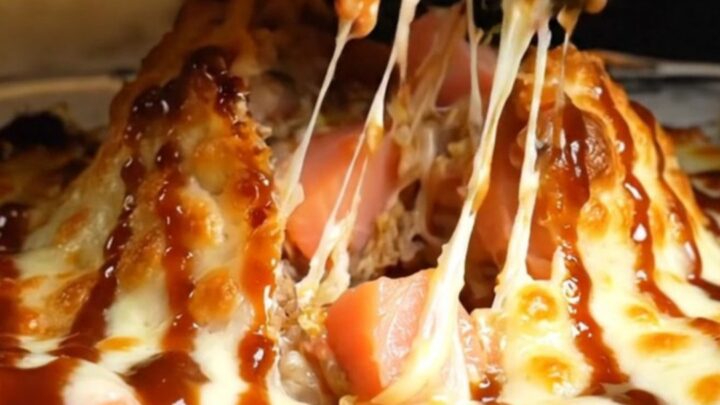
- Broil Until Golden and BlisteredSwitch the oven to broil and continue cooking for 2 minutes, watching closely, until the top is blistered and golden in spots. The cheese should bubble and char slightly, creating volcano-like peaks. Remove from the oven carefully.Look for The top is golden brown with blistered, bubbling cheese.Tip Keep an eye on it under the broiler—it can burn quickly.
After baking, the casserole is hot and bubbling, with the cheese melted and the salmon cooked through. After broiling, the top is golden brown with blistered, charred spots, resembling a volcano.
The internal temperature of the salmon should be at least 145°F (63°C). The kitchen smells of baked salmon and toasted cheese.
Finish and Serve
- Add Toppings and ServeDrizzle unagi sauce over the hot casserole. Arrange sliced avocado on top and sprinkle with masago. Serve immediately with roasted seaweed sheets for scooping. Let the casserole cool for 2 minutes before serving, then enjoy.Look for The casserole is topped with glossy sauce, creamy avocado, and bright masago.Tip For extra crunch, toast the nori sheets briefly over a flame before serving.
The casserole is topped with a glossy drizzle of unagi sauce, creamy avocado slices, and bright orange masago. It is served immediately with crispy nori sheets for scooping. Each bite is a combination of warm, creamy, spicy, and fresh flavors, with the crunch of nori adding texture.
Common mistakes
One common mistake is overmixing the salmon and crab mixture, which can break up the salmon into small pieces. Gently fold the ingredients together to keep the salmon chunks intact. Another mistake is not pressing the rice firmly enough, leading to a loose base that falls apart when serving.
Use a spatula or wet hands to compact the rice evenly. Also, be careful not to overbake the casserole, as the salmon can dry out. Stick to the recommended baking time and check the internal temperature.
How to tell it’s done
The casserole is done when the salmon reaches an internal temperature of 145°F (63°C) and the cheese is melted and bubbling. After broiling, the top should be golden brown with blistered, charred spots.
The edges of the casserole will be hot and sizzling, and the aroma of baked salmon and melted cheese will fill the kitchen. Let it cool for a couple of minutes before serving, but it is best enjoyed warm when the cheese is still stretchy and the rice is tender.
- Fish: 145°F (63°C) in the thickest part
- Shellfish: 145°F (63°C) in the thickest part
Up next · Part 3 of 3
4 variations · storage & make-ahead · 5 answers · printable card
Tips, FAQ & printable recipe (Part 3)← Back to the ingredients (Part 1)