Dinner · Part 3 of 3: Tips & recipe card
Vintage Gingersnap Pot Roast for Tender Slow Cooker Beef Tips, FAQ & printable recipe
- Prep
- Cook
- Total
- Serves
- 6
Tips for success
For a more concentrated flavor, you can sear the beef roast in a hot pan with a tablespoon of oil before placing it into the slow cooker. While not strictly necessary, this adds an extra layer of complexity to the crust of the beef and helps deepen the color of the final gravy significantly.
If you find the gravy is not thick enough for your preference at the end of the cooking time, you can remove the beef and whisk in a small amount of cornstarch slurry (equal parts cornstarch and water) into the hot liquid.
Let it simmer on high for a few minutes until it reaches your desired consistency.
Variations
- Root Vegetable Addition: Add chopped carrots and potatoes around the roast during the assembly phase to create a complete one-pot meal. The vegetables will cook in the juices and absorb the delicious gingersnap gravy flavor.
- Spiced Version: Enhance the warmth of the dish by adding a teaspoon of dried thyme or a bay leaf to the slow cooker. These herbs complement the sweetness of the gingersnap cookies and the savory beef perfectly.
Storage and make-ahead
- Fridge
- Keep in an airtight container for up to 3 days.
- Freezer
- Freeze in a freezer-safe container for up to 2 months.
- Reheat
- Reheat gently on the stovetop over low heat until the internal temperature reaches 165°F (74°C).
Store any leftovers in an airtight container in the refrigerator for up to 3 days. Ensure the beef is completely cooled to room temperature before placing it in the fridge, but do not leave it out for more than 2 hours.
If you have a large amount of leftovers, divide them into smaller containers to allow them to cool more quickly and evenly.
This dish is an excellent candidate for making ahead, as the flavors often improve after sitting for a day. Simply follow the recipe as written, let the roast cool, and store it in the refrigerator.
When you are ready to serve, reheat the beef and gravy gently on the stovetop over low heat until it is warmed through completely.
Serving ideas
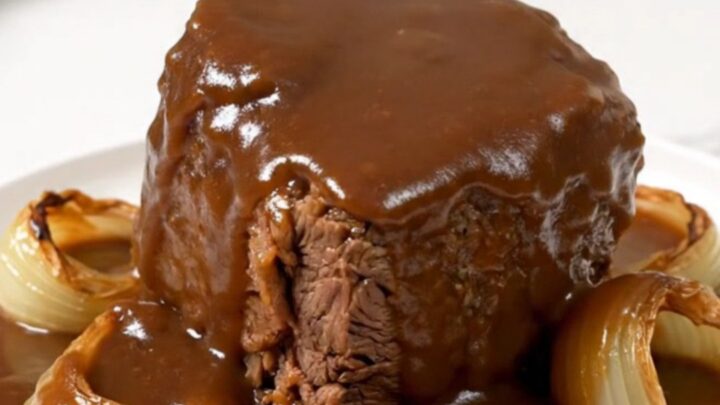
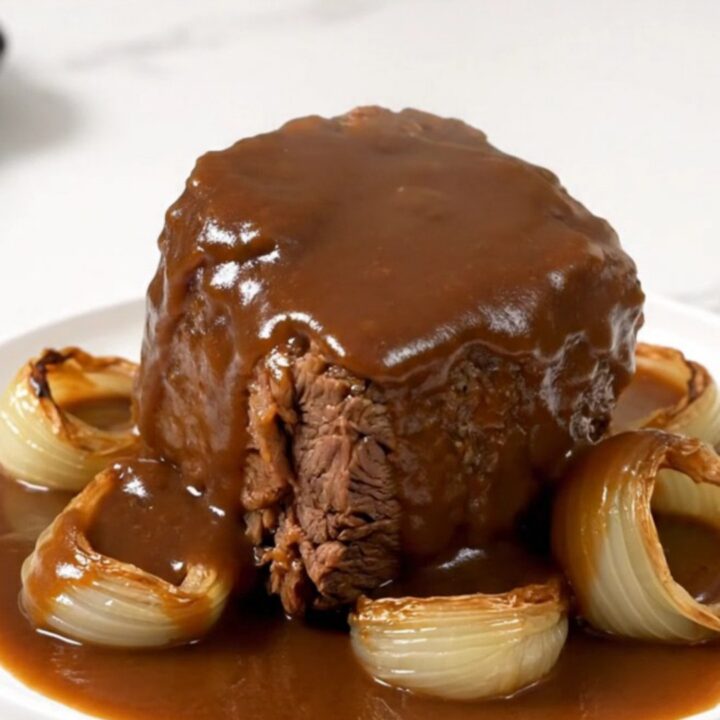
Serve this pot roast hot, ideally with a side of creamy mashed potatoes or roasted root vegetables to soak up the rich, gingersnap-infused gravy. A crisp green salad with a bright vinaigrette also makes a great accompaniment to balance the depth and richness of the braised beef and onions.
When serving, consider pulling the meat into large chunks rather than slicing it, as this allows the meat to hold more of the flavorful gravy.
Spoon a generous amount of the onions and the thickened sauce directly over the beef before presenting it to ensure every portion is flavorful and moist.
Frequently asked questions
Can the gingersnap cookies be substituted if they are not available?
Is it necessary to use a specific type of beef for this recipe?
Can this recipe be prepared in a pressure cooker?
Vintage Gingersnap Pot Roast for Tender Slow Cooker Beef
Ingredients
- 3 lb beef chuck roast
- 2 large yellow onions, sliced into half-moons
- 1 cup gingersnap cookies, crushed
- 2 cups beef broth
- 2 tbsp apple cider vinegar
Instructions
- Place the beef chuck roast into the bottom of the slow cooker. Arrange the sliced onions around the sides of the beef. Ensure the roast lies flat for even cooking throughout the process.
- Sprinkle the crushed gingersnaps over the top of the beef and onions. Pour the beef broth and vinegar over the ingredients. Cover with the lid and set to low heat for 8 hours.
- Once the cooking time is complete, verify the internal temperature of the beef reaches 145°F (63°C). Carefully remove the roast from the slow cooker and let it rest for at least 10 minutes before slicing or pulling it apart for serving.
Estimated nutrition per serving
- Calories
- 450
- Protein
- 35 g
- Carbohydrates
- 18 g
- Fat
- 26 g
- Fiber
- 1 g
- Sugar
- 12 g
- Sodium
- 750 mg
Next recipe

Slow Cooker Pesto Chicken and Baby Potatoes
See the recipe → →This recipe is based on a short cooking video and is published under the pen name Clara Weller. It was checked before publication, but errors can slip through. Nutrition, when shown, is an estimate. Read more in our editorial policy and on our food safety page.
More recipes to try

Slow Cooker Sweet and Sour Ham for Easy Dinners
Total time: 4 h 13 min
Creamy Smoked Sausage and Potato Biscuit Bake
Total time: 55 min
Creamy Garlic Parmesan White Beans for a Quick Dinner
Total time: 3 h 5 min
Creamy Mushroom Swiss Turkey Potato Tot Casserole
Total time: 1 h 5 min
Creamy Cheesy Scalloped Ham and Gnocchi Bake
Total time: 40 min