Dinner · Part 2 of 3: Instructions
Vibrant Pistachio Pesto Trofie with Creamy Stracciatella Step-by-step instructions
- Prep
- Cook
- Total
- Serves
- 4
Before you start
Before you begin cooking, ensure all your ingredients are measured and ready. Bring a large pot of water to a rolling boil and ensure it is well-salted, as this is the only chance to season the pasta itself.
Have your food processor clean and ready, and keep your stracciatella chilled in the refrigerator until the final plating step to maintain its signature creamy, spreadable texture.
Ingredients at a glance (10)
- 120 grams shelled roasted green pistachios
- 40 grams fresh sweet basil
- 60 grams Parmigiano-Reggiano
- 1 clove garlic
- 100 milliliters extra-virgin olive oil
- 2 cubes ice
- 400 grams trofie pasta
- 80 milliliters starchy pasta water
- 150 grams chilled creamy stracciatella cheese
- crushed toasted pistachios for serving
Instructions
Pesto Preparation
- Prepare the PestoCombine the roasted pistachios, fresh basil, Parmigiano-Reggiano, garlic, olive oil, and ice cubes in a food processor. Pulse the mixture until it reaches a smooth, vibrant green emulsion consistency.Look for The pesto should be smooth and bright green.Tip The ice helps maintain the vibrant color of the basil by preventing oxidation.
The pesto should be a vibrant, emerald-green color with a thick, spreadable consistency. The texture should be uniform, with the pistachios finely ground but still providing a slight, pleasant mouthfeel.
Check that the garlic is fully incorporated and the olive oil has emulsified with the other ingredients to create a smooth, cohesive base that smells fresh, nutty, and intensely fragrant.
Cooking the Pasta
- Cook the PastaBring a large pot of salted water to a boil. Add the trofie pasta and cook according to the package instructions until al dente. Reserve about 80 milliliters of the starchy cooking water before draining.Look for Pasta should be firm to the bite, or al dente.Tip Starchy water is the secret to emulsifying the sauce properly.
The trofie should be cooked to al dente, meaning it is tender but maintains a firm core. The pasta water should look cloudy and starchy, which is exactly what you need to help the pesto coat the pasta properly. Drain the pasta carefully, making sure you have reserved the required amount of starchy liquid, as this is essential for the final emulsification process.
Final Emulsification
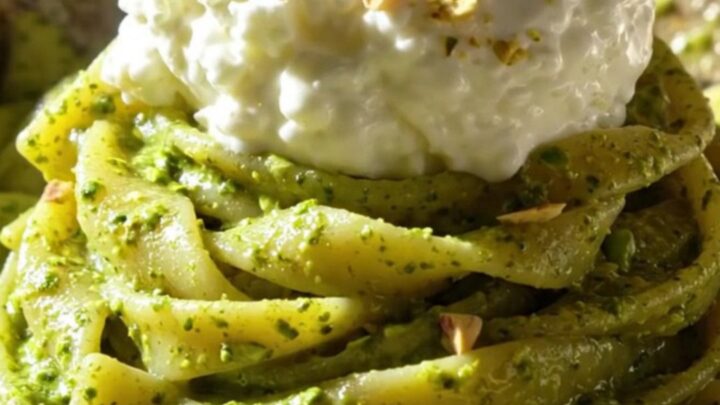
- Emulsify and ServeIn a large bowl, combine the cooked pasta with the pistachio pesto. Gradually add the reserved starchy water, folding everything off-heat until the sauce is velvety and coats the pasta perfectly. Plate immediately and top with the chilled stracciatella and crushed toasted pistachios.Look for The sauce should look smooth, glossy, and evenly coat the pasta.Tip Folding the pesto off-heat preserves the bright green color of the basil.
The pasta should be perfectly coated in a glossy, bright green sauce. When you lift a spoonful, it should fall away easily without being clumpy or watery.
The stracciatella should be added as a fresh, cool dollop on top, providing a beautiful visual and textural contrast to the hot, steaming pasta. The final dish should smell like fresh basil, roasted nuts, and savory cheese.
Common mistakes
Avoid over-processing the pesto, as this can generate too much heat and cause the oils to separate from the nuts, resulting in a greasy sauce. Do not add the pesto to the pasta while it is still over the heat; this ruins the color and texture.
Finally, do not forget to reserve the starchy pasta water, as it is the key to achieving the perfect, restaurant-style consistency that binds the pesto to the pasta.
How to tell it’s done
The pasta is done when it reaches an al dente texture, meaning it is cooked through but still offers a slight resistance when bitten. The pesto is ready when all ingredients are finely ground and emulsified into a smooth, thick, and vibrant green paste. The final dish is ready when the pasta is coated in a glossy, velvety sauce that is neither too watery nor too stiff.
Up next · Part 3 of 3
2 variations · storage & make-ahead · 3 answers · printable card
Tips, FAQ & printable recipe (Part 3)← Back to the ingredients (Part 1)